NumPy np.sign(): Map Negative, Zero, and Positive Values
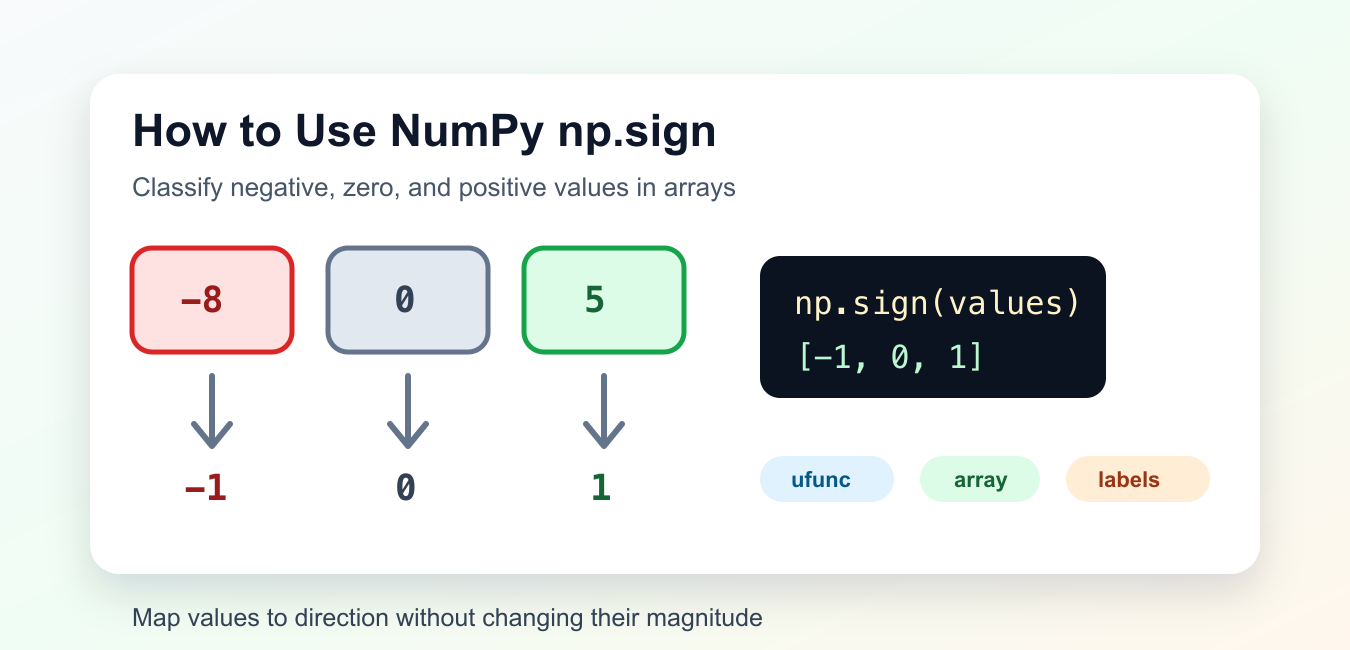
Use NumPy np.sign() to classify scalar or array values by sign, preserve array shape, handle NaN values, and understand complex-number behavior.
Learn NumPy with array operations, random sampling, math functions, shapes, dtypes, plotting examples, and fixes for common NumPy errors.
Use NumPy np.sign() to classify scalar or array values by sign, preserve array shape, handle NaN values, and understand complex-number behavior.

Use NumPy argmin to find minimum indices, choose axes, preserve dimensions with keepdims, handle ties, and convert flat indices safely.

Use NumPy logical_and() for elementwise Boolean masks, broadcasting, range filters, where conditions, and logical reductions.

Generate Poisson-distributed counts with NumPy, choose lambda correctly, set a reproducible generator, and understand shape, mean, and variance expectations.
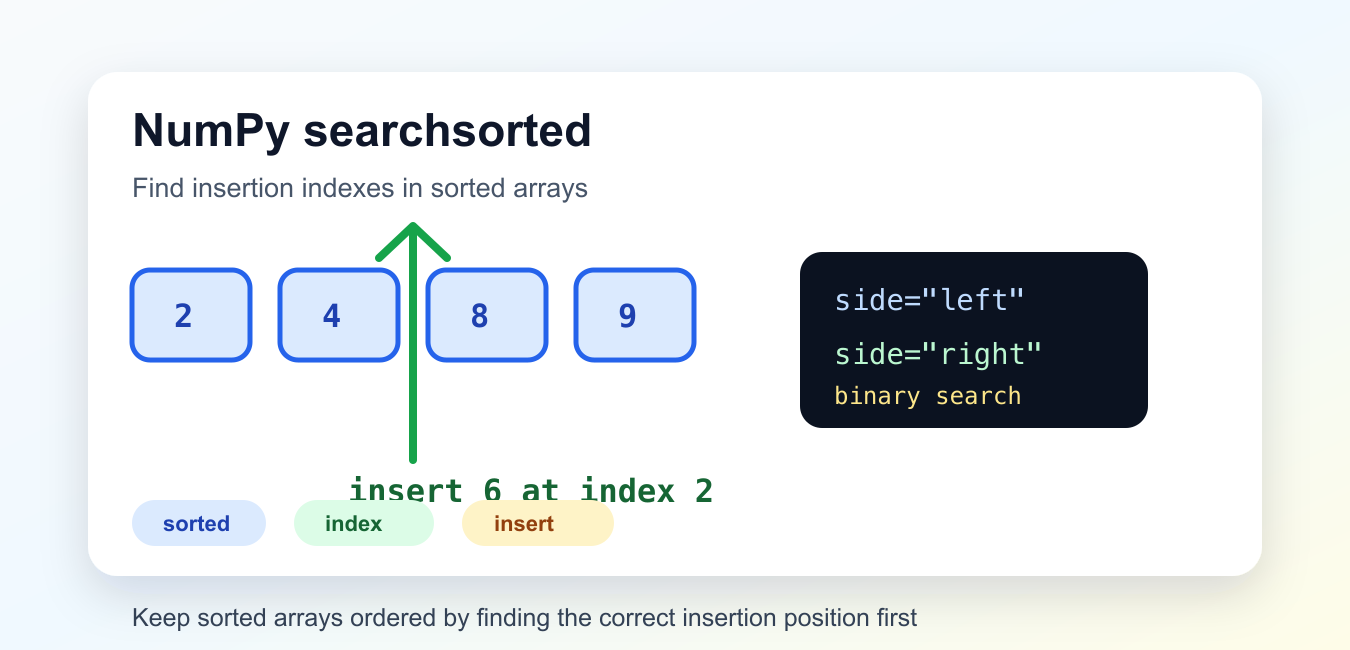
Use NumPy searchsorted with sorted arrays, left and right sides, vectorized values, sorter indexes, and duplicate handling.
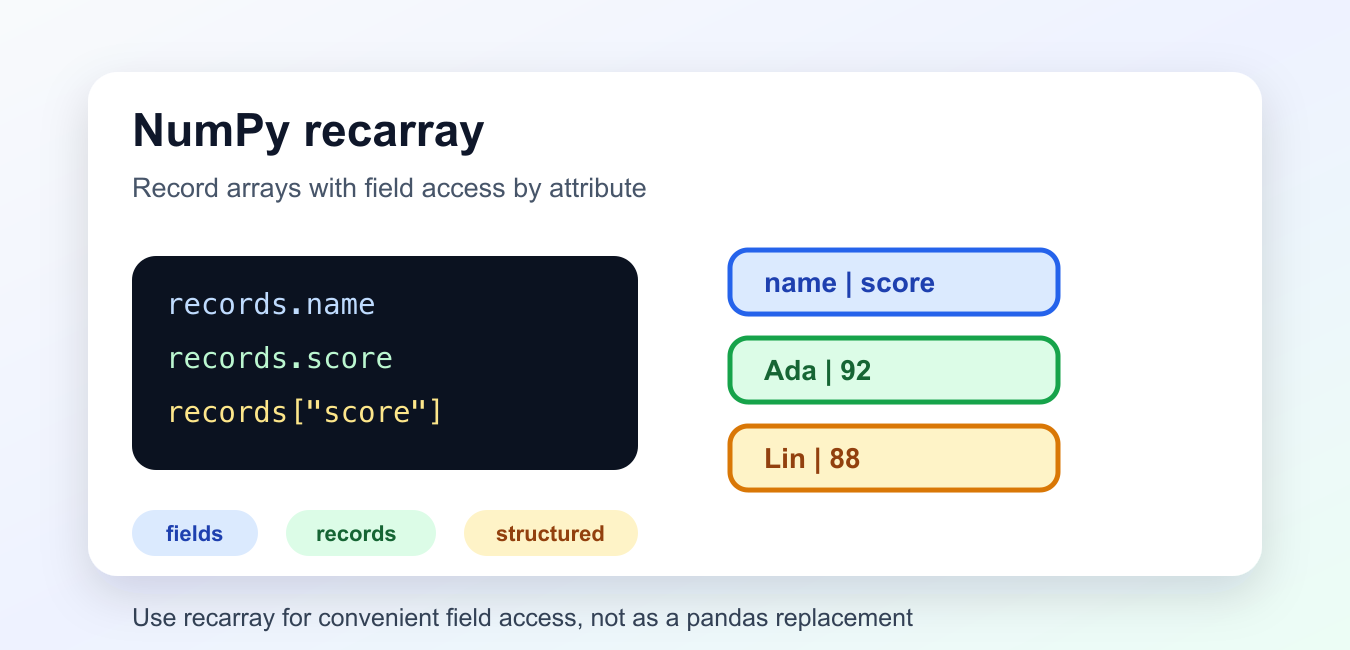
Use NumPy recarray for structured records with named fields, understand attribute access limitations, filter and sort safely, and know when a structured array or DataFrame is better.
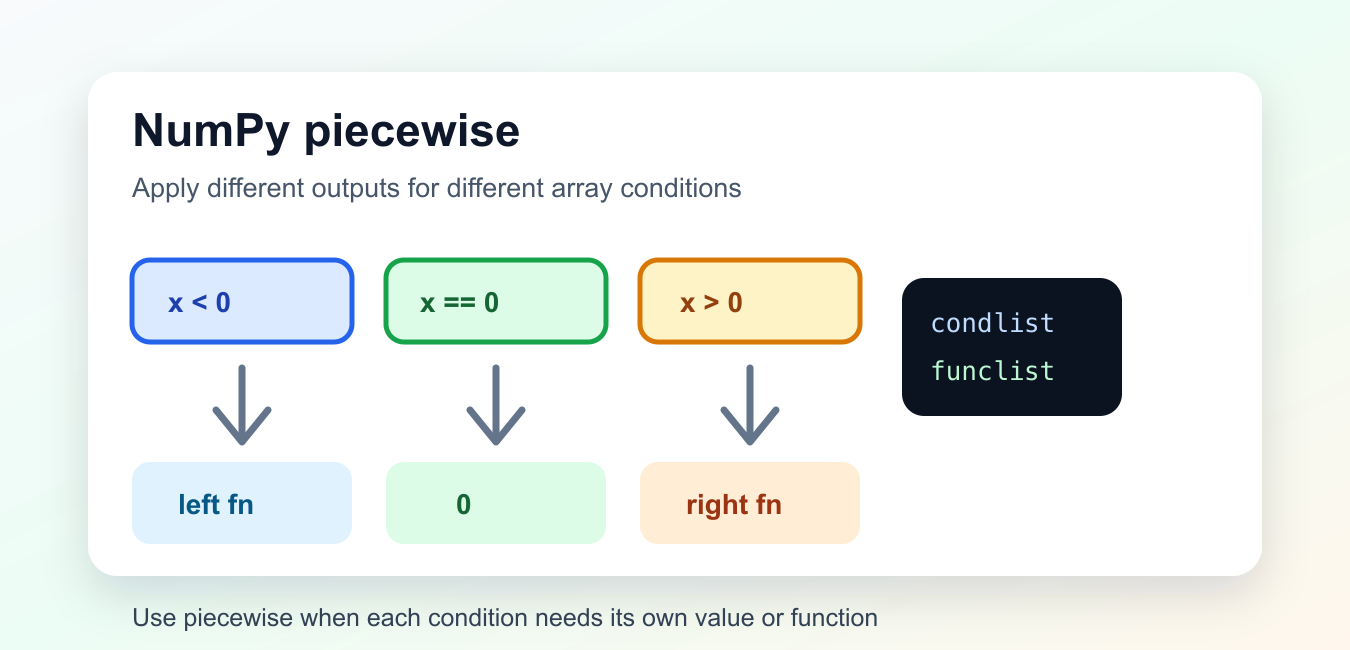
Evaluate different constants or functions over NumPy array regions with piecewise, matching condition shapes and optional defaults.
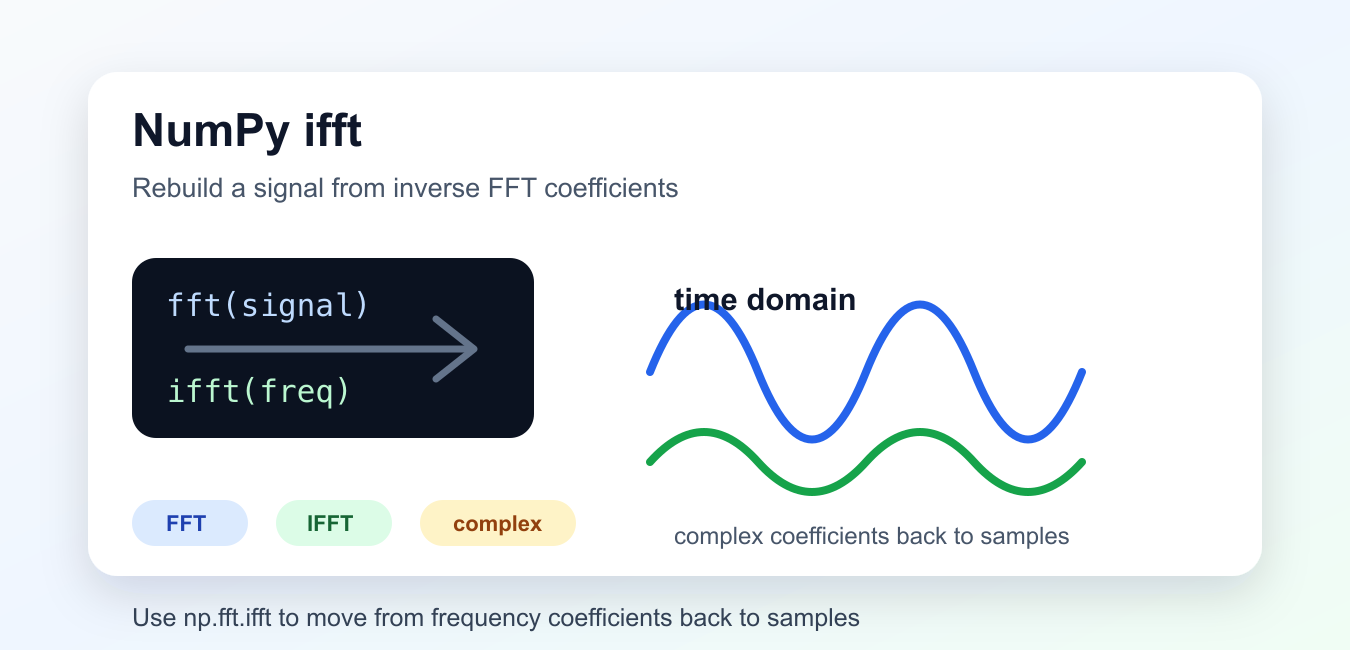
Use NumPy ifft and ifftn to reconstruct signals from frequency data, with correct axes, normalization, complex values, padding, and verification.
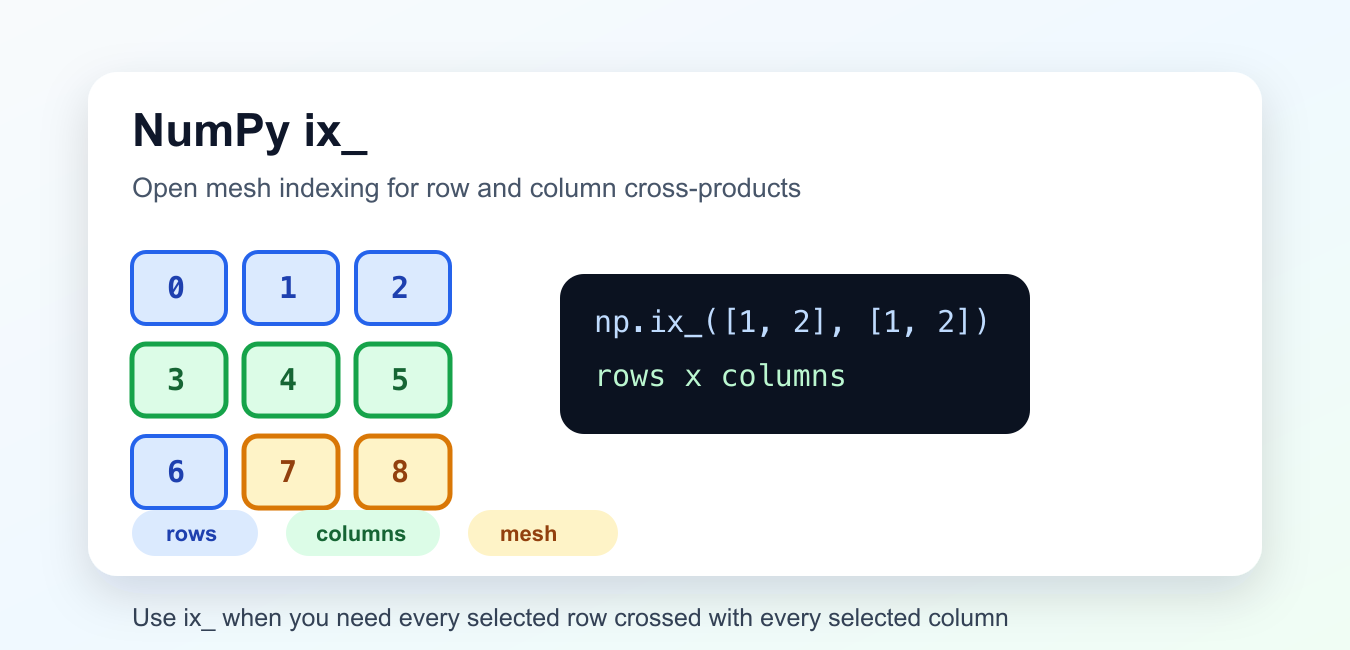
Use NumPy ix_() to combine row and column selections into an open mesh and extract the rectangular submatrix they define.

Use NumPy heaviside() for step functions, including negative, zero, and positive inputs, the second zero-value argument, broadcasting, and plotting.