NumPy Extrapolation: Estimate Beyond the Known Data Range
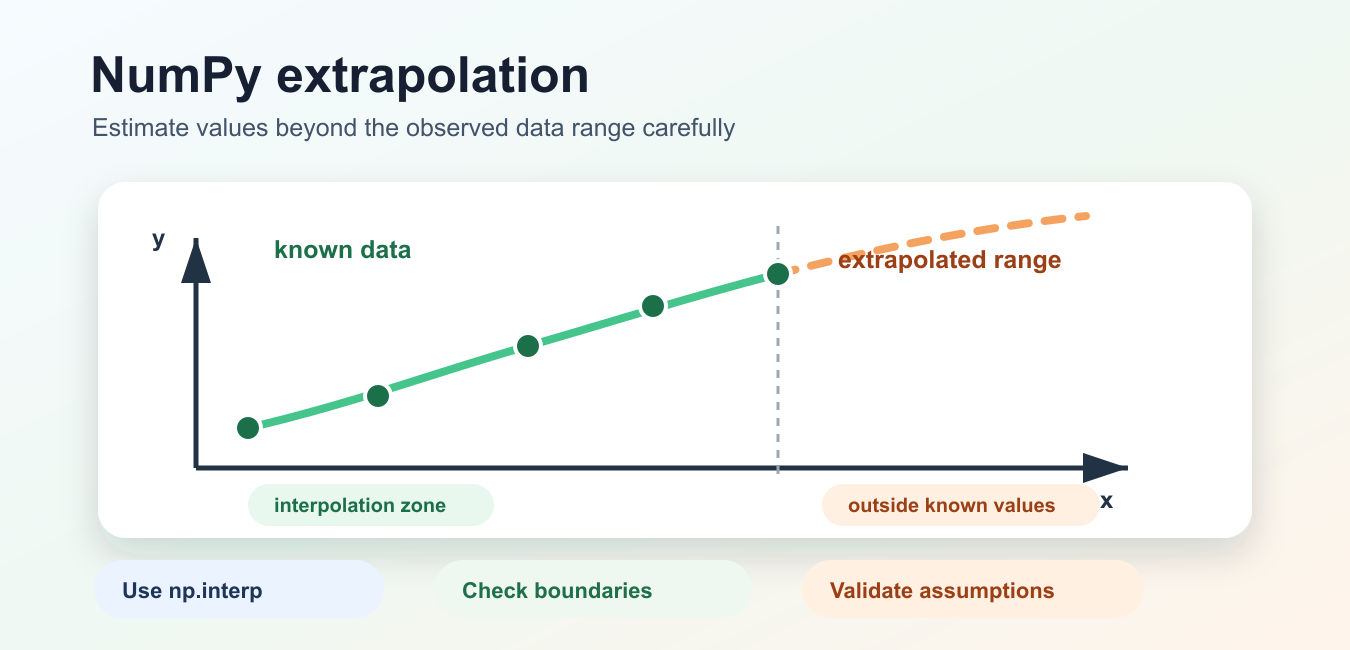
Build cautious NumPy extrapolation with formulas, interpolation boundaries, fitted models, validation, and clear uncertainty limits.
Learn NumPy with array operations, random sampling, math functions, shapes, dtypes, plotting examples, and fixes for common NumPy errors.
Build cautious NumPy extrapolation with formulas, interpolation boundaries, fitted models, validation, and clear uncertainty limits.
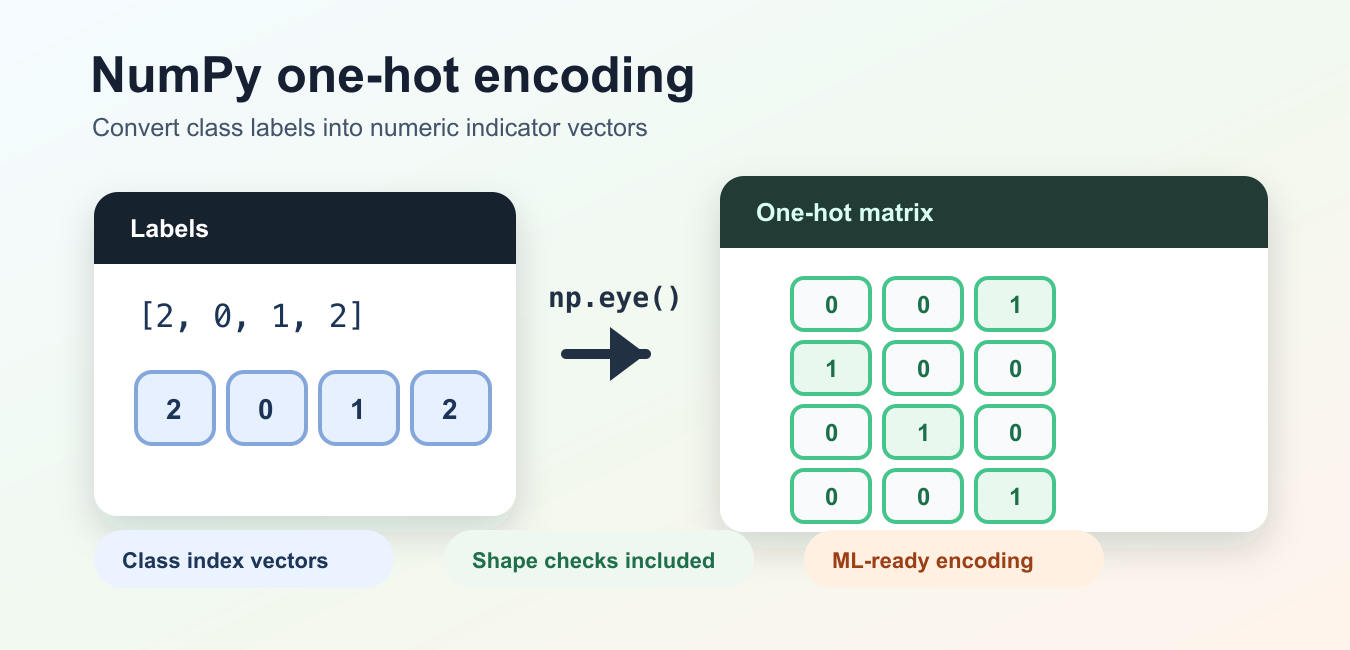
Build one-hot encoded arrays with NumPy while handling class indices, shape conventions, unknown labels, dtype, and machine-learning data validation.
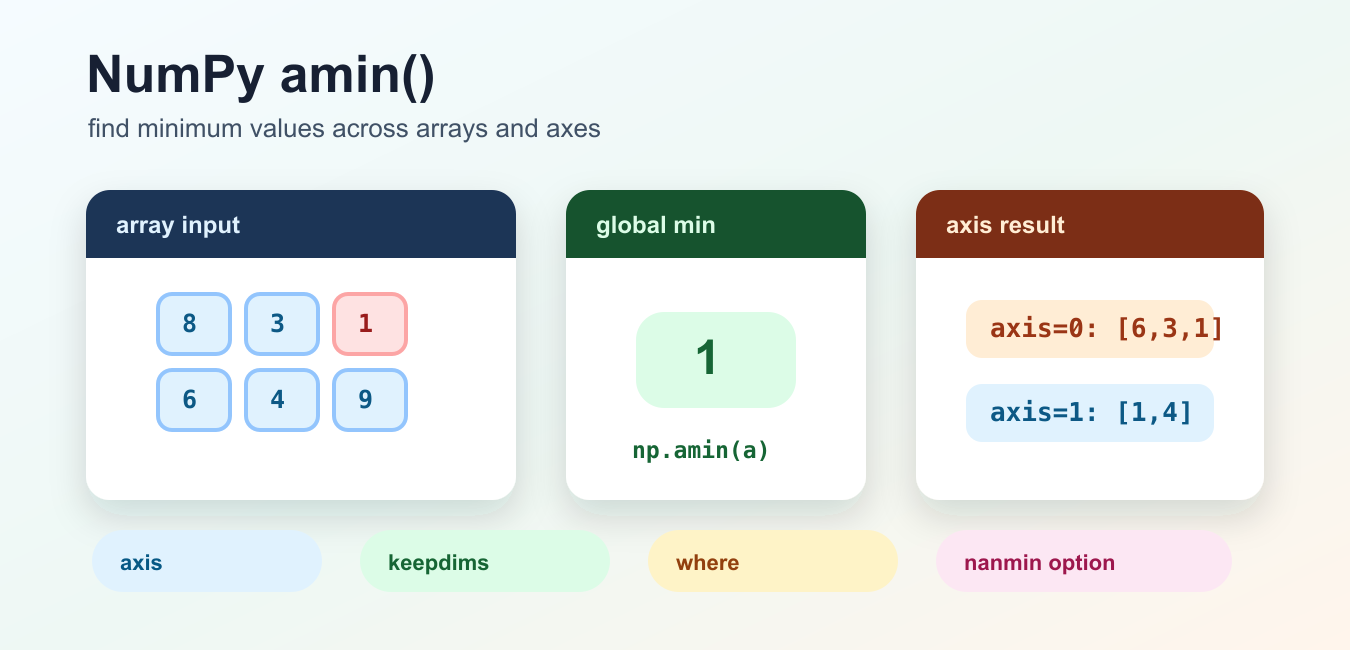
Learn how NumPy amin() finds minimum values across flattened arrays or selected axes, with keepdims, out, NaN handling, and practical examples.
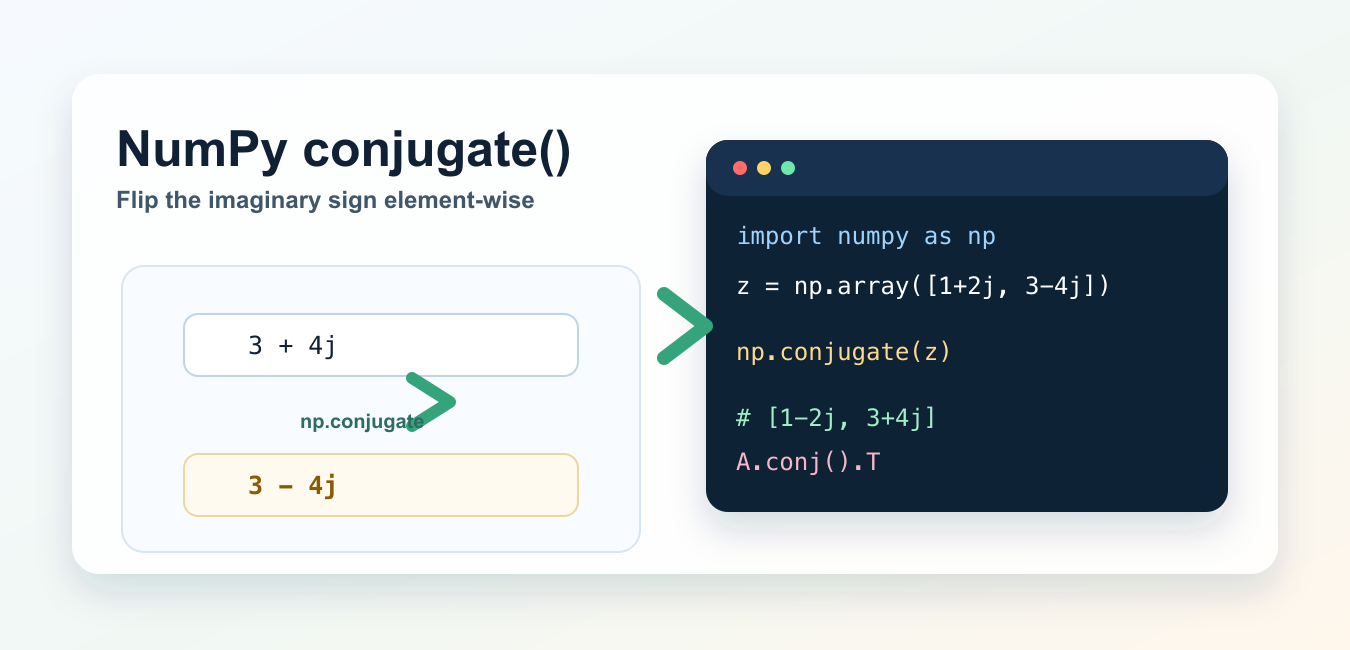
Use NumPy conjugate() and conj() elementwise, build conjugate transposes, write to out arrays, and avoid mistakes with complex data.
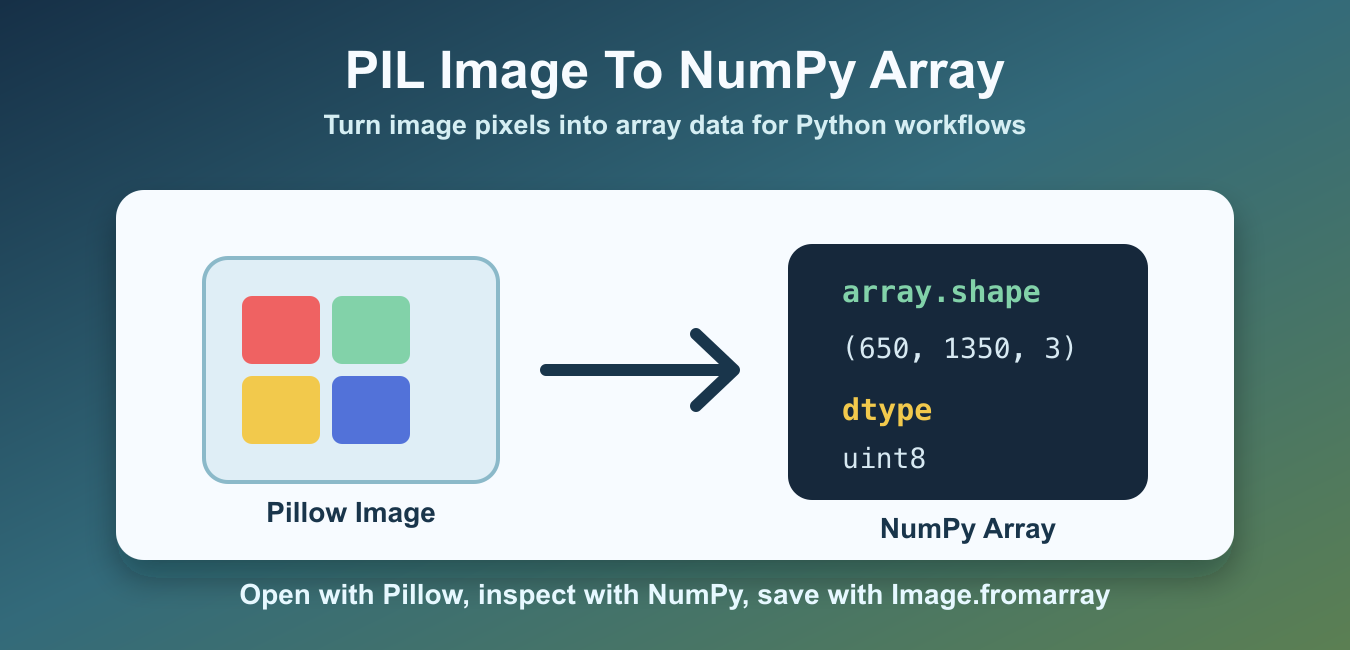
Convert Pillow images to NumPy arrays with np.asarray(), inspect RGB and RGBA modes, copy safely, and convert arrays back to images.
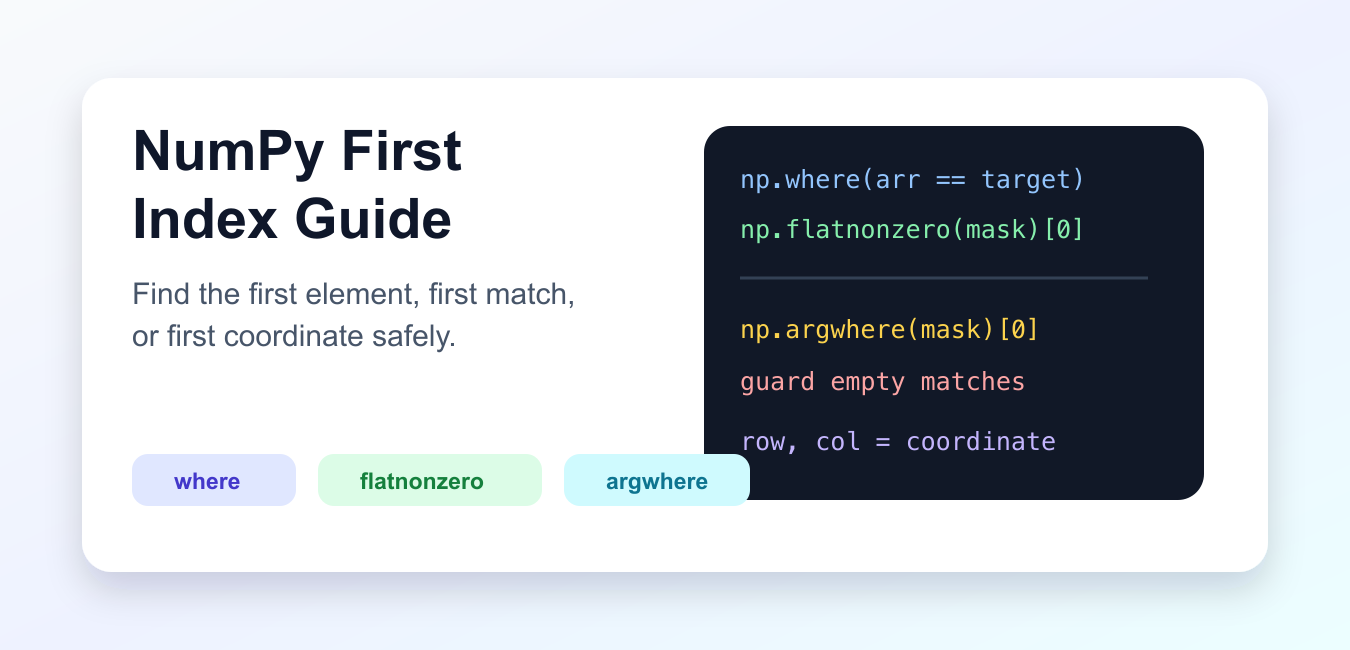
Learn how to get the first index in NumPy arrays using direct indexing, where(), flatnonzero(), argmax(), and argwhere().

Use NumPy save() and load() for .npy arrays, savez() archives, object safety, paths, compression, and portable data workflows.

Build NumPy ranges with start, stop, and step while avoiding endpoint, floating-point, dtype, and memory mistakes.
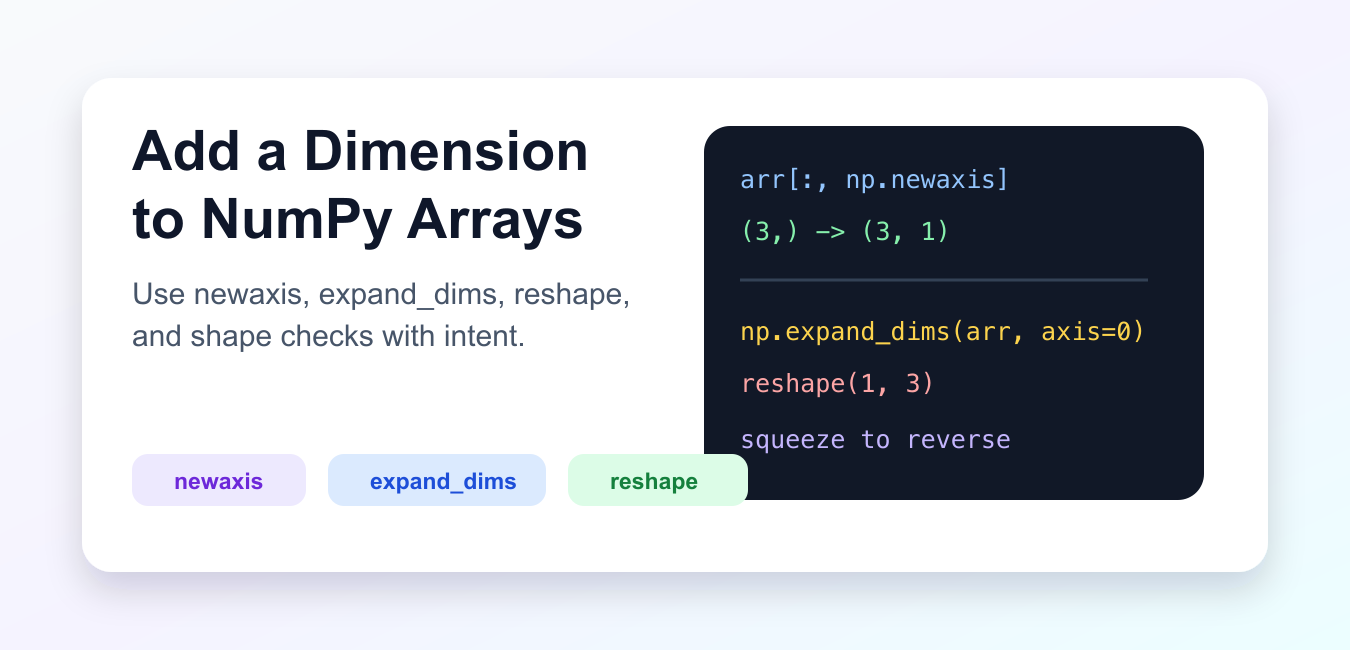
Insert a singleton axis with expand_dims or np.newaxis, verify the shape, and choose reshape only when the full shape contract is known.
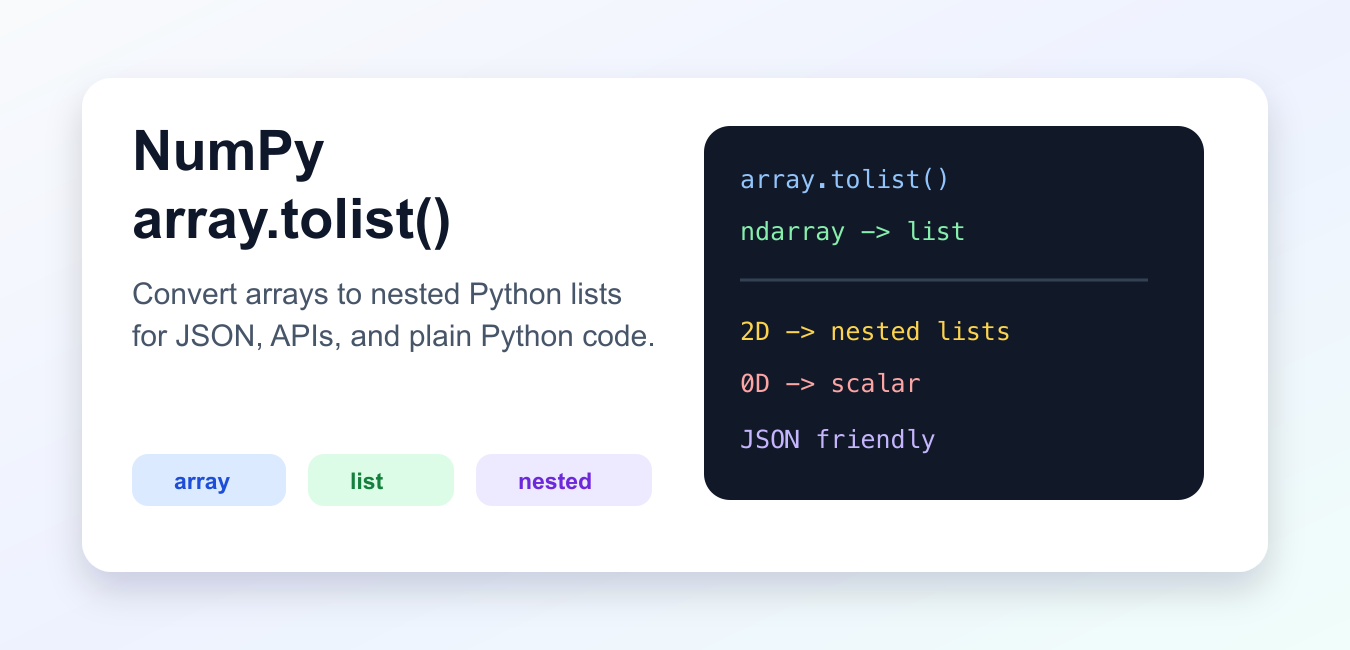
Convert NumPy arrays to nested Python lists with tolist() for JSON and APIs while preserving shape and handling dtype boundaries.