Sort a Dictionary by Value in Python: sorted(), Ties, and Top Values
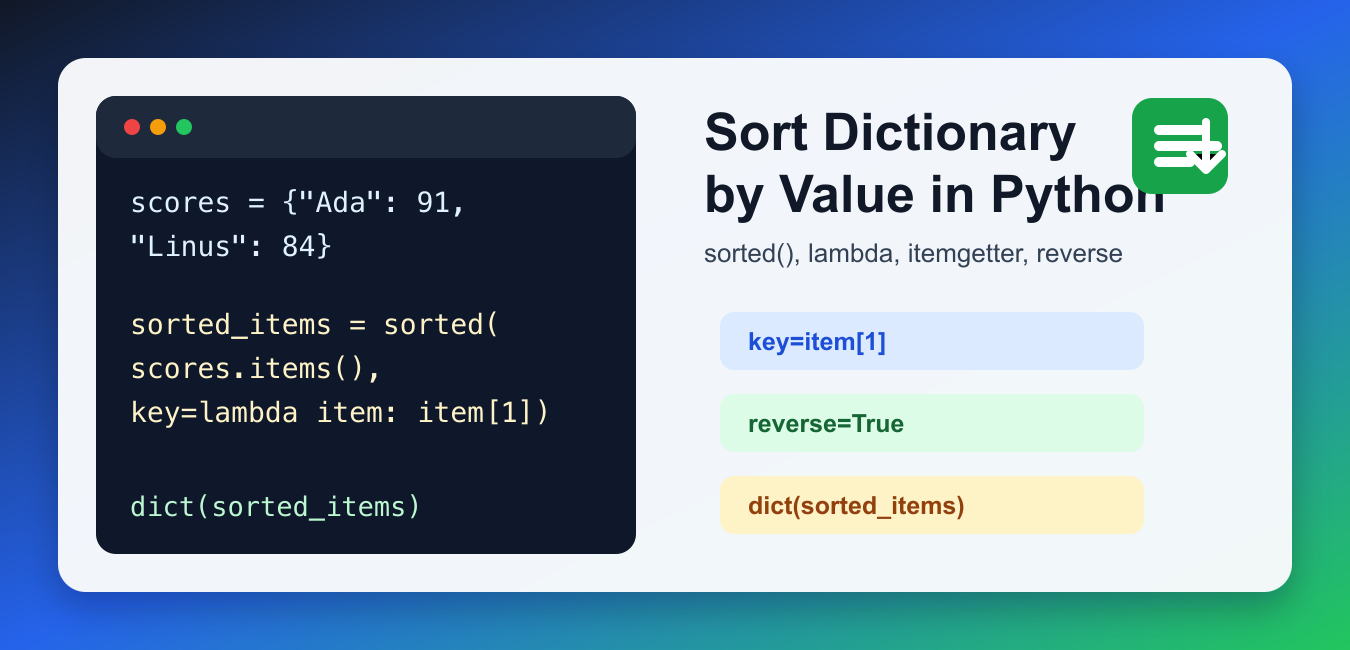
Sort Python dictionaries by value with sorted(), lambda, itemgetter, reverse order, tie-breakers, and ordered output.
Browse Python tutorials for beginners and working developers, including syntax, libraries, examples, projects, and real problem-solving guides.
Sort Python dictionaries by value with sorted(), lambda, itemgetter, reverse order, tie-breakers, and ordered output.
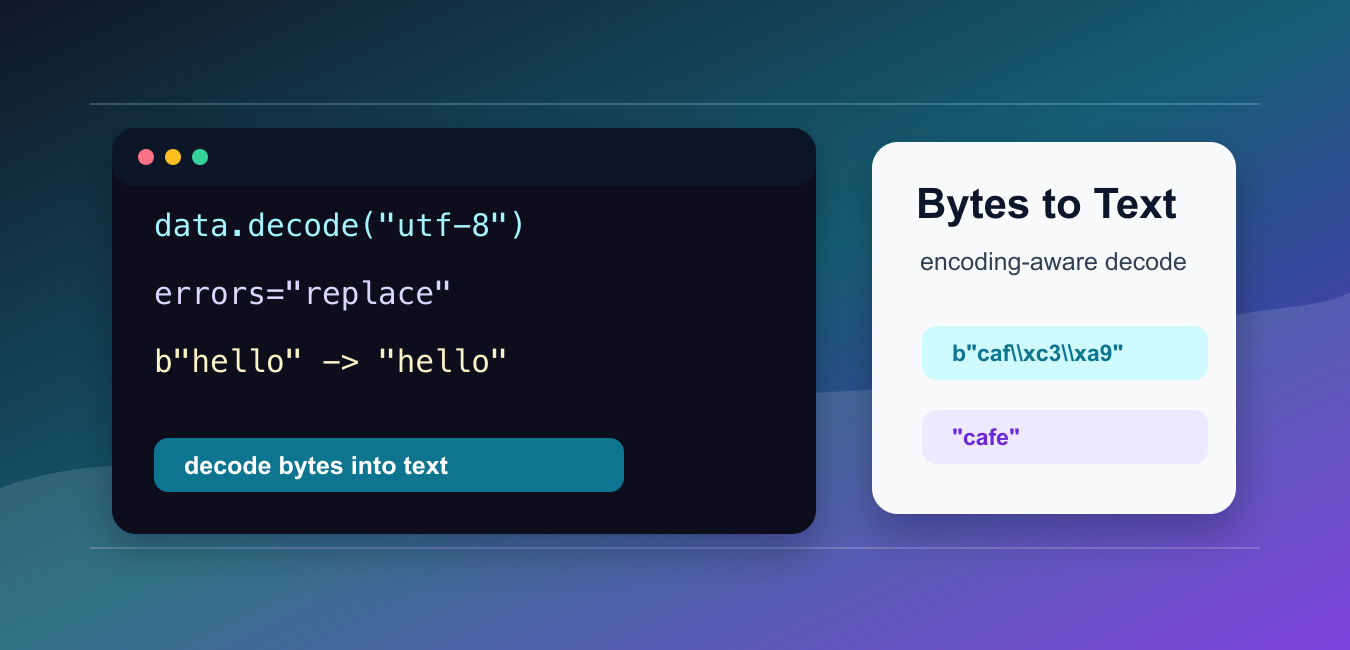
Decode Python bytes safely with an explicit encoding, handle invalid data deliberately, and keep text-versus-binary boundaries clear in files and APIs.
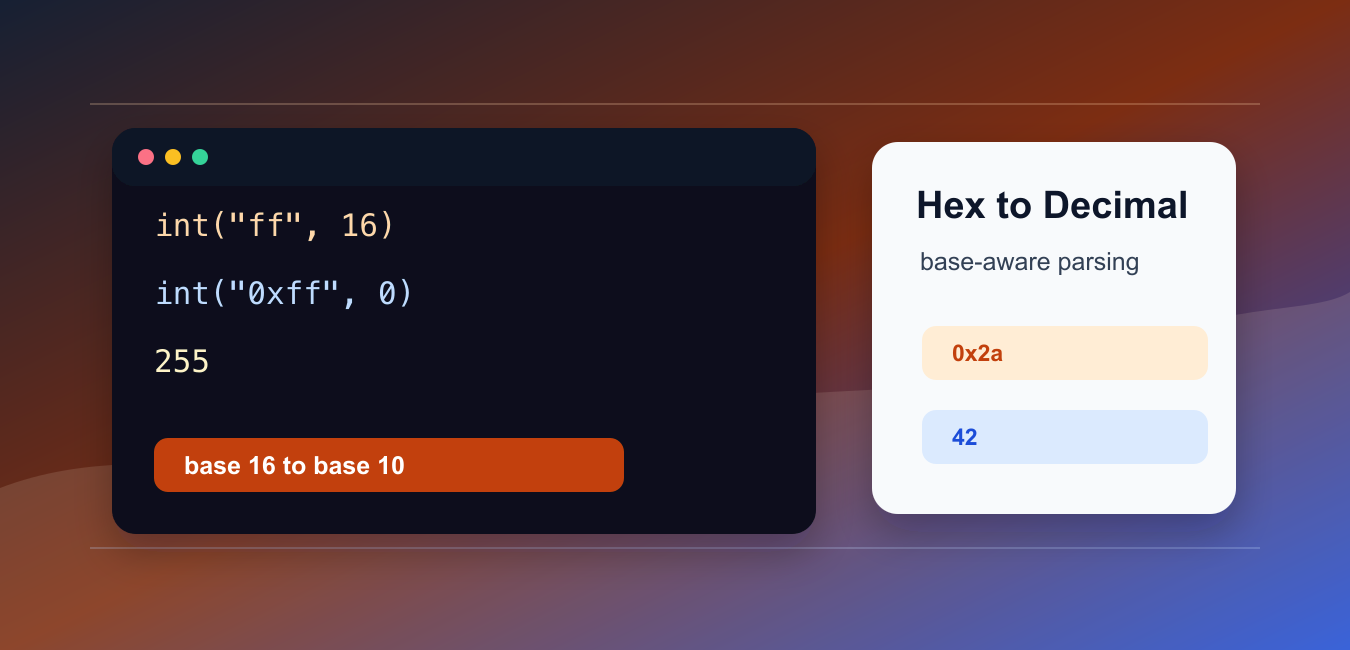
Convert hexadecimal strings to decimal integers in Python with int(base=16), handle 0x prefixes and validation, and format results safely.

Learn when Python semicolons separate simple statements, why one statement per line is clearer, and which syntax cannot be compressed safely.

Store strings in Python with lists, the array module, or NumPy, and choose the right representation for typing, performance, indexing, and text operations.
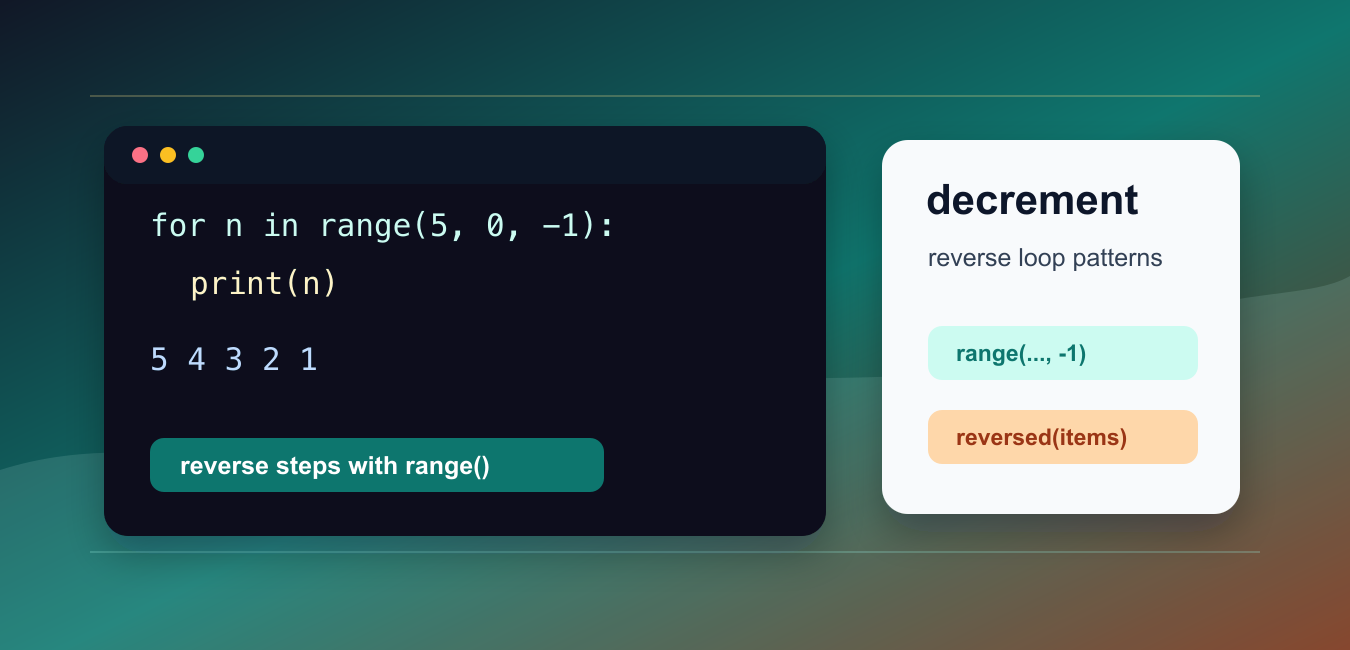
Decrement a Python for loop with range(start, stop, -step), understand the exclusive stop value, and avoid off-by-one and zero-step errors.
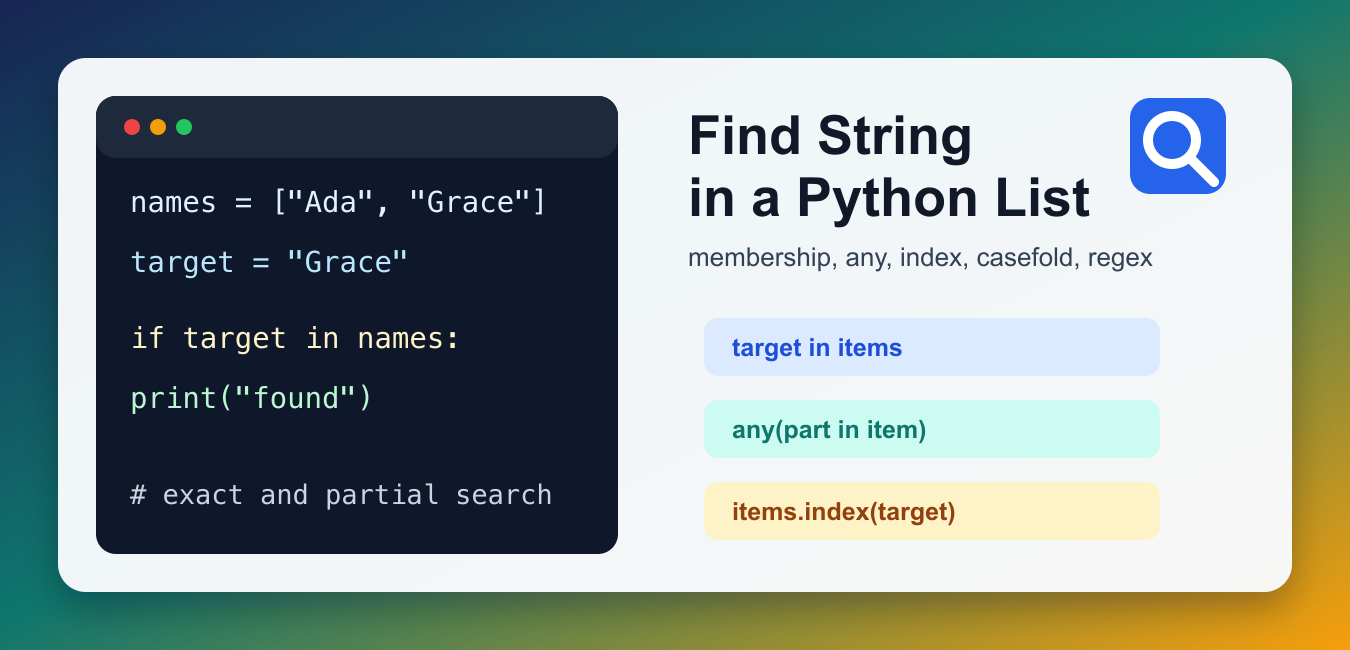
Find strings in a Python list with in, index, any, and comprehensions while choosing exact, substring, case-insensitive, and duplicate-match behavior.
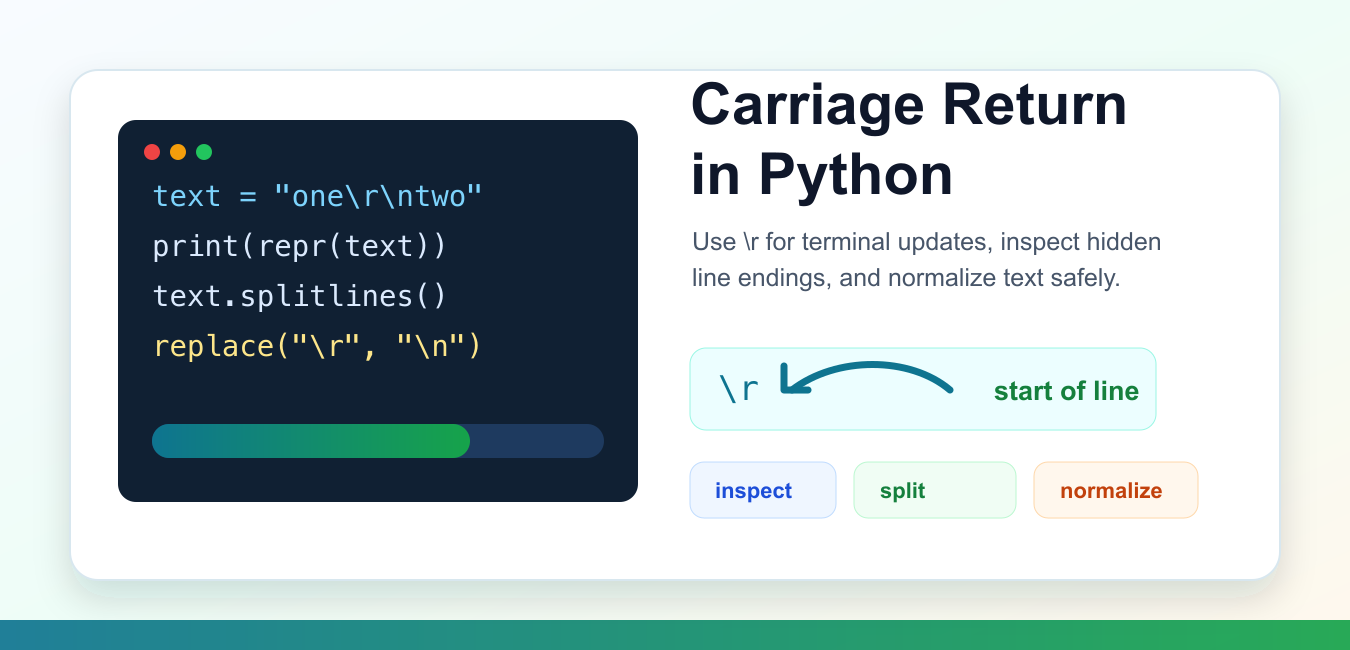
Understand carriage return in Python, use splitlines(), normalize CRLF text, preserve file endings, update terminal progress, and handle CSV files.
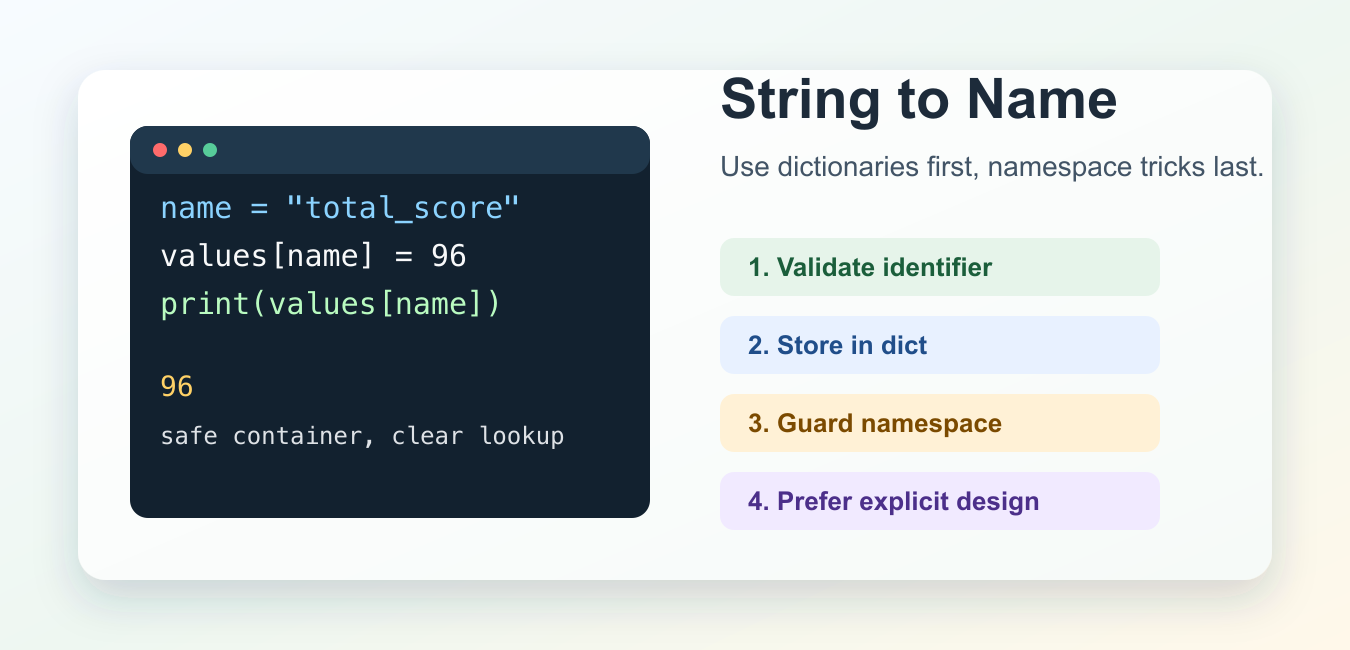
Map Python strings to values with dictionaries or object attributes, validate names, and understand why globals(), locals(), and exec() are fragile choices.
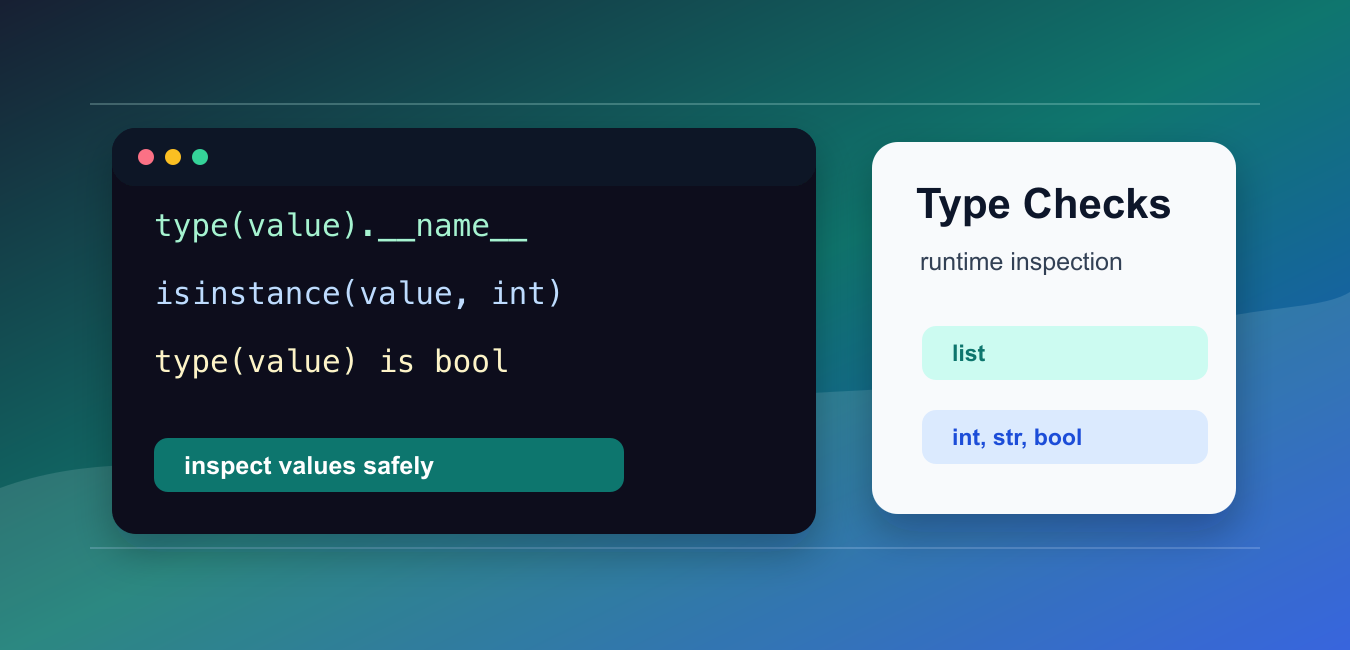
Check Python types with type() for exact identity, isinstance() for compatible classes, and explicit value or behavior validation.