Read a File Line by Line in Python: Efficient and Safe Patterns

Read files line by line in Python with context managers, iteration, encodings, newline handling, memory limits, and error-aware processing.
Browse Python tutorials for beginners and working developers, including syntax, libraries, examples, projects, and real problem-solving guides.
Read files line by line in Python with context managers, iteration, encodings, newline handling, memory limits, and error-aware processing.

Python range() excludes stop; include an endpoint by adjusting the boundary for the step direction and testing the resulting sequence.
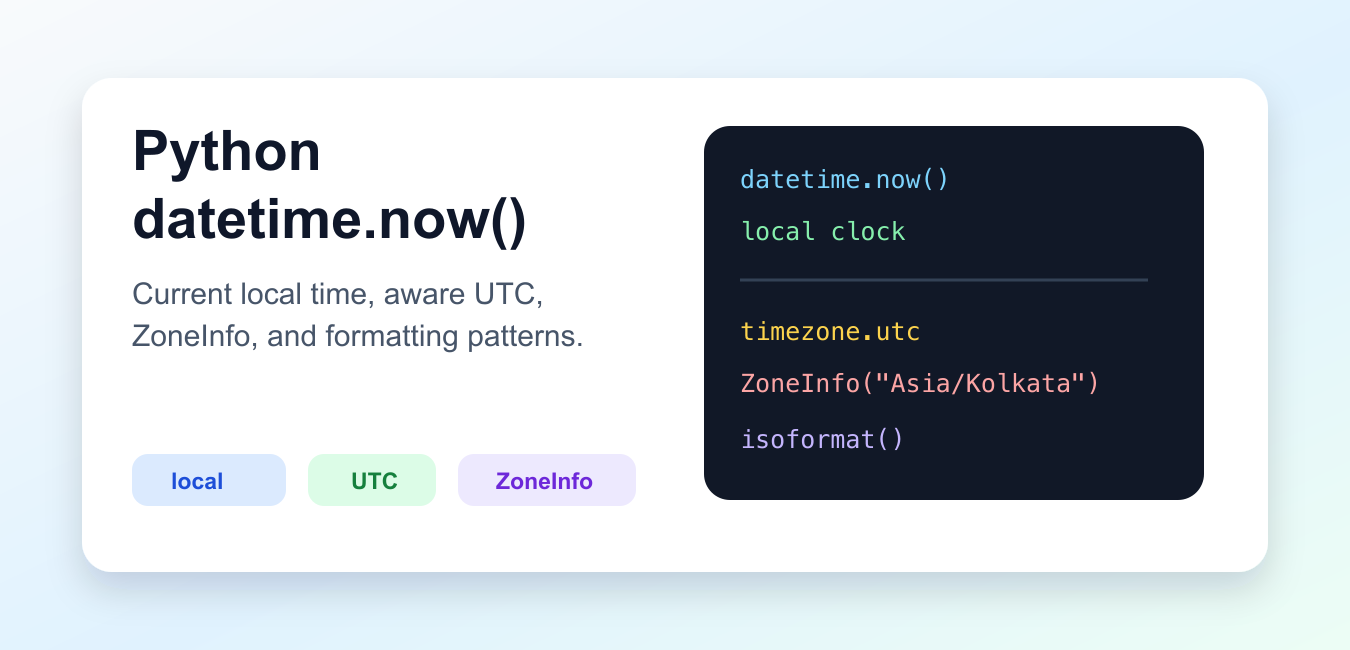
Use Python datetime.now() correctly with local time, UTC, timezone-aware values, formatting, and daylight-saving transitions.

Write a portable Python shebang with env or an explicit interpreter, make scripts executable, diagnose interpreter paths, and understand Windows behavior.
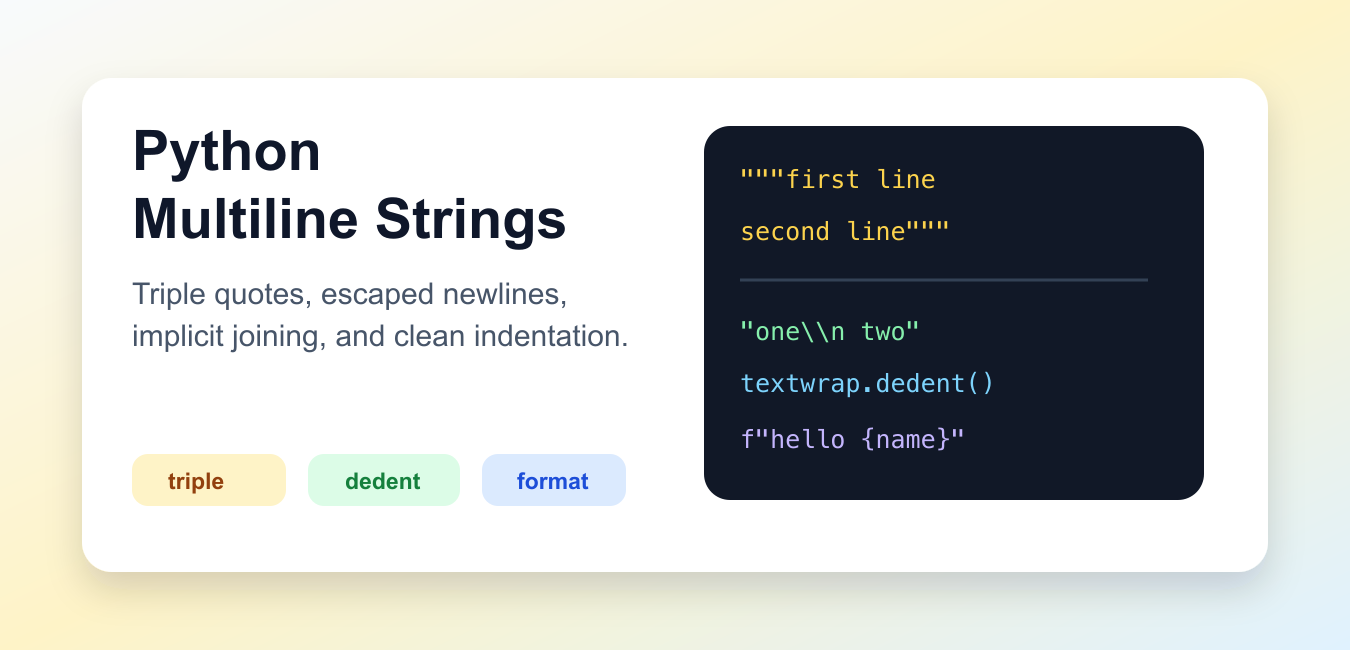
Use triple quotes for retained newlines, implicit concatenation for readable long text, and dedent when source-code indentation should not become content.
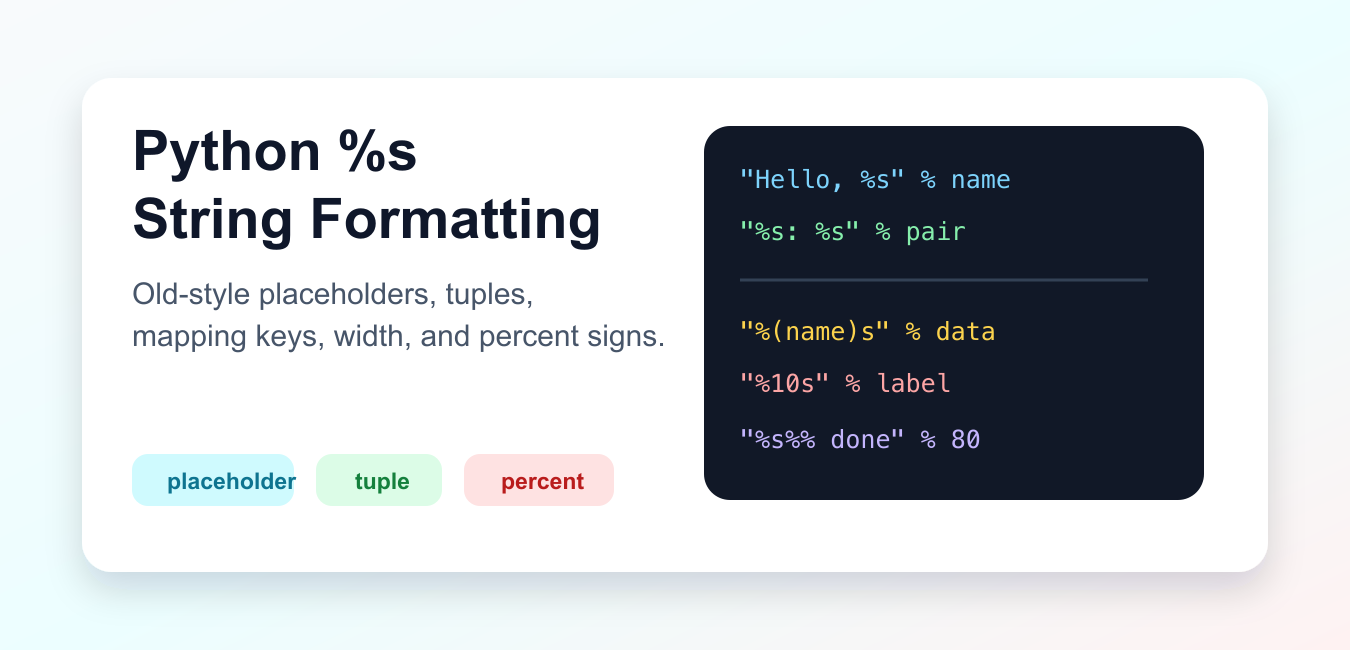
Learn Python percent-style %s formatting with strings, tuples, mappings, escaping percent signs, type conversions, and modern alternatives.

Sort a Python dictionary by key with sorted() and dict(), while making reverse order, case normalization, dates, and nested keys explicit.
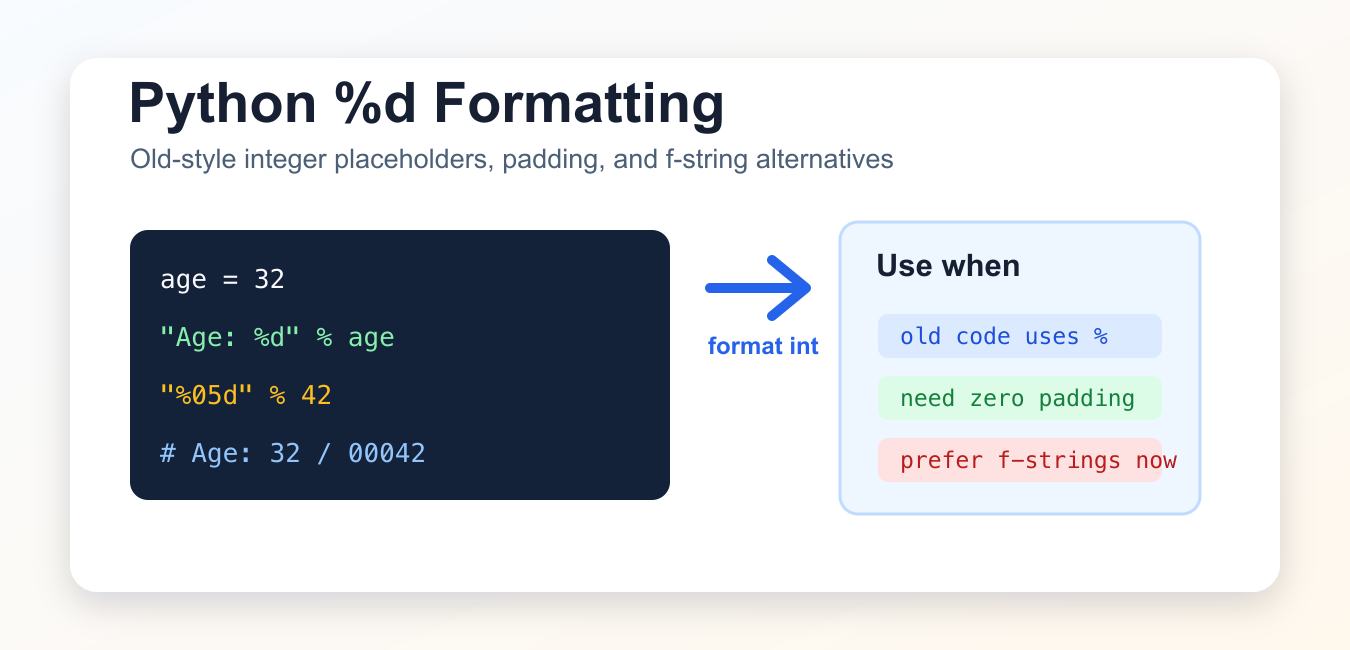
Use Python %d formatting for integers, width, zero padding, multiple values, and percent signs, then compare it with f-strings.

Use Python ternary expressions for compact conditional values, avoid nested unreadable logic, and choose a normal if statement when the branches do more than return a value.
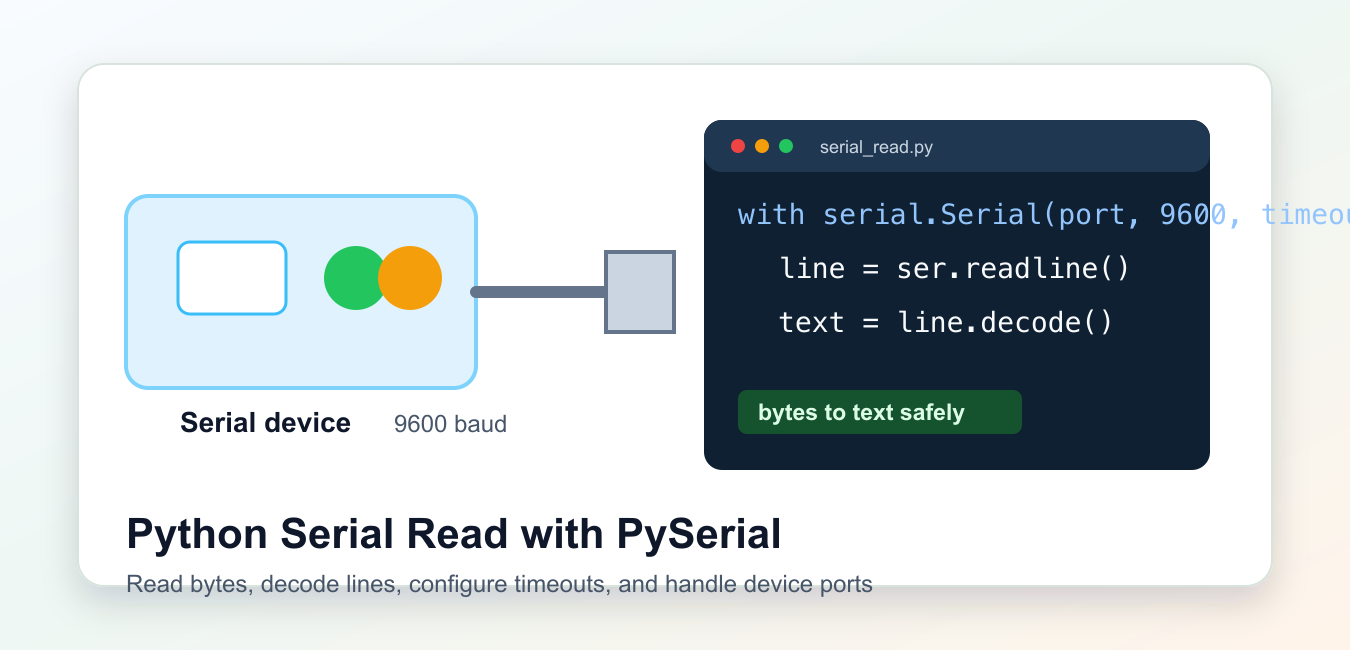
Read reliable serial messages with pySerial by defining framing, timeout, buffering, byte decoding, disconnect, and cleanup behavior.