NumPy asarray(): Convert Data Without Unnecessary Copies

Learn when NumPy asarray returns a view, converts dtype, shares memory, and differs from np.array for ownership and copying.
Learn NumPy with array operations, random sampling, math functions, shapes, dtypes, plotting examples, and fixes for common NumPy errors.
Learn when NumPy asarray returns a view, converts dtype, shares memory, and differs from np.array for ownership and copying.
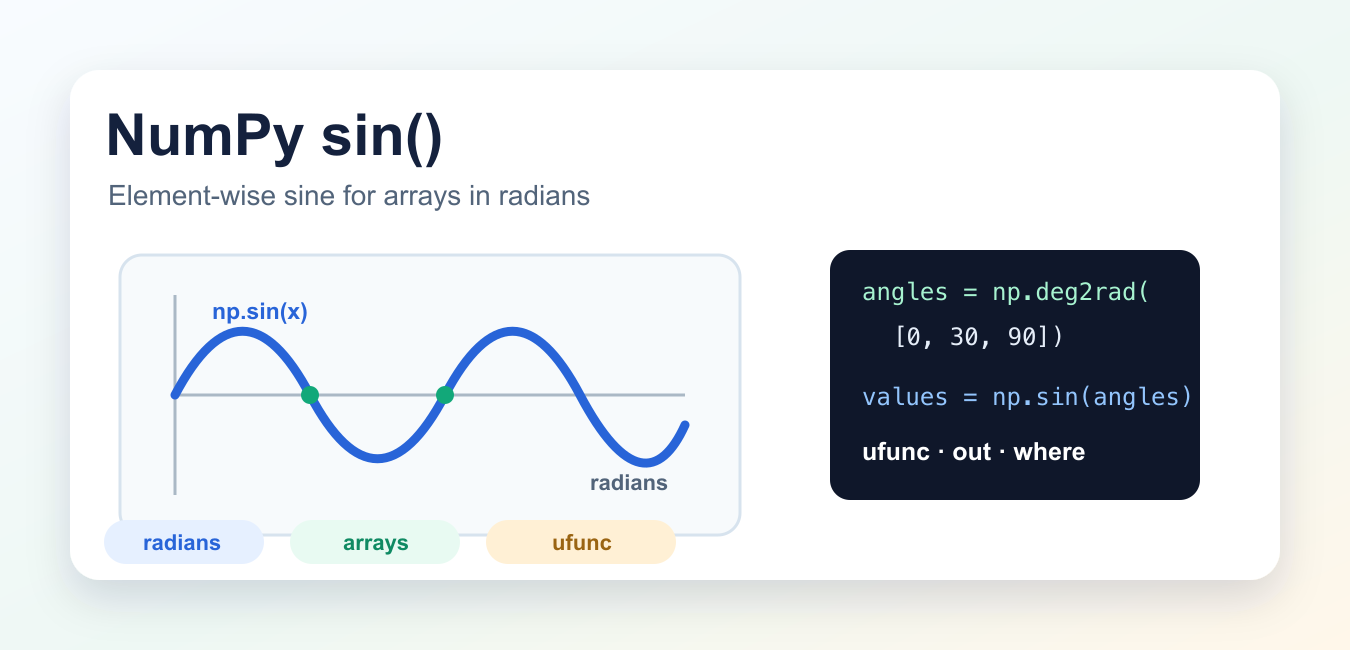
Calculate sine with NumPy in radians, convert degrees safely, use broadcasting, and control output with out and where.
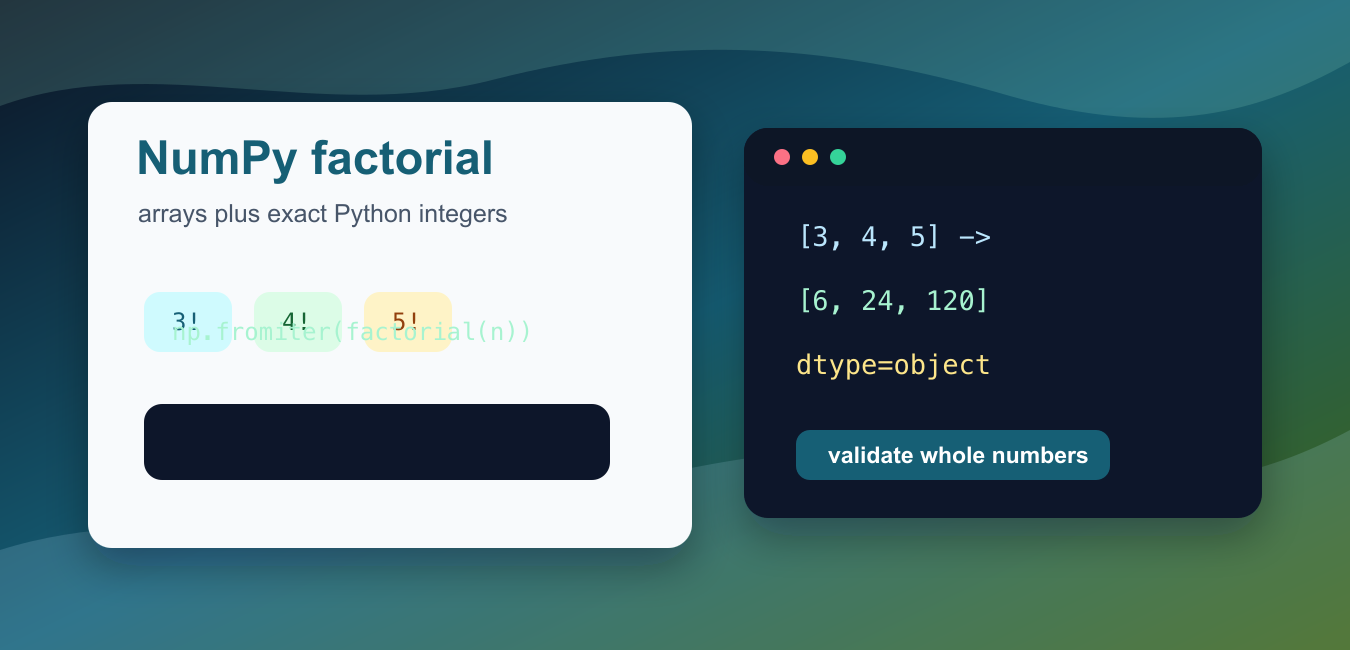
Calculate factorials for NumPy arrays with math.factorial, object-safe approaches, cumulative products, and SciPy exactness choices.
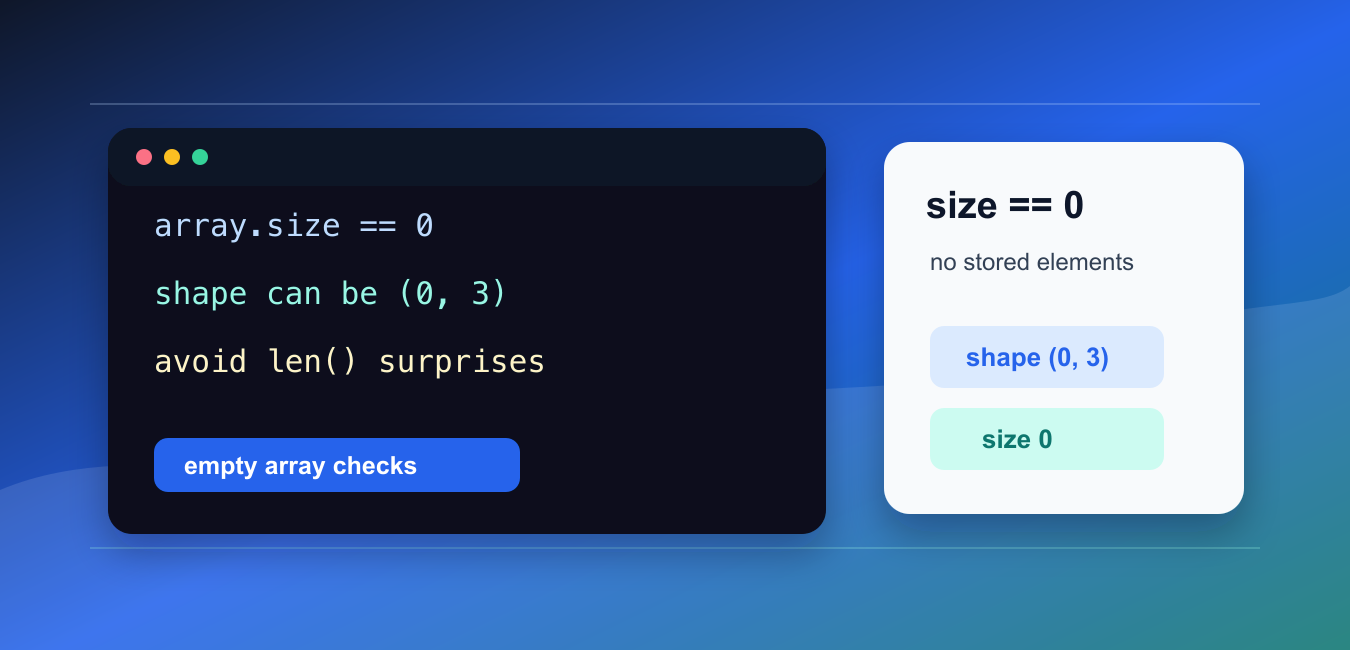
Check whether a NumPy array is empty with size, avoid ambiguous truth-value errors, distinguish zero-size shapes from NaN values, and handle dimensions explicitly.
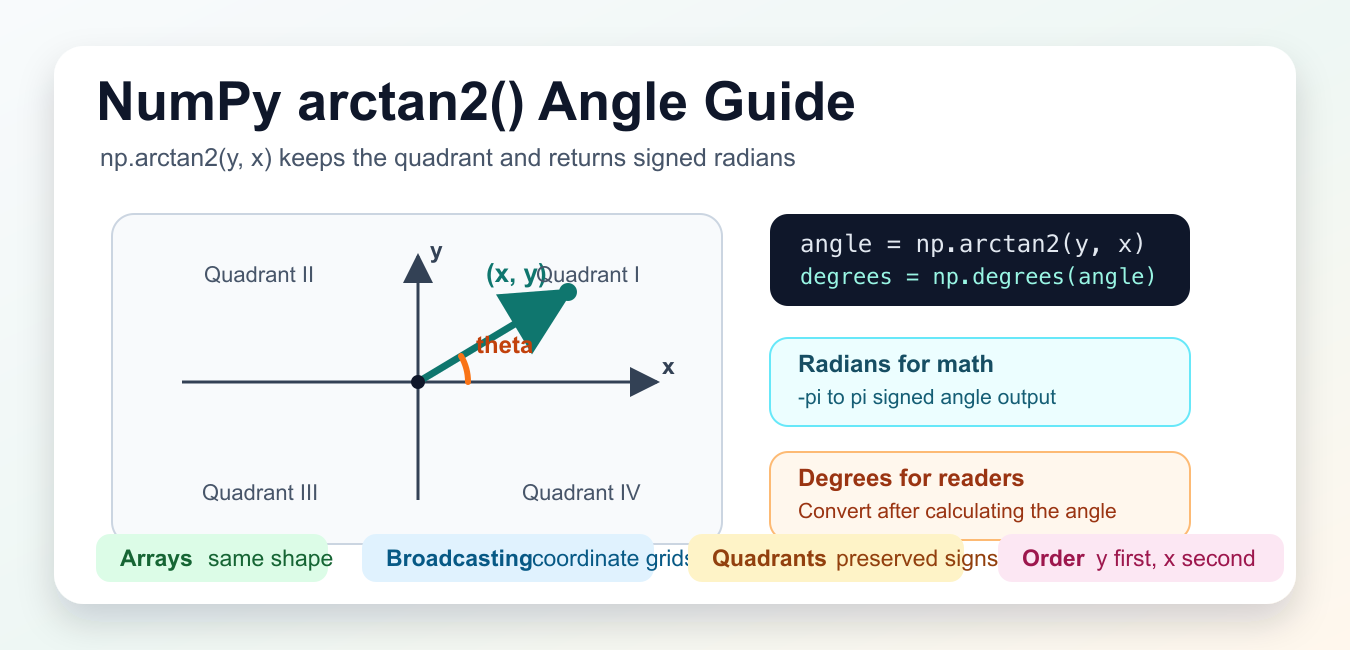
Use NumPy arctan2() for signed angles with correct quadrants, broadcasting, degrees, zero inputs, infinities, and vectorized arrays.
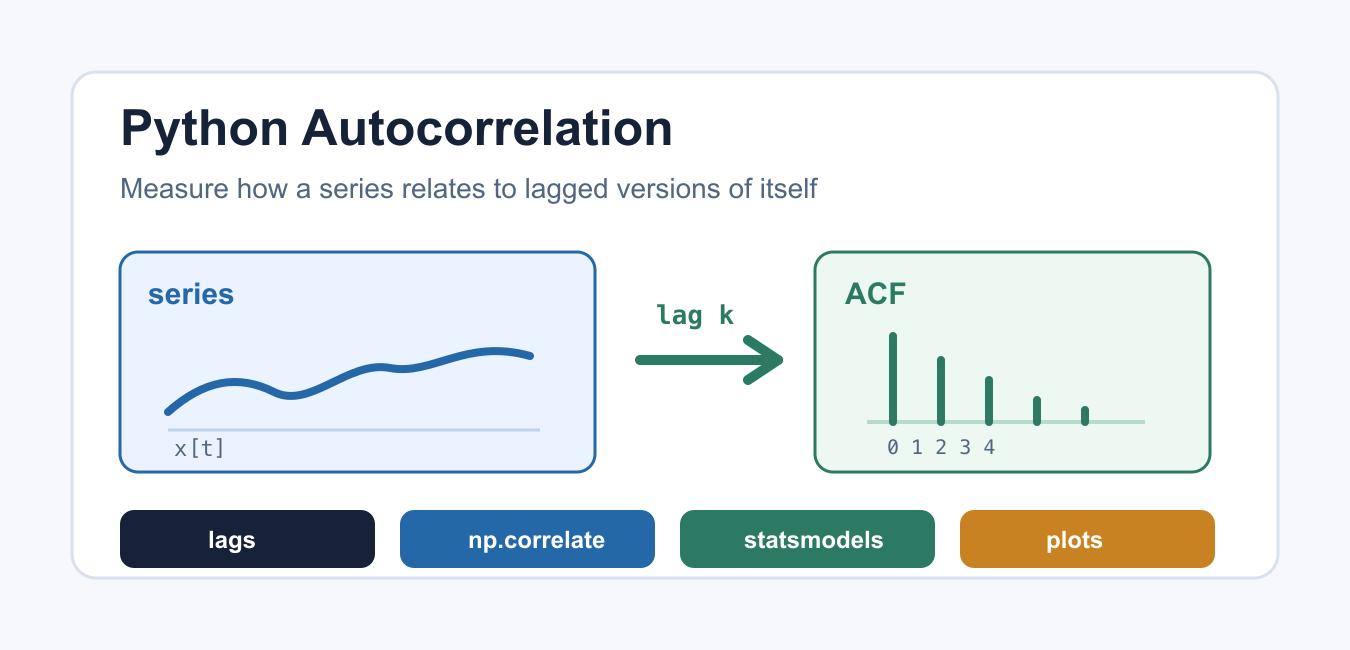
Compute autocorrelation in Python with centered series, lag conventions, missing values, normalization, confidence limits, and time-series checks.

Shuffle NumPy arrays with Generator.shuffle, reproducible seeds, in-place mutation, axes, copies, and safe data-pair handling.
Use NumPy cross for 3D vector products and batches, control vector axes, understand broadcasting, and replace deprecated 2D inputs.
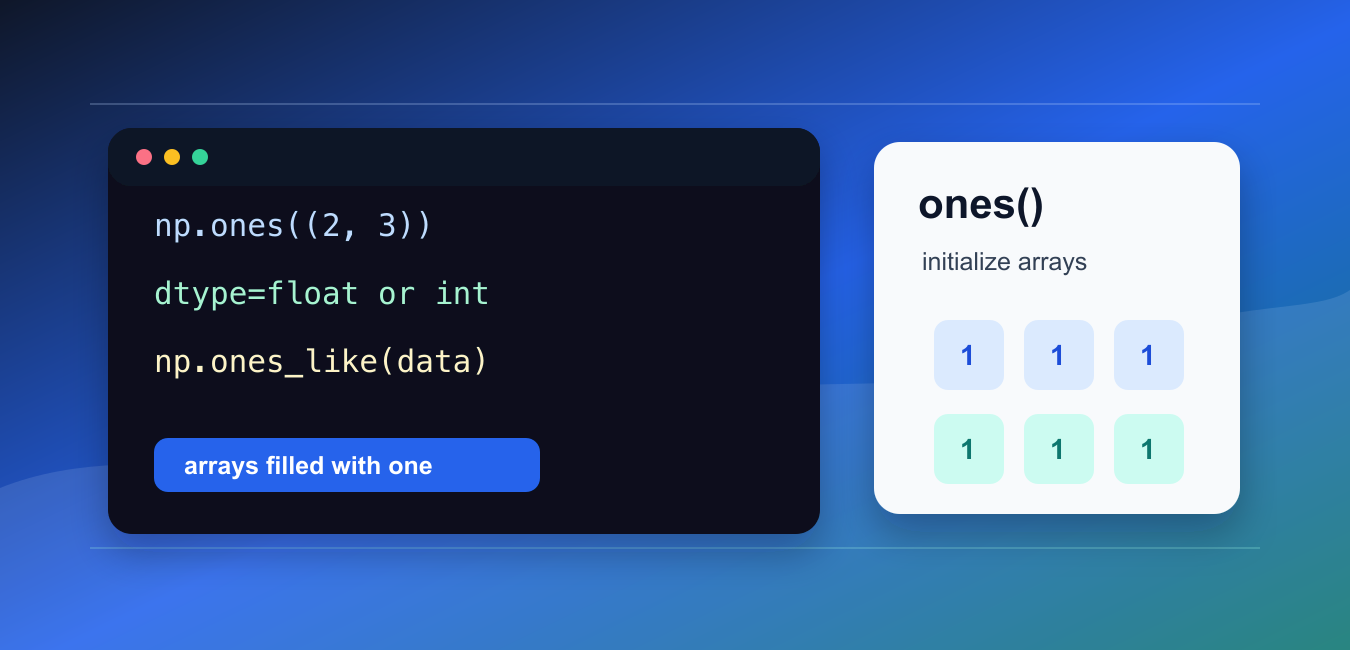
Use NumPy ones() with shapes, dtype, order, and ones_like() to create predictable arrays for masks, initialization, broadcasting, and numerical computation.

Normalize NumPy arrays with min-max and L2 scaling while handling constant arrays, NaN values, axes, and division-by-zero safely.