NumPy diag(): Extract Diagonals and Build Diagonal Matrices
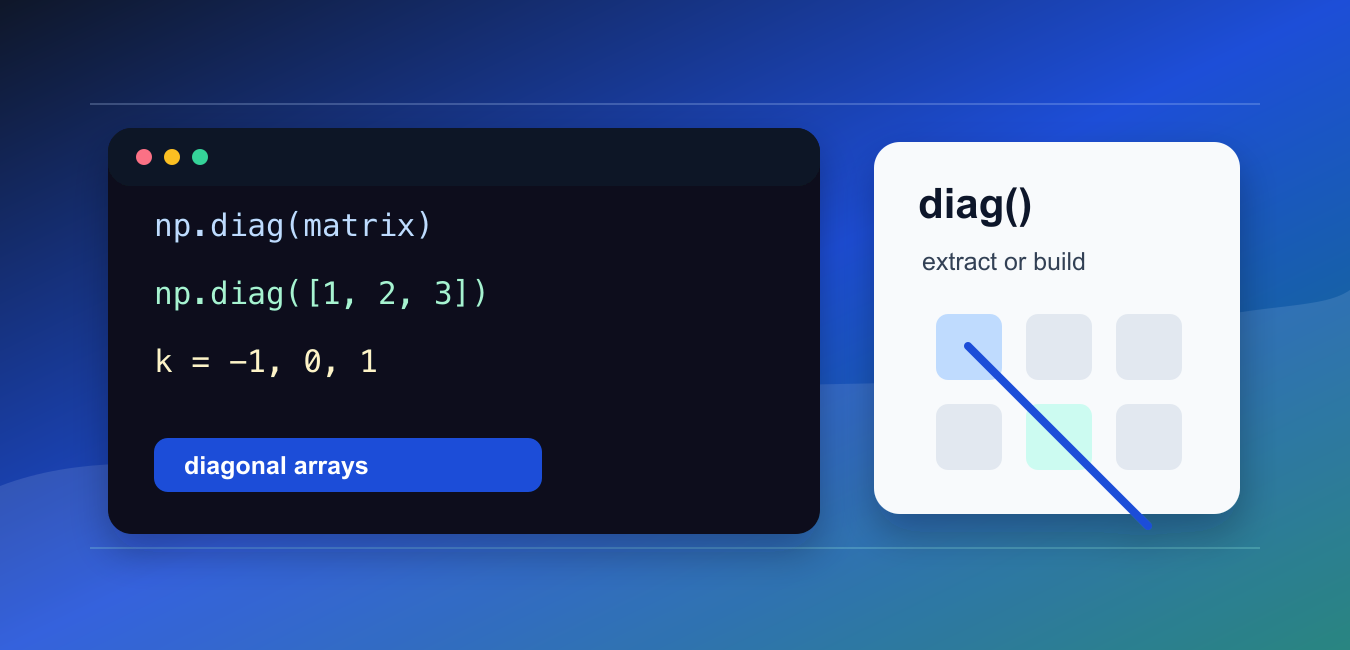
Use NumPy diag to extract or construct diagonals, understand offsets and shapes, and choose diagonal or fill_diagonal for the operation you need.
Learn NumPy with array operations, random sampling, math functions, shapes, dtypes, plotting examples, and fixes for common NumPy errors.
Use NumPy diag to extract or construct diagonals, understand offsets and shapes, and choose diagonal or fill_diagonal for the operation you need.
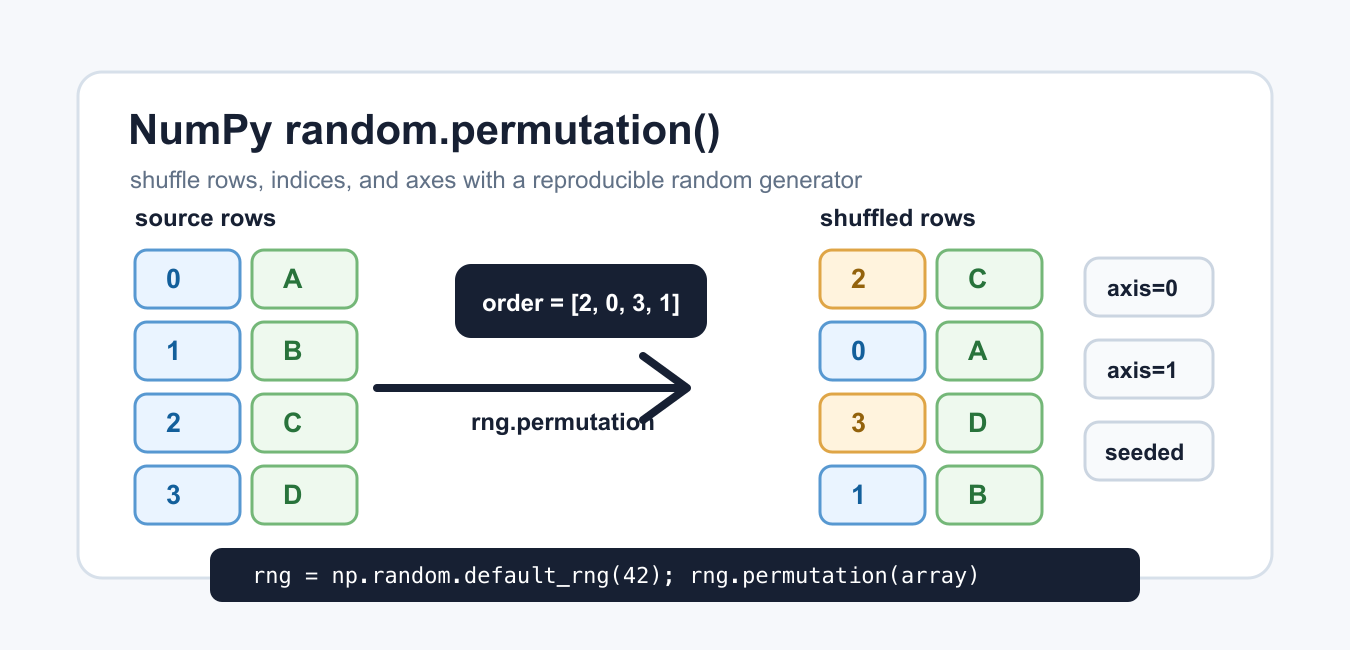
Choose permutation for a shuffled copy, use shuffle for in-place changes, and prefer a seeded Generator in new NumPy code.
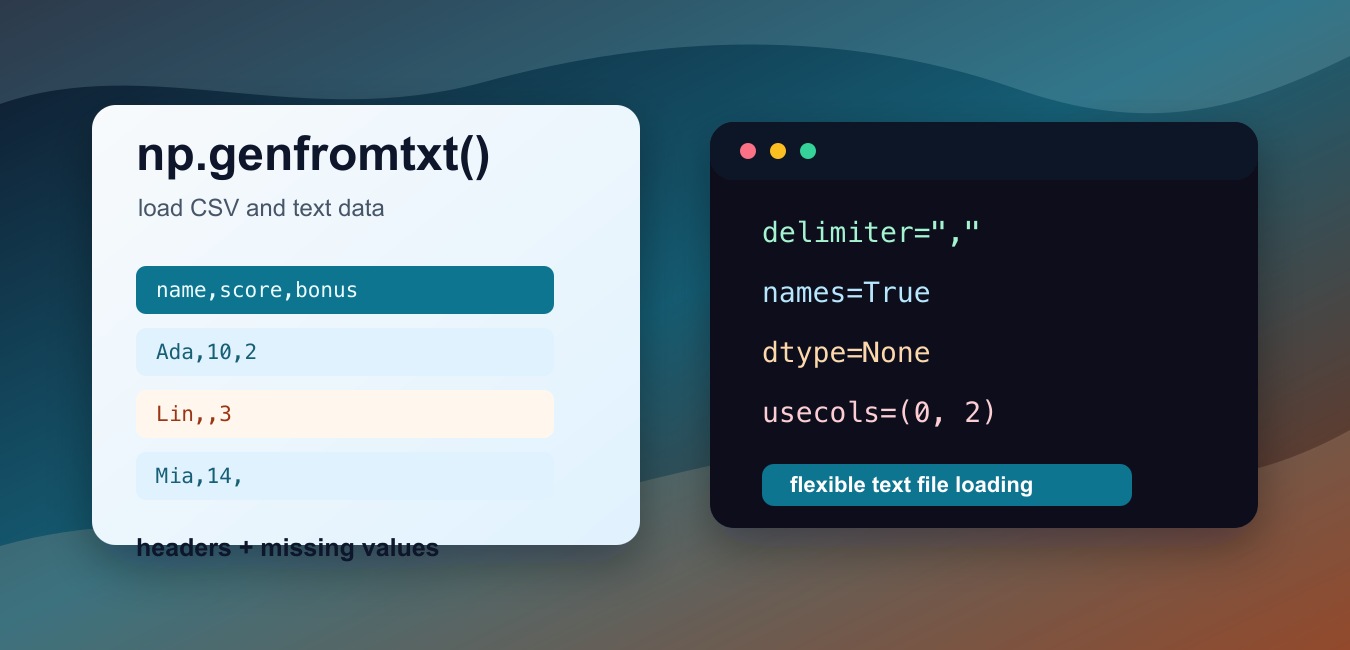
Use NumPy genfromtxt() to load delimited text with missing values, dtype control, column names, converters, and validation.
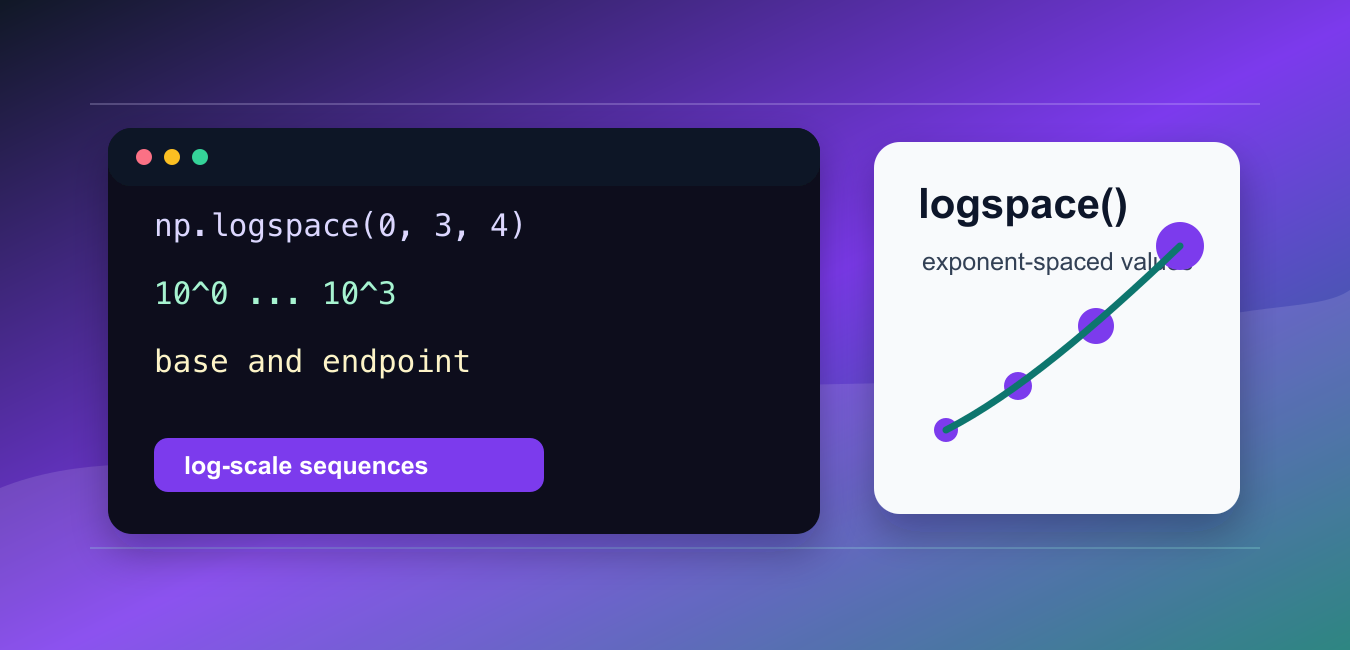
Use NumPy logspace to create logarithmically spaced values, choose start and stop exponents, control endpoint and base, and compare linspace.

Convert NumPy arrays to pandas DataFrames with shape, columns, index, dtype, missing values, copy behavior, and practical validation checks.

Use NumPy ravel() to flatten arrays, understand C, Fortran, and memory order, compare it with flatten() and reshape(), and avoid view-related surprises.

Use NumPy outer to combine every value in two one-dimensional arrays, understand output shapes, and choose outer, multiply, or broadcasting correctly.
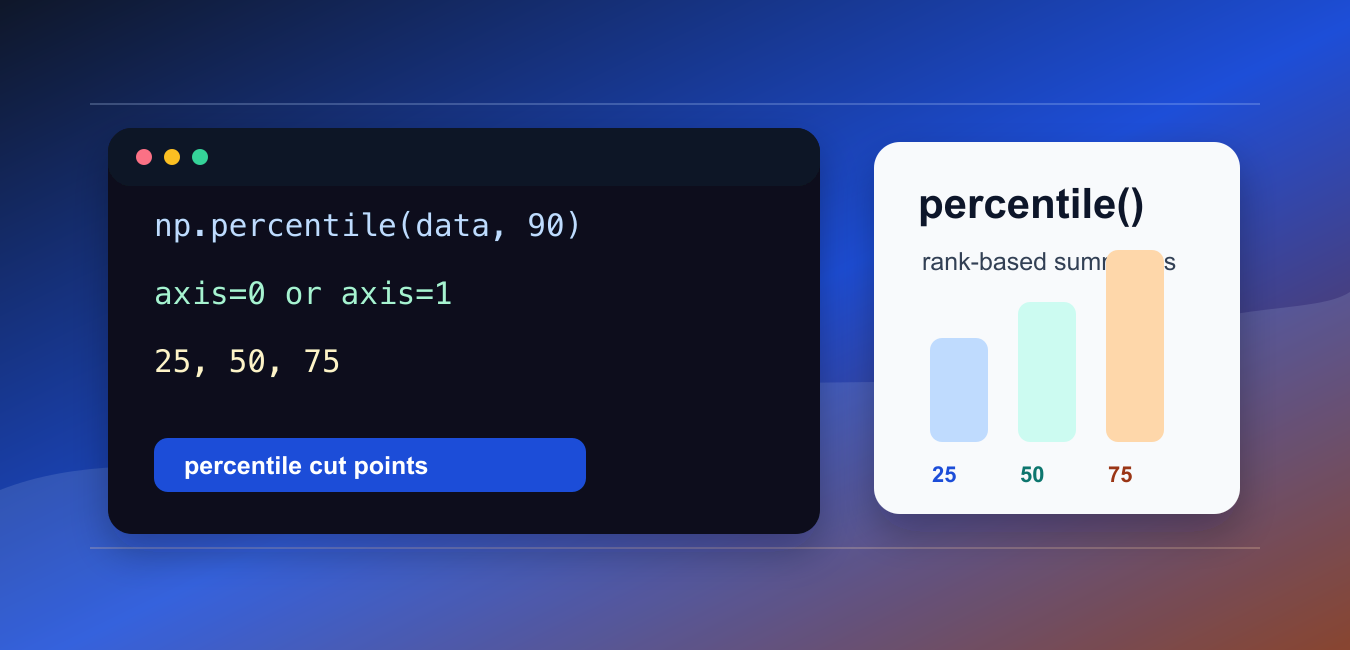
Calculate NumPy percentiles with q, axis, method, keepdims, and nanpercentile while understanding interpolation, shapes, and missing values.

Use NumPy flatten() to create a 1D copy, choose C or Fortran order, compare ravel() and reshape(-1), and avoid accidental mutations.

Calculate NumPy standard deviation with axis, ddof, keepdims, dtype, and NaN policies that match the statistical meaning of your data.