Fix TypeError: NumPy ndarray Object Is Not Callable
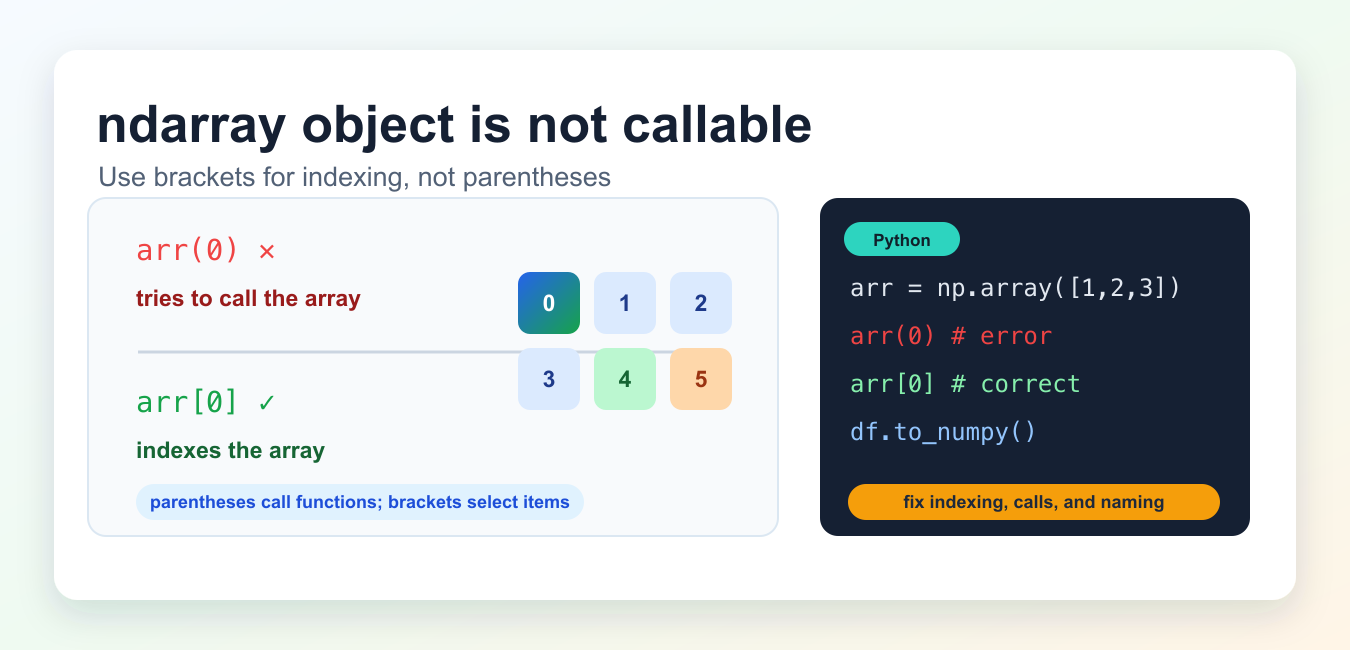
Fix NumPy ndarray object is not callable by using brackets for indexing, avoiding overwritten function names, and separating arrays from callable APIs.
Learn NumPy with array operations, random sampling, math functions, shapes, dtypes, plotting examples, and fixes for common NumPy errors.
Fix NumPy ndarray object is not callable by using brackets for indexing, avoiding overwritten function names, and separating arrays from callable APIs.

Choose rtol and atol from the measurement scale, understand broadcasting, and use assert_allclose for strict tests.
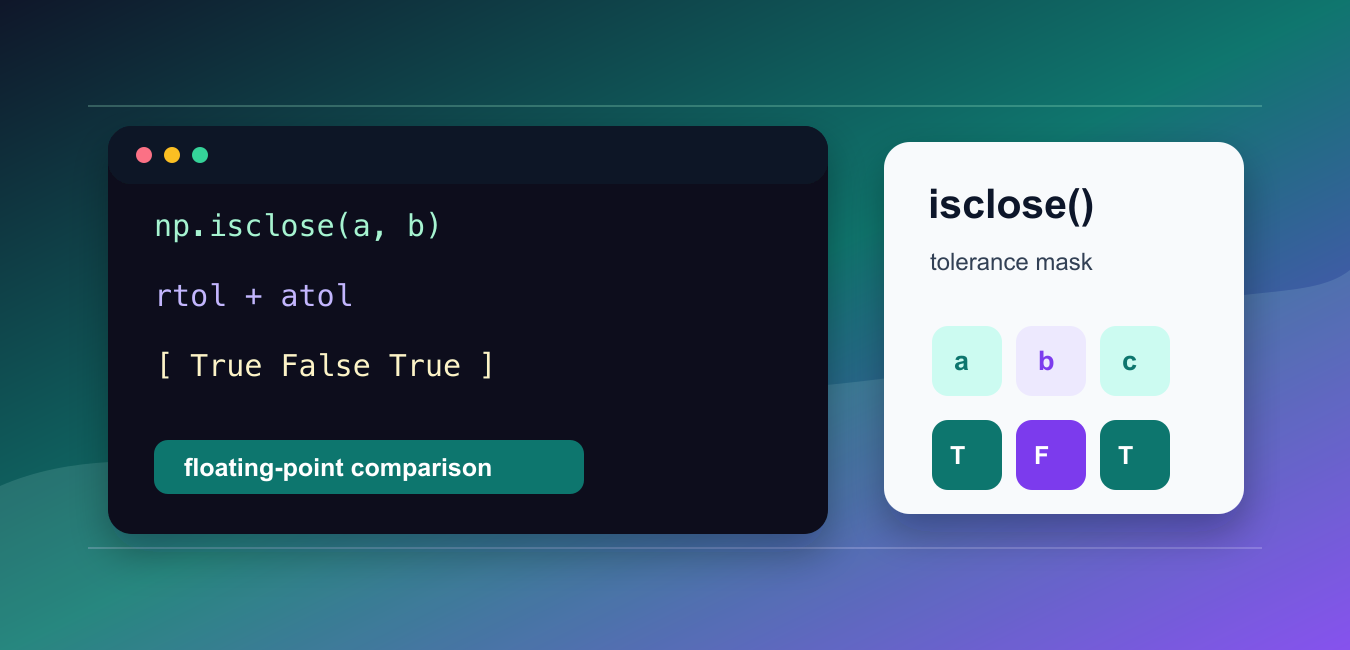
Use NumPy isclose() with rtol, atol, equal_nan, broadcasting, and domain-appropriate tolerances for floating-point comparisons.
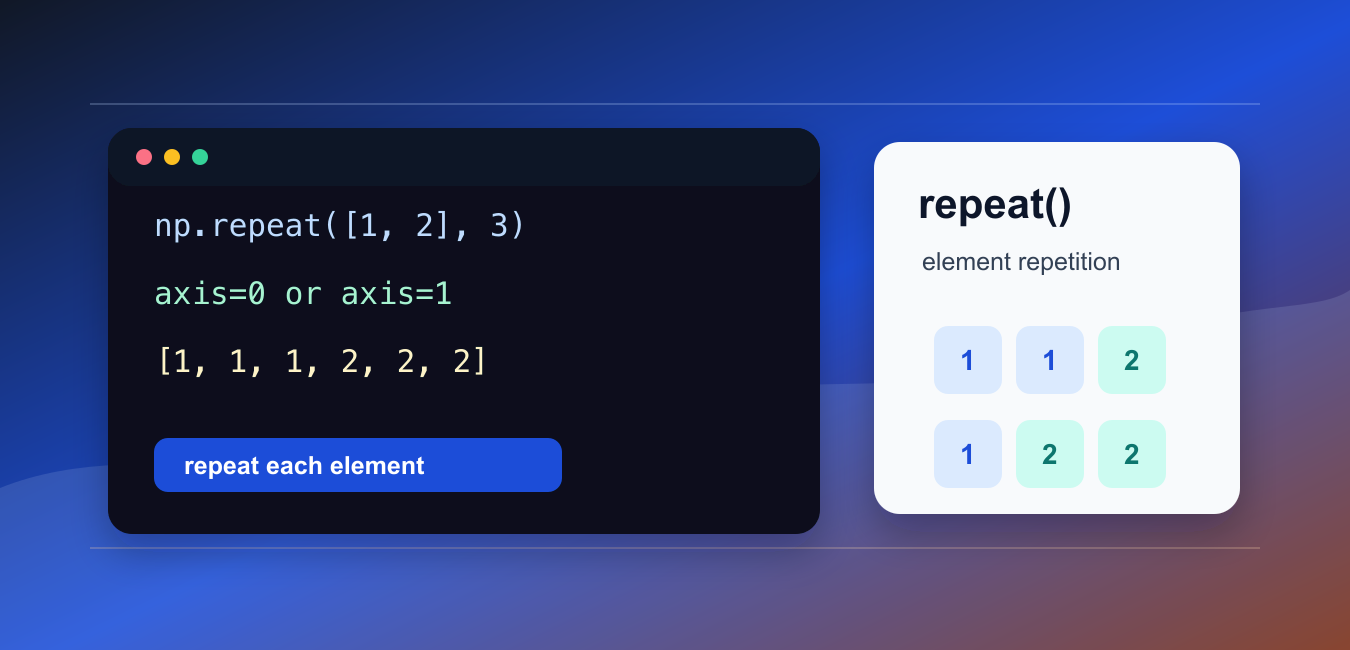
Use NumPy repeat to duplicate array elements with counts and axes, understand shape changes, dtype behavior, broadcasting limits, and tests.
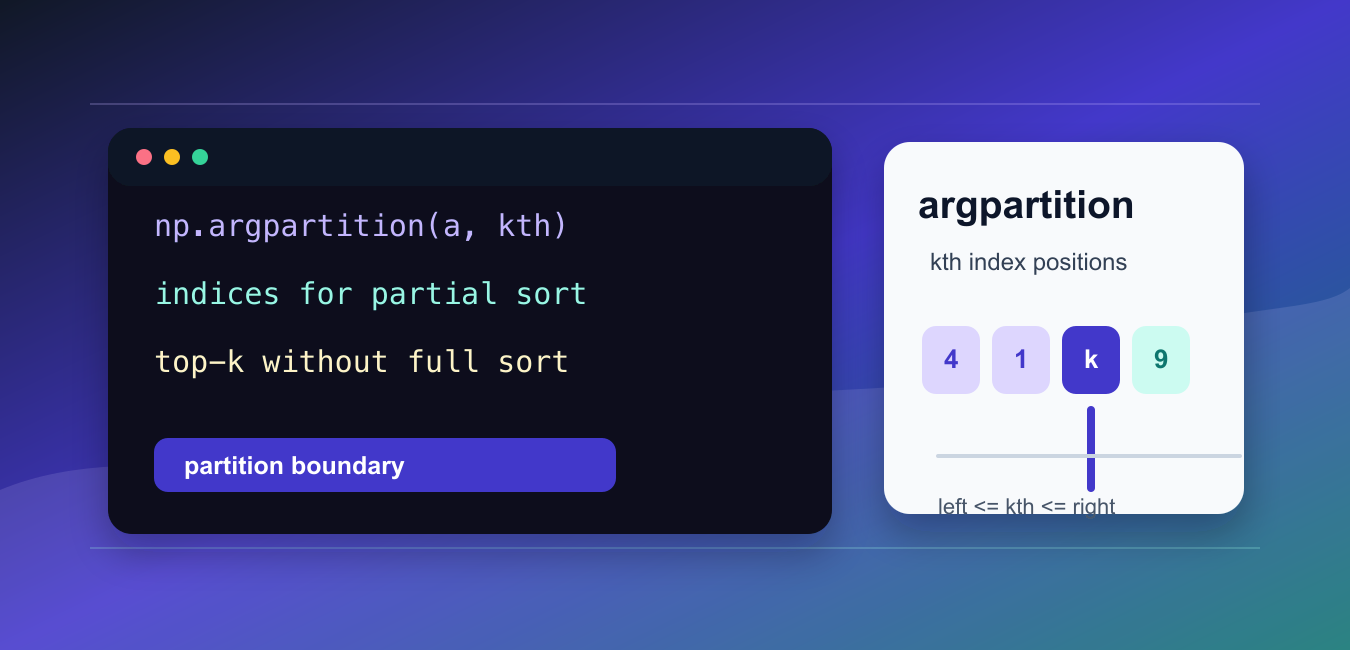
Use NumPy argpartition to find top-k or bottom-k indices without fully sorting an array, then sort the selected subset when ordered output is required.

Create NumPy identity matrices with identity() and eye(), choose dimensions and dtype, build diagonal masks, and avoid unexpected integer or boolean behavior.
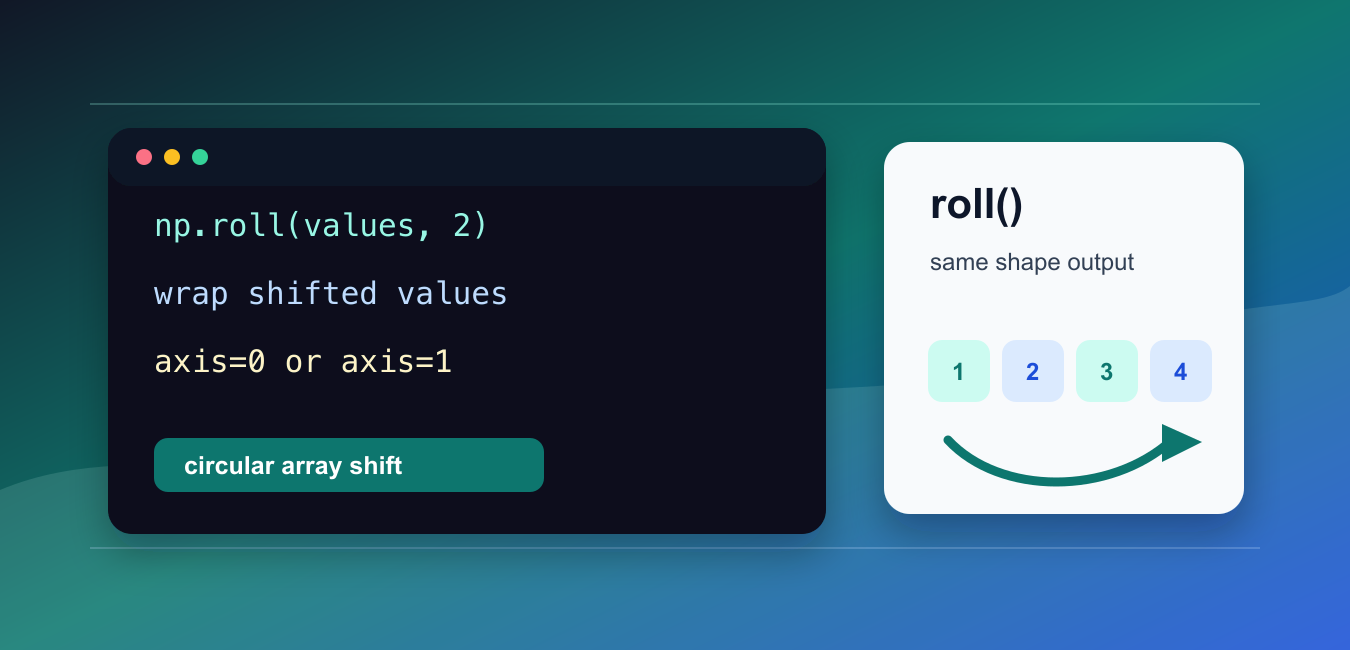
Use NumPy roll to rotate array values, choose an axis, combine shifts, and understand that wrapped elements re-enter at the opposite end.
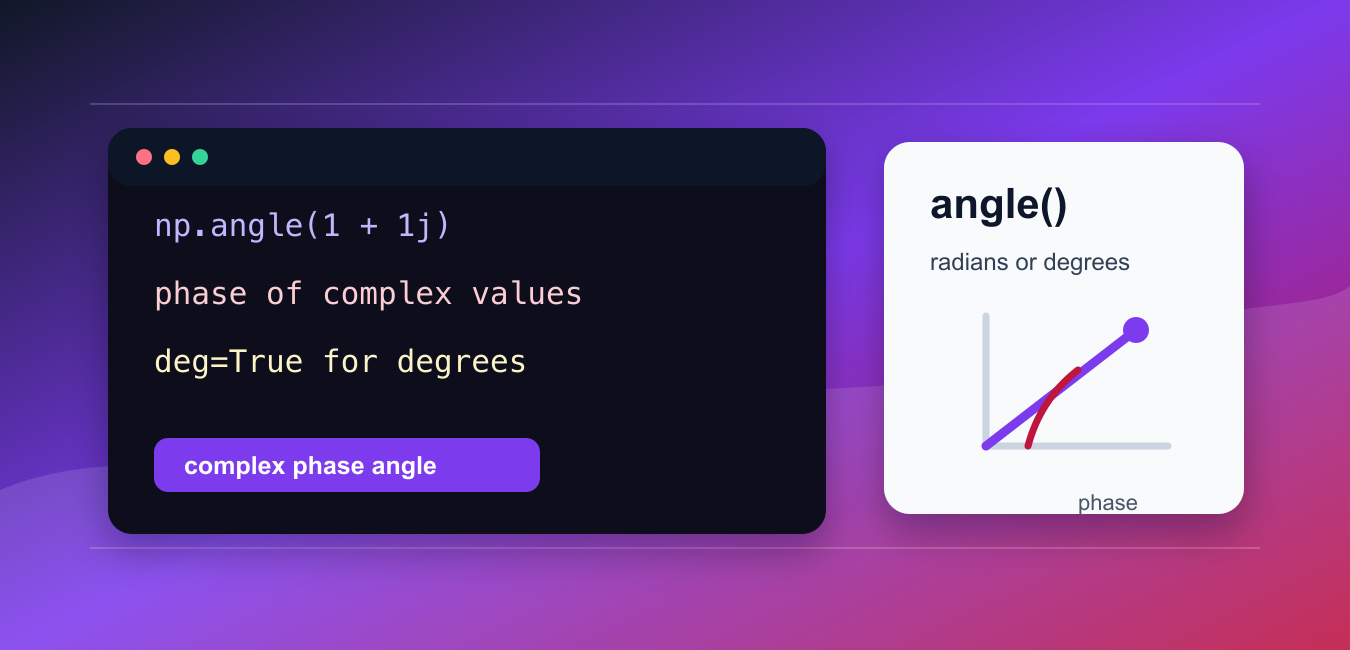
Use NumPy angle() to compute complex phase, choose radians or degrees, understand zero and negative values, and preserve array shapes.
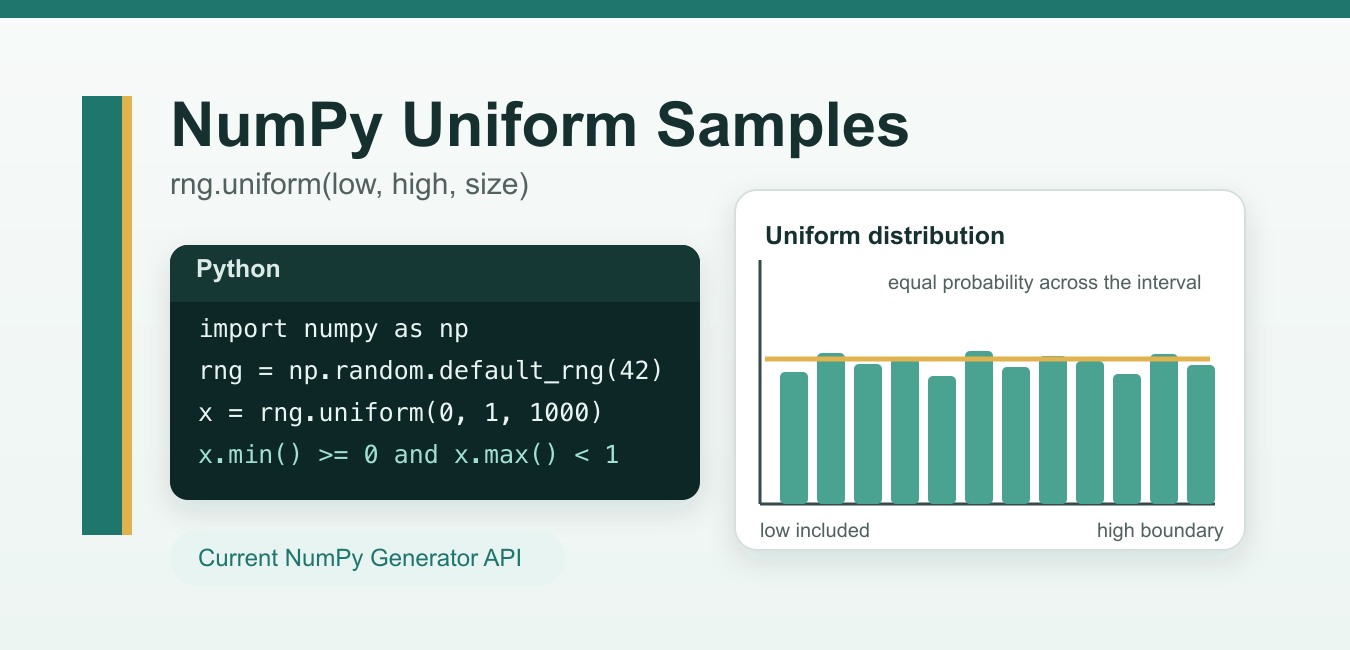
Generate uniform random samples with NumPy using ranges, sizes, modern generators, reproducible seeds, and numerical edge cases.
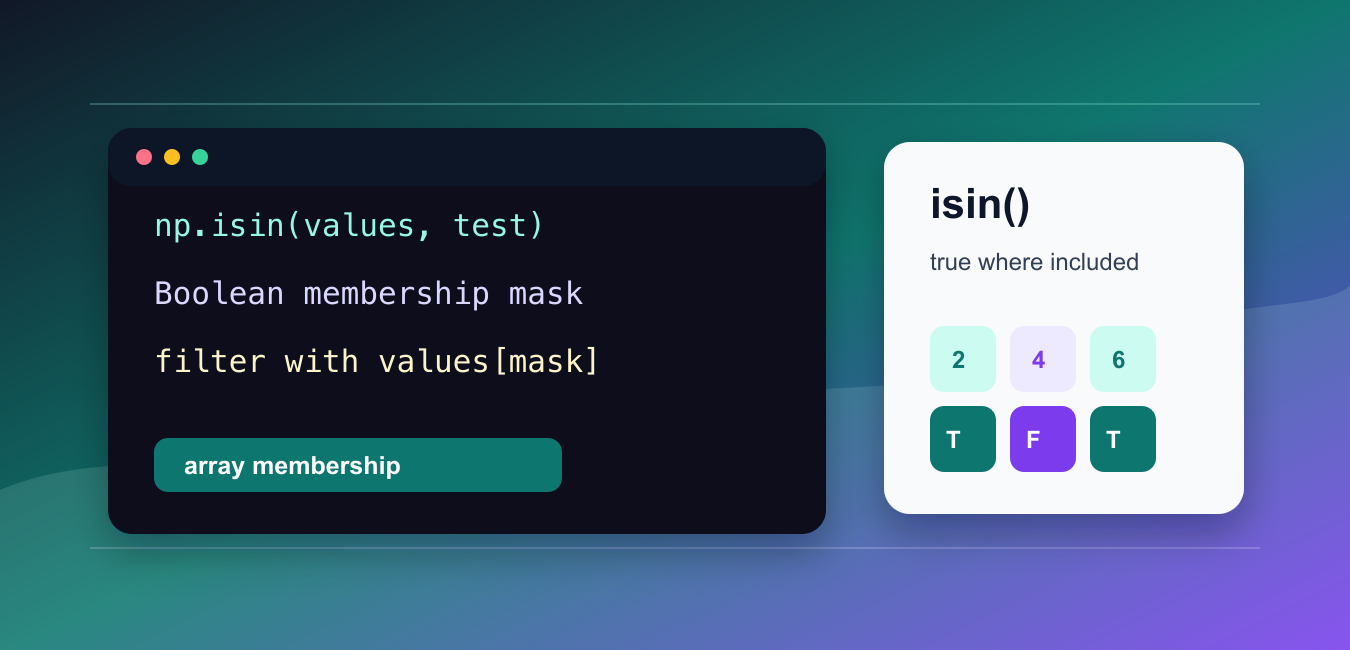
Use NumPy isin() for elementwise membership masks, inverted filters, multidimensional arrays, set inputs, and memory-aware comparisons.