NumPy loadtxt: Read Text Files into Arrays

Use NumPy loadtxt to read delimited text into arrays with dtype, delimiter, skiprows, usecols, unpack, converters, and validation for real-world files.
Learn NumPy with array operations, random sampling, math functions, shapes, dtypes, plotting examples, and fixes for common NumPy errors.
Use NumPy loadtxt to read delimited text into arrays with dtype, delimiter, skiprows, usecols, unpack, converters, and validation for real-world files.

Use numpy.log for elementwise natural logarithms while handling positive domains, zeros, negative values, dtypes, warnings, and stable numerical workflows.

Learn NumPy ogrid with open-grid shapes, broadcasting, masks, complex steps, and comparisons with mgrid and meshgrid.
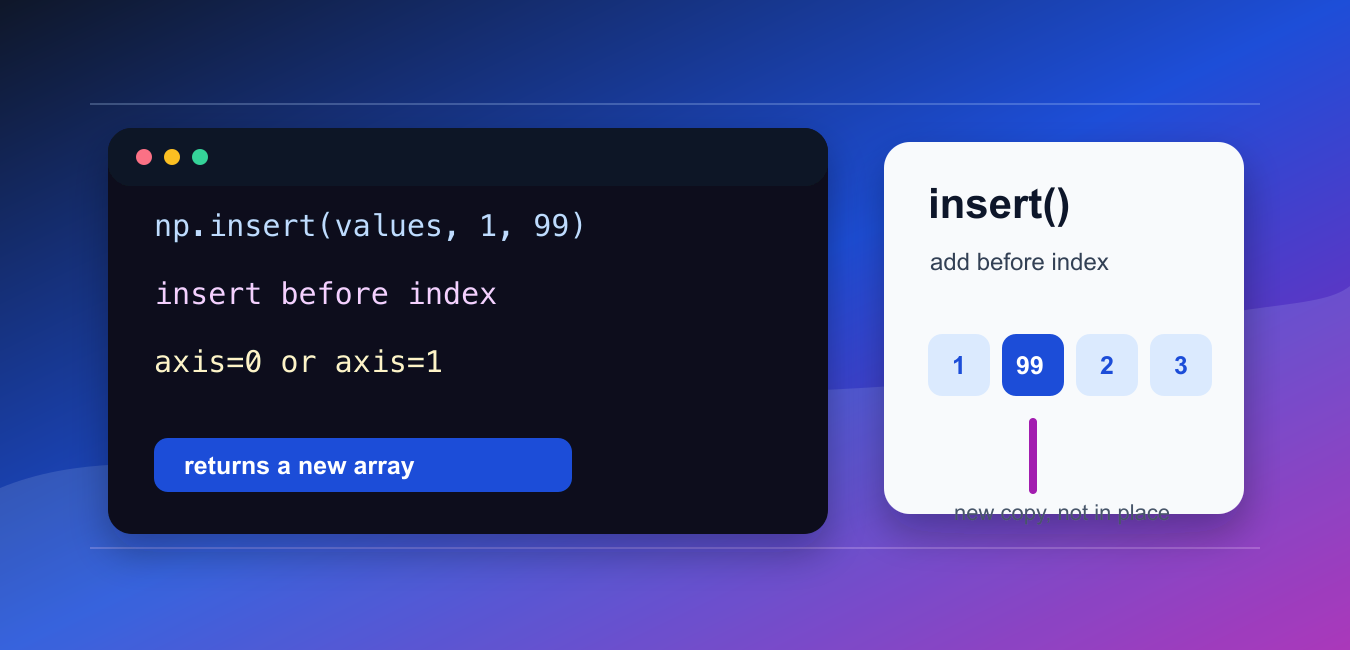
Use numpy.insert() to add values along an axis, understand its copy semantics, handle indices and broadcasting, and choose concatenate when it is clearer.
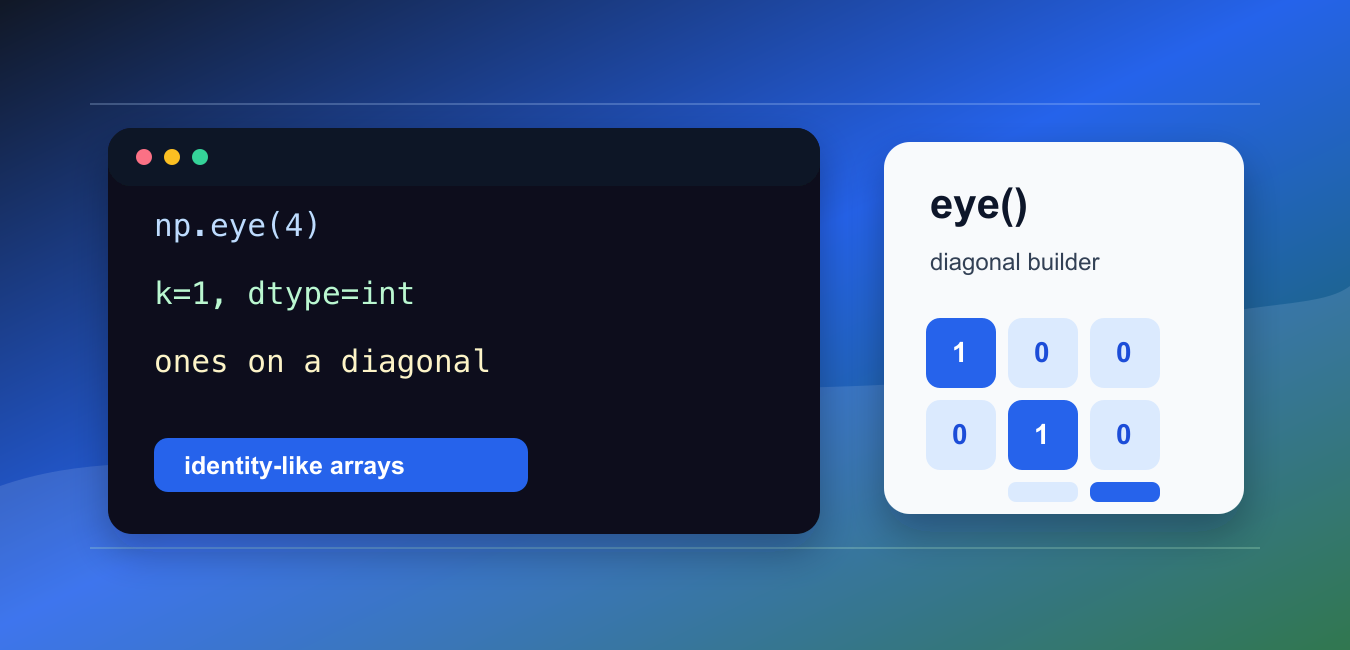
Use NumPy eye to create identity-like arrays with rows, columns, diagonal offsets, dtype control, and memory-aware initialization.

Use NumPy diff() for first and higher-order differences with axes, prepend, append, datetime values, booleans, and unsigned integers.
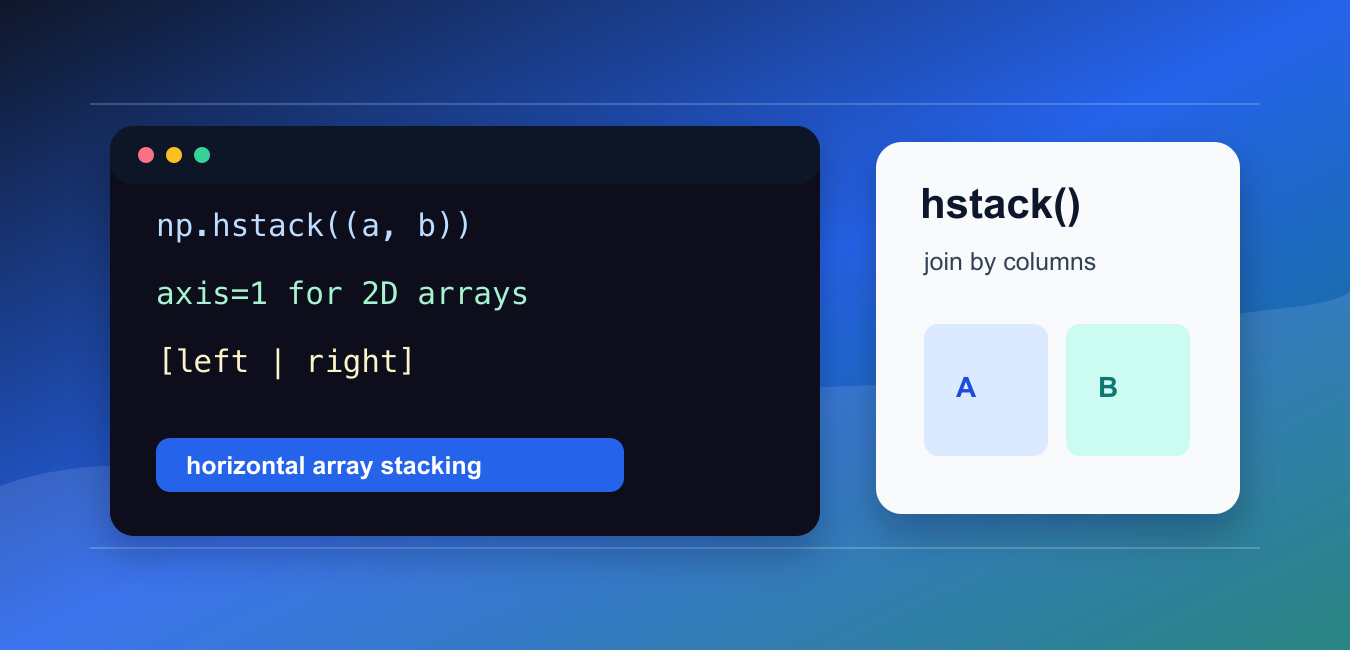
Use NumPy hstack() to join vectors and matrices horizontally, understand one- and two-dimensional shape rules, and avoid mismatched layouts.
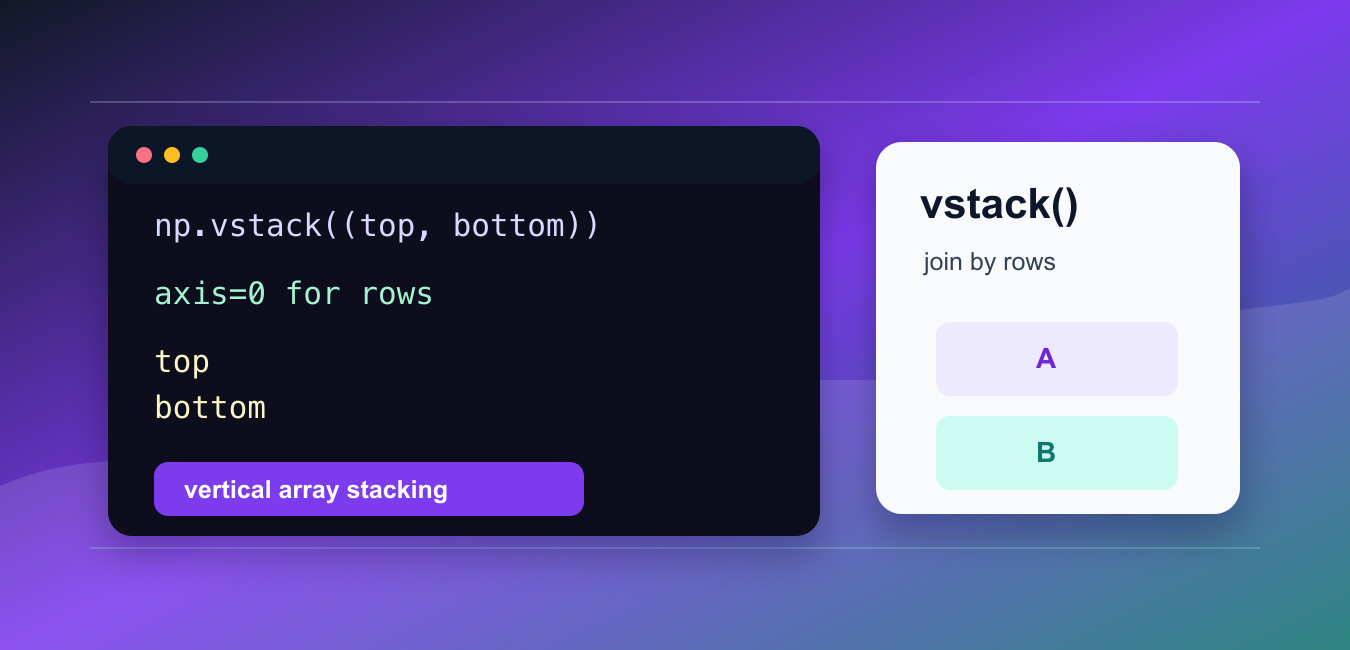
Use NumPy vstack() to combine arrays by rows, understand one-dimensional promotion, validate shapes, and choose concatenate or stack when the operation differs.
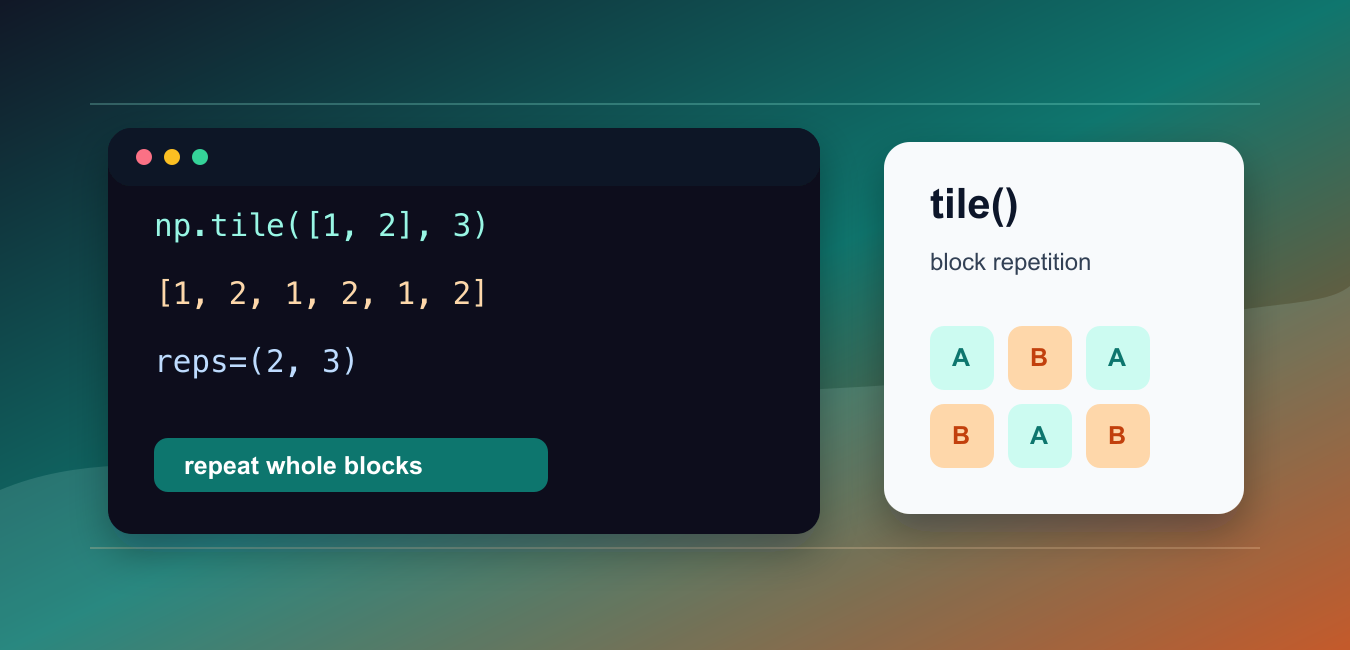
Repeat NumPy array patterns with tile(), understand reps and shape promotion, compare repeat(), and avoid unnecessary copies for arithmetic.

Use NumPy squeeze() to remove axes of length one, select an axis deliberately, understand shape changes, and avoid dimension errors.