NumPy convolve(): 1D Convolution Modes and Examples

Use NumPy convolve for one-dimensional signals, understand full same and valid modes, choose operand order, and avoid unexpected output lengths.
Learn NumPy with array operations, random sampling, math functions, shapes, dtypes, plotting examples, and fixes for common NumPy errors.
Use NumPy convolve for one-dimensional signals, understand full same and valid modes, choose operand order, and avoid unexpected output lengths.
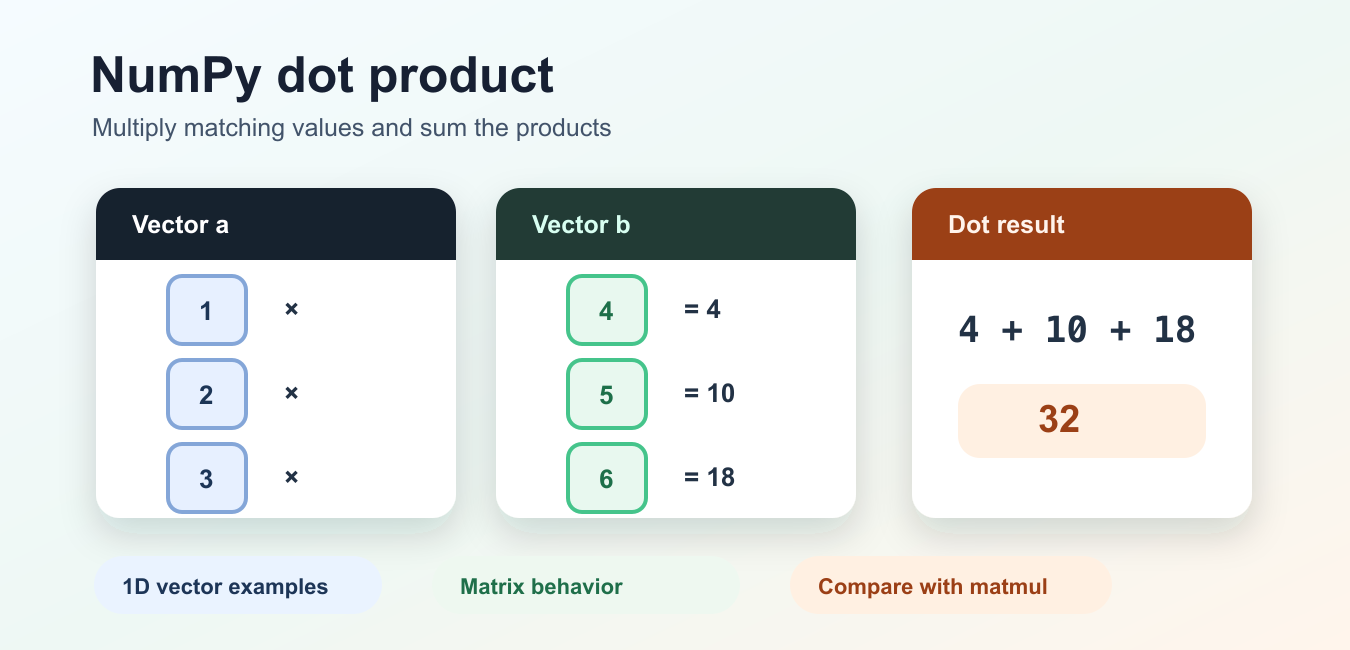
Use np.dot() correctly by checking dimensions, separating vector, matrix, and element-wise multiplication, and choosing the clearest NumPy API.

Calculate variance with NumPy, choose population or sample degrees of freedom, reduce along an axis, and handle missing values without silent statistical errors.
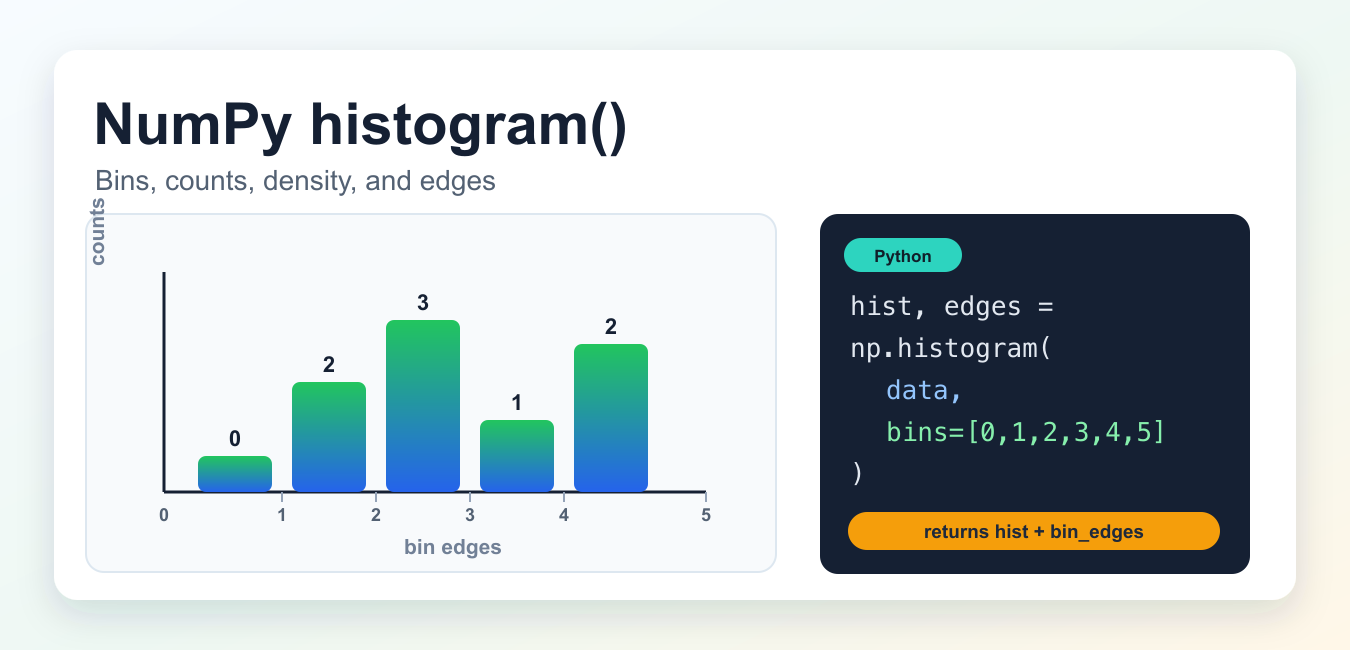
Use NumPy histogram() to choose bins, ranges, density, weights, and edges while interpreting counts and plotting distributions correctly.
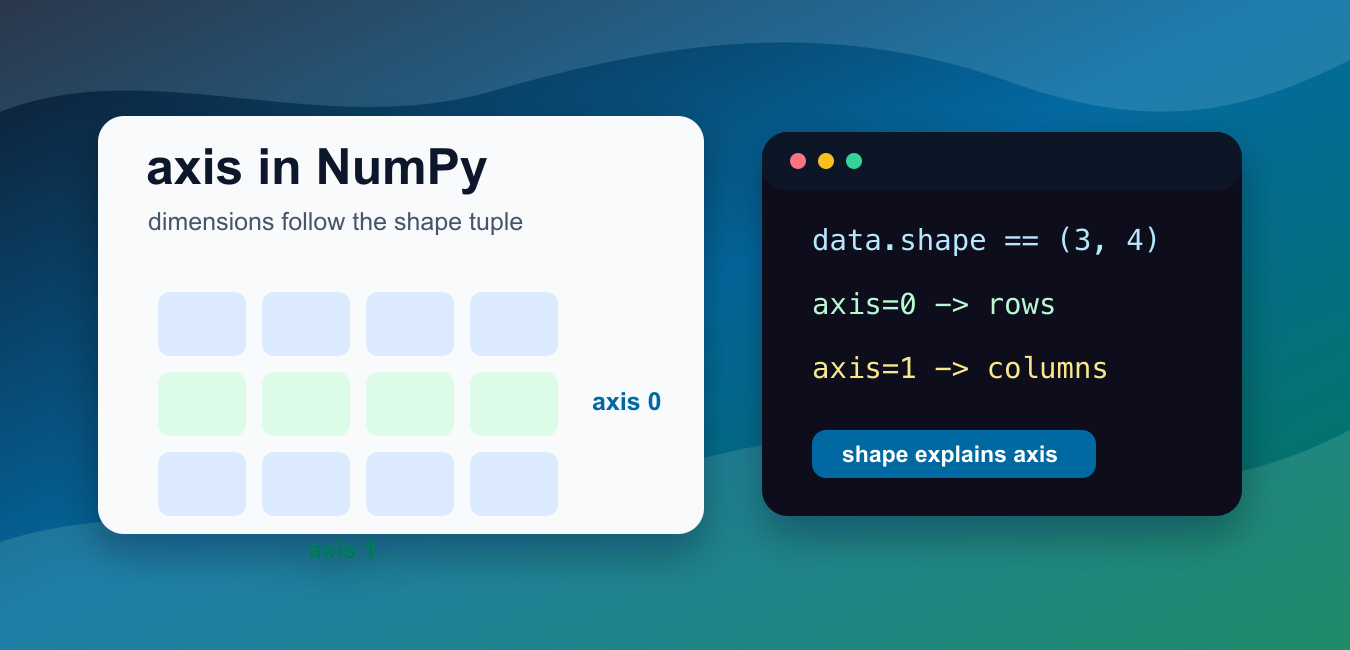
Understand NumPy axes with shapes, axis 0 and 1 reductions, negative axes, keepdims, and examples that prevent dimension mistakes.
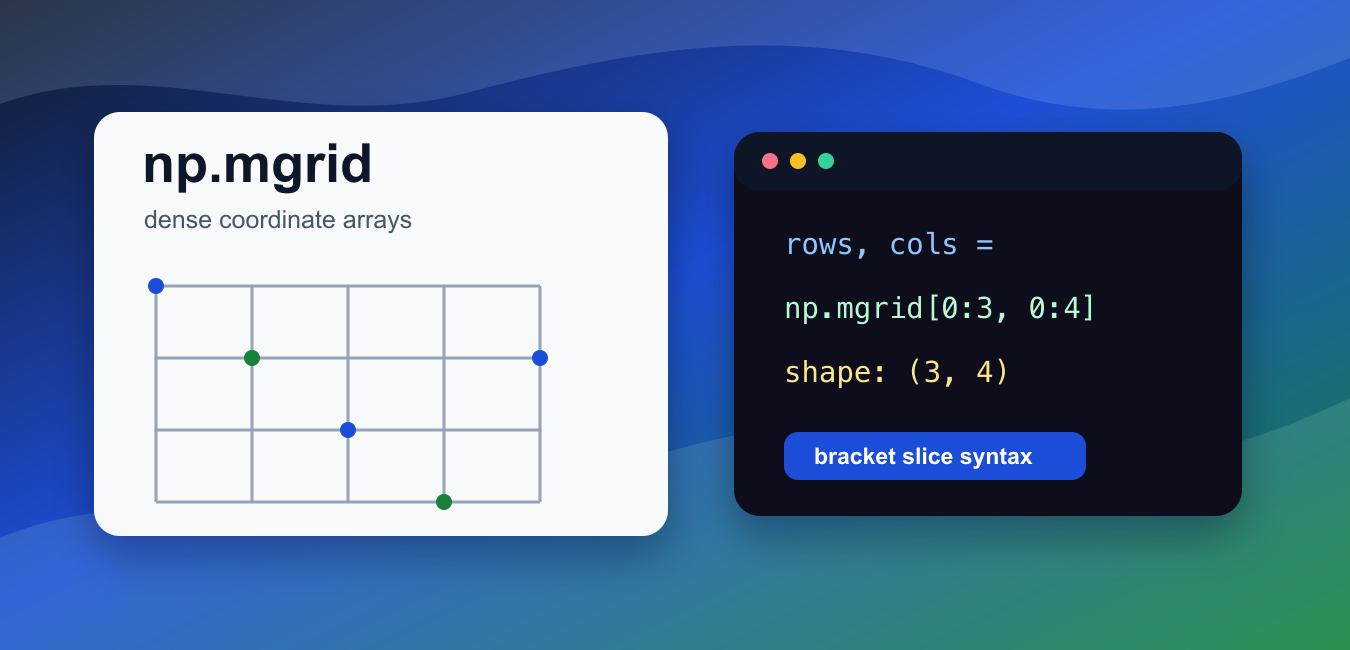
Use NumPy mgrid for dense coordinate grids, understand integer and complex slice steps, compare ogrid and meshgrid, and manage memory.

Use NumPy digitize to assign values to bins, understand right boundaries, handle out-of-range values, and convert bin indices into labels.
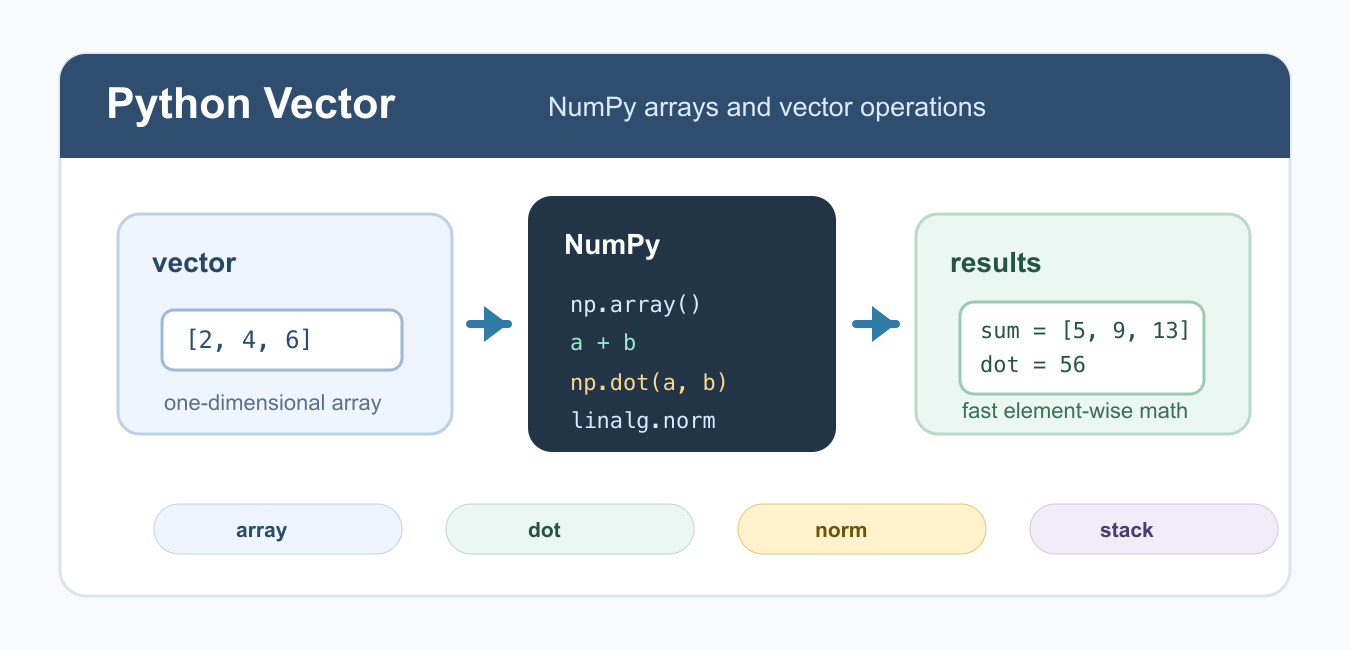
Work with Python vectors using NumPy arrays, element-wise math, dot products, norms, shapes, broadcasting, and validation.

Use NumPy tanh element-wise on scalars and arrays, understand its range, dtype behavior, broadcasting, overflow warnings, and stable tests.

Use NumPy trace to sum matrix diagonals with offsets and axes, understand rectangular arrays, complex values, dtypes, and equivalent diagonal operations.