How to Find the Maximum of Two Numbers in Python
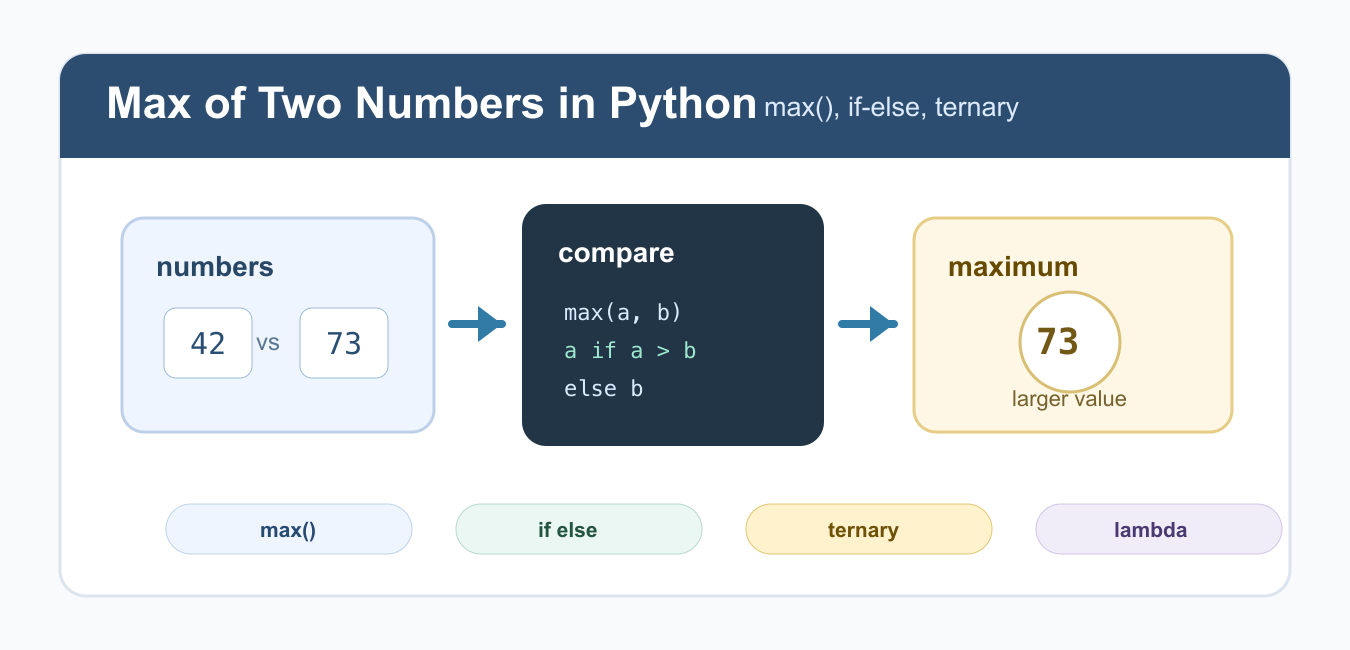
Compare two Python numbers with max(), conditional expressions, and validation while handling ties, numeric types, and readable code.
Browse Python tutorials for beginners and working developers, including syntax, libraries, examples, projects, and real problem-solving guides.
Compare two Python numbers with max(), conditional expressions, and validation while handling ties, numeric types, and readable code.
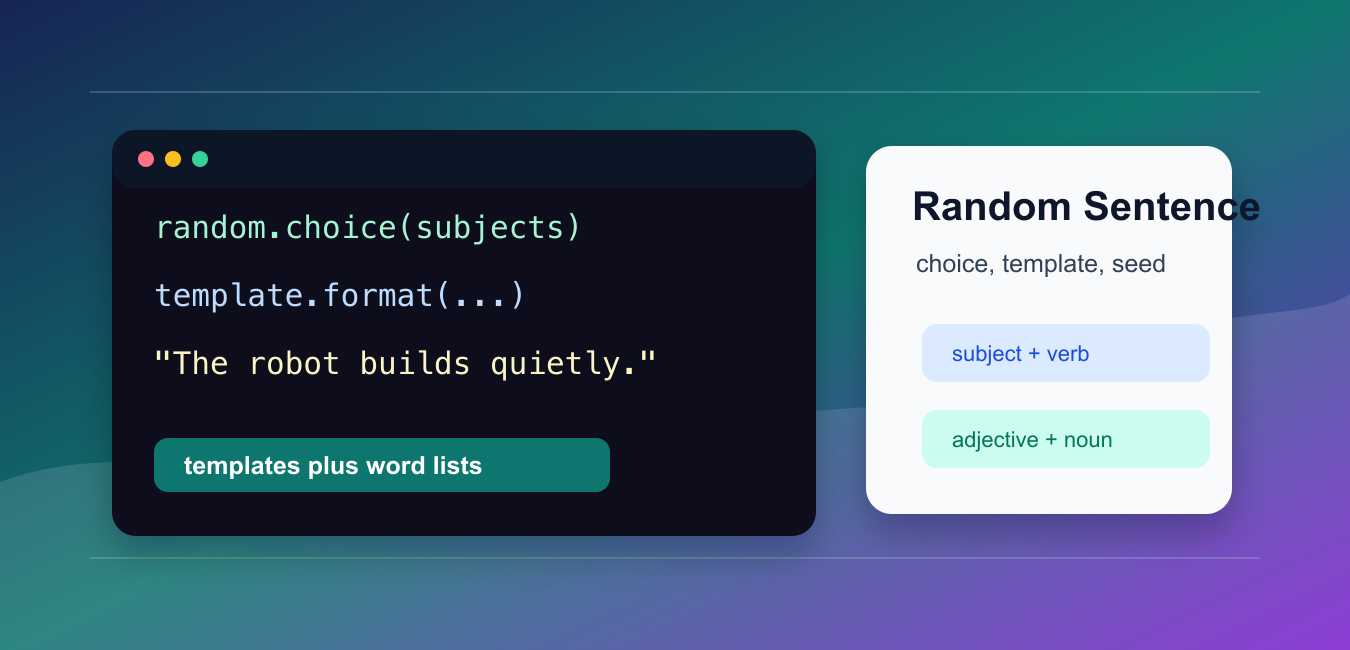
Generate random sentences in Python with word lists, templates, reproducible tests, grammar constraints, and the difference between random and secure selection.

Run a module through Python’s import system, use -m pip and -m venv reliably, and understand how working directories affect resolution.
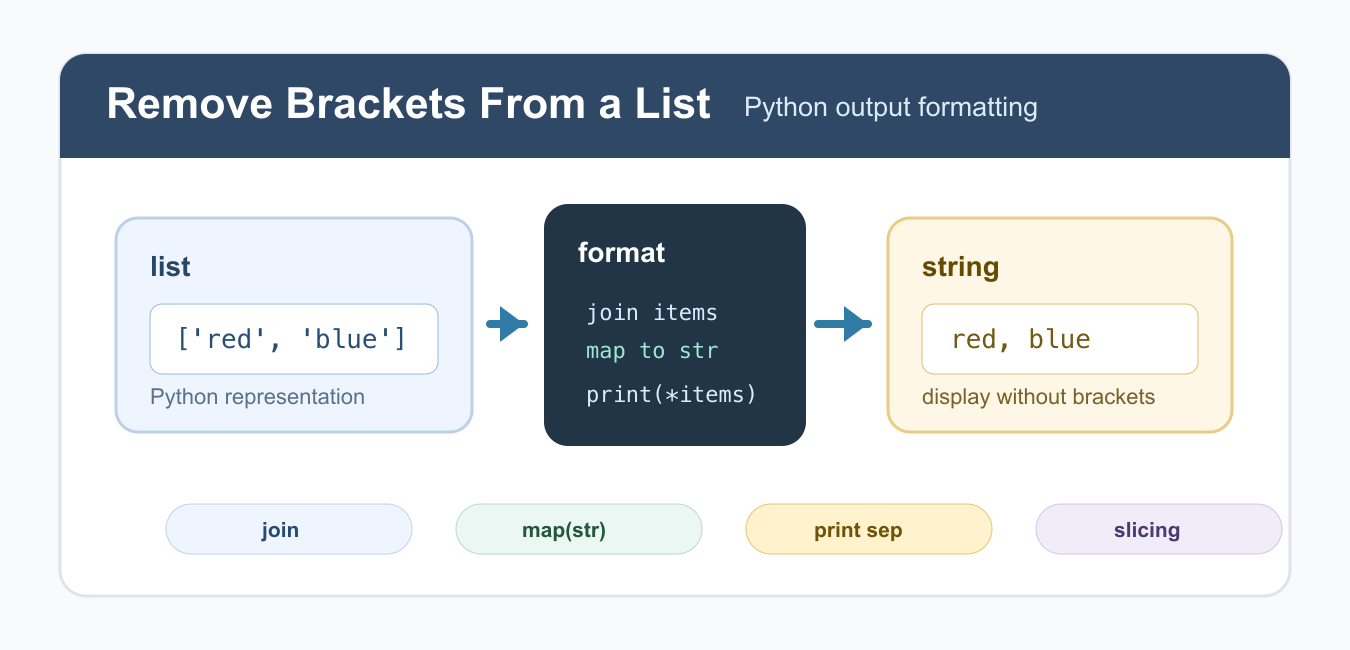
Remove brackets from a Python list for display with join, map, and formatting while preserving the original list and handling mixed values safely.
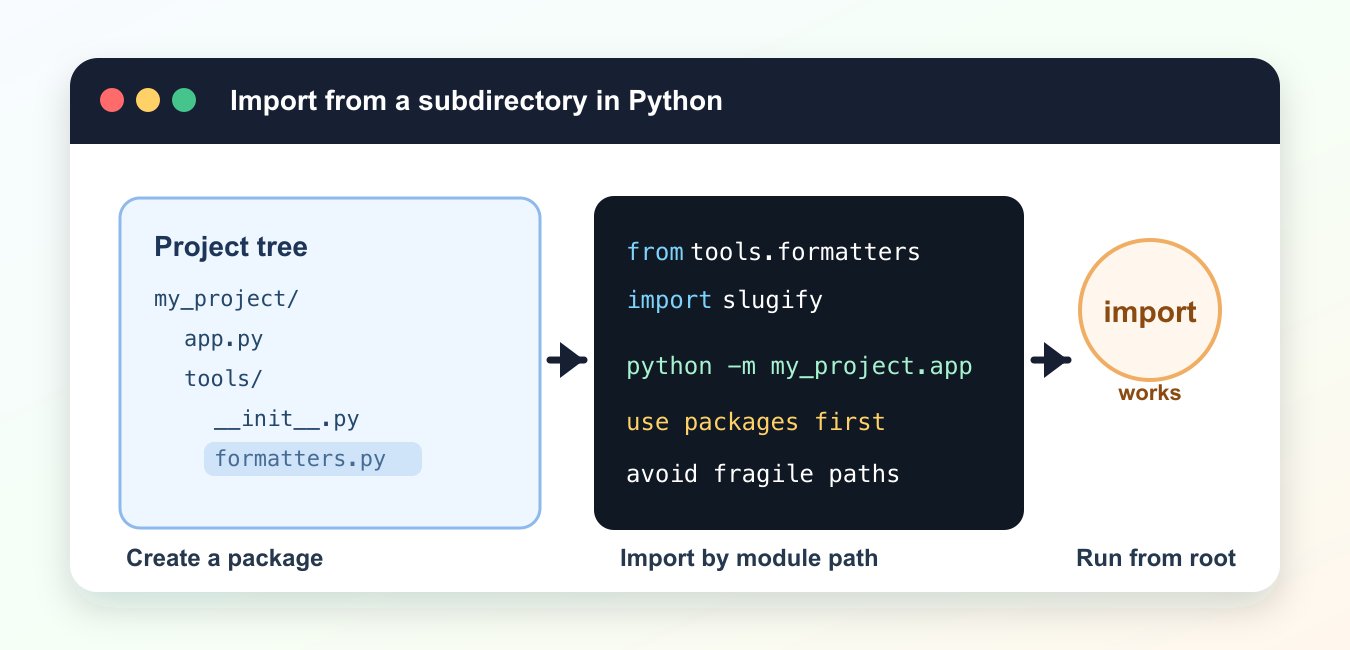
Import Python modules from a subdirectory using packages, __init__.py, absolute and relative imports, PYTHONPATH, and python -m without fragile path hacks.

Calculate a sum of squares in Python with generator expressions, formulas, math.fsum, NumPy arrays, and a clear distinction from squaring a sum.

Understand Python’s tilde operator as integer bitwise inversion, including the -(x + 1) rule and custom __invert__ methods.
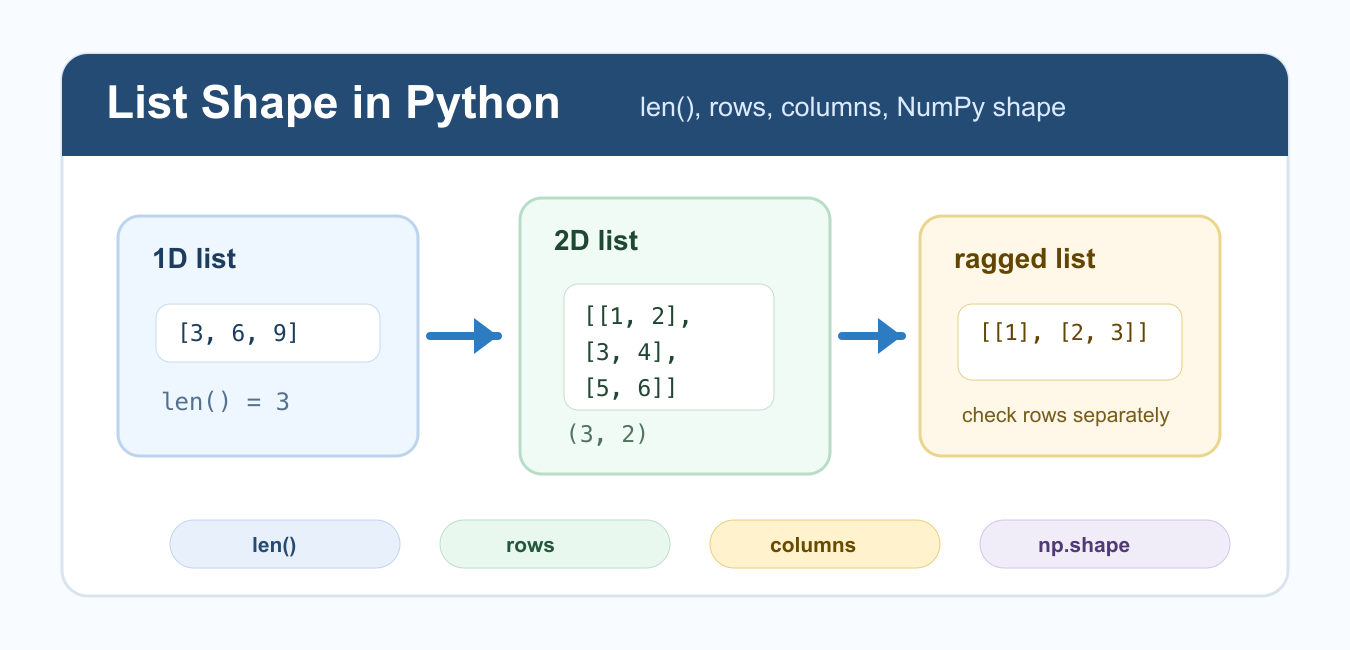
Find the shape of Python lists with len, validate nested rows, distinguish ragged data, and convert rectangular lists to NumPy arrays safely.
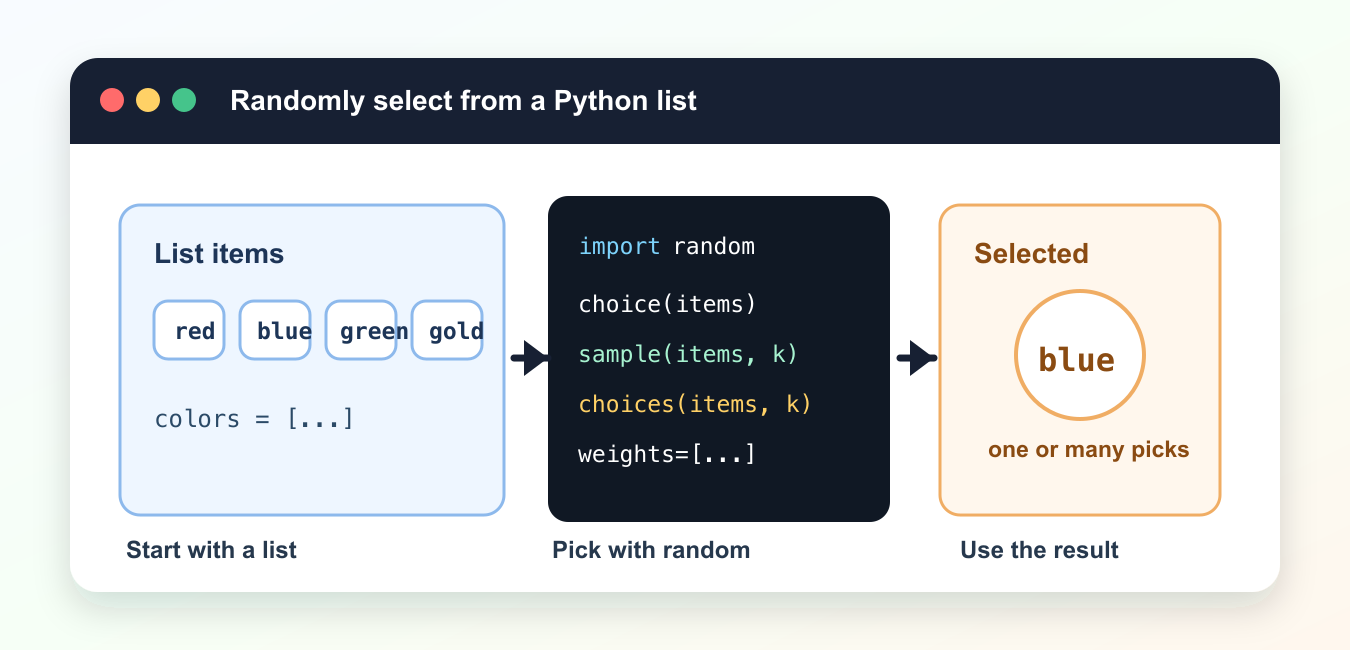
Randomly select one or more Python list items with choice(), sample(), choices(), or secrets.choice(), including empty-list and weighted-selection rules.
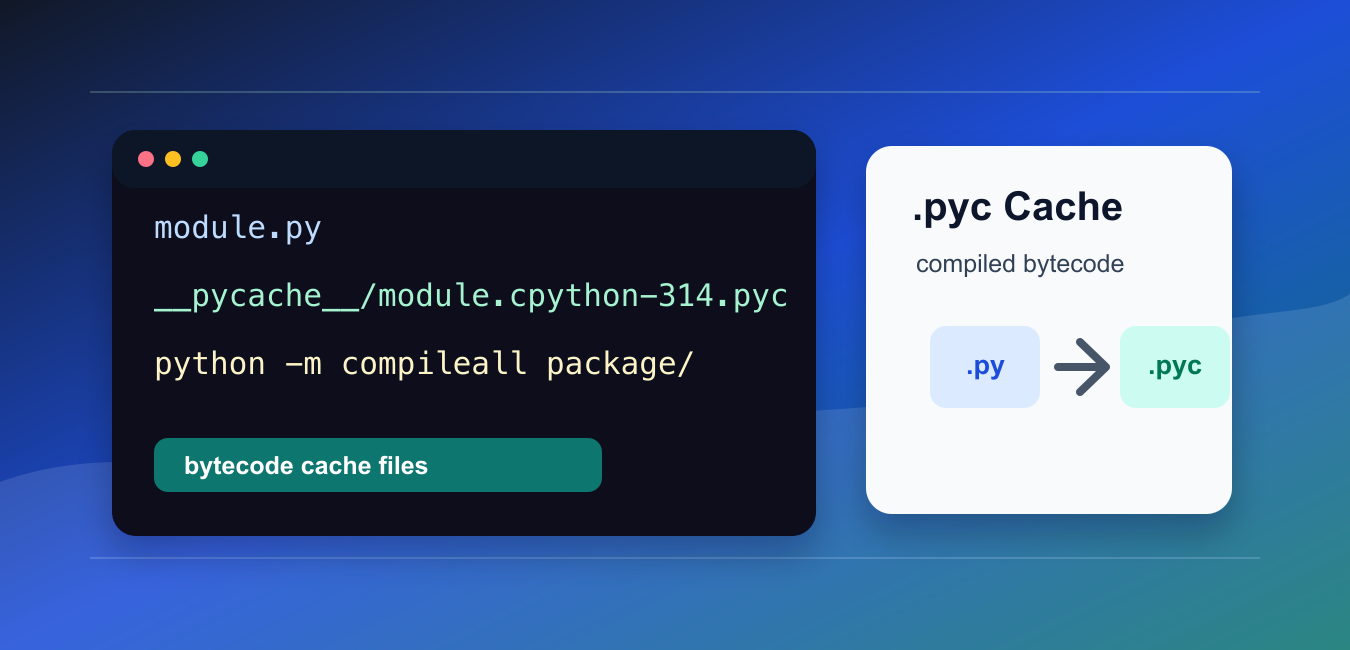
Understand Python bytecode caches, __pycache__, .pyc invalidation, py_compile, compileall, and why source files remain authoritative.