Adjacency List in Python: Directed, Weighted, BFS, and DFS Graphs
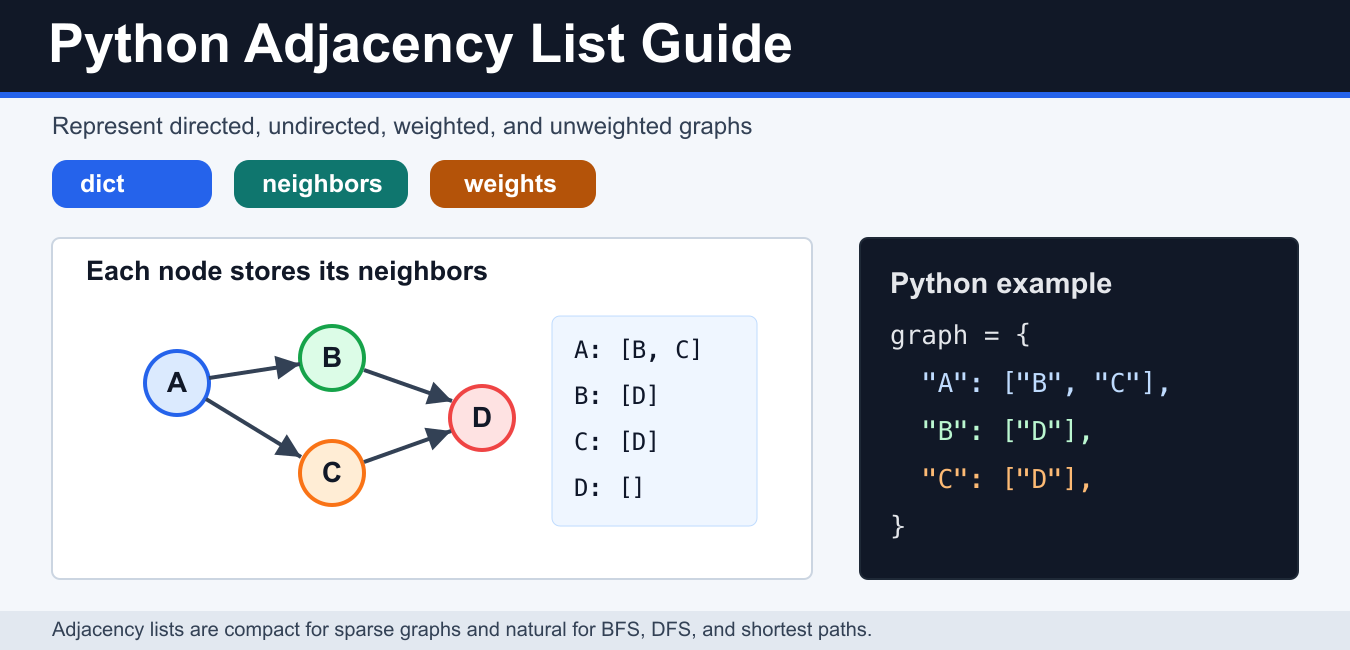
Represent Python graphs with adjacency lists, add directed or weighted edges, avoid duplicates, and traverse with BFS or DFS safely.
Browse Python tutorials for beginners and working developers, including syntax, libraries, examples, projects, and real problem-solving guides.
Represent Python graphs with adjacency lists, add directed or weighted edges, avoid duplicates, and traverse with BFS or DFS safely.

Check whether a file exists in Python with pathlib and os.path, while distinguishing files, directories, permissions, and race conditions.
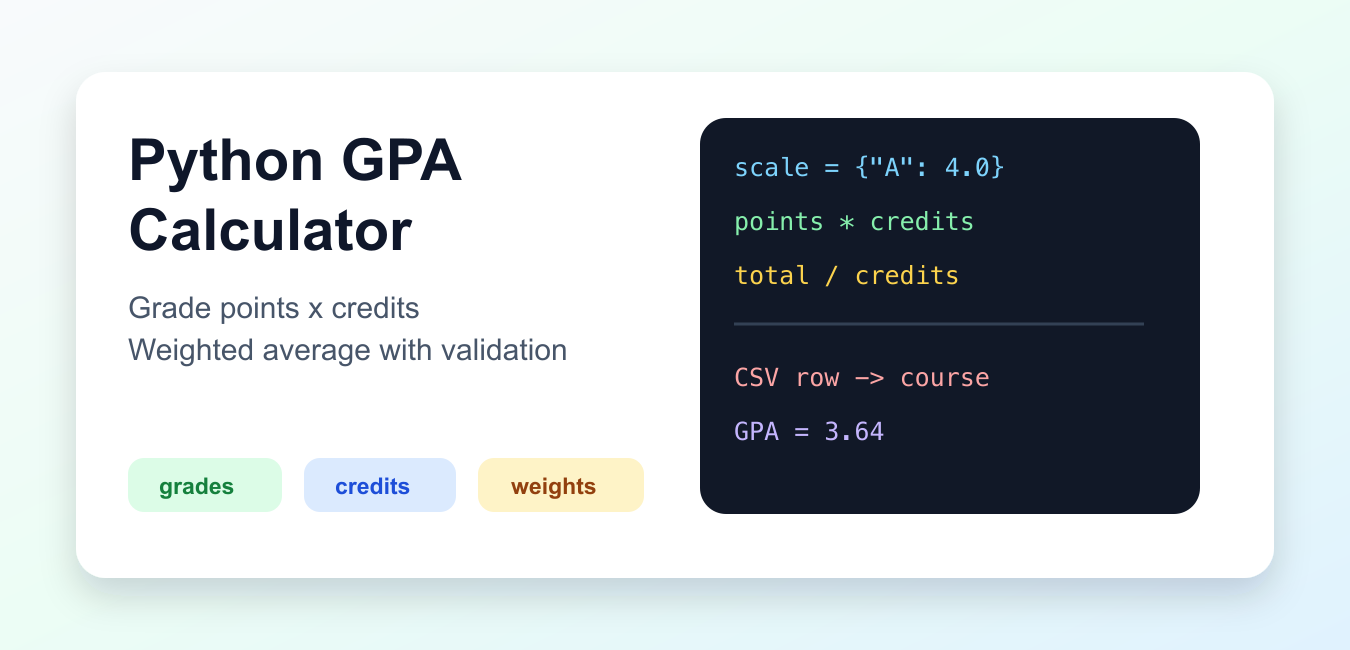
Build a Python GPA calculator with grade points, credit-hour weighting, input validation, rounding, and a clear reusable design.
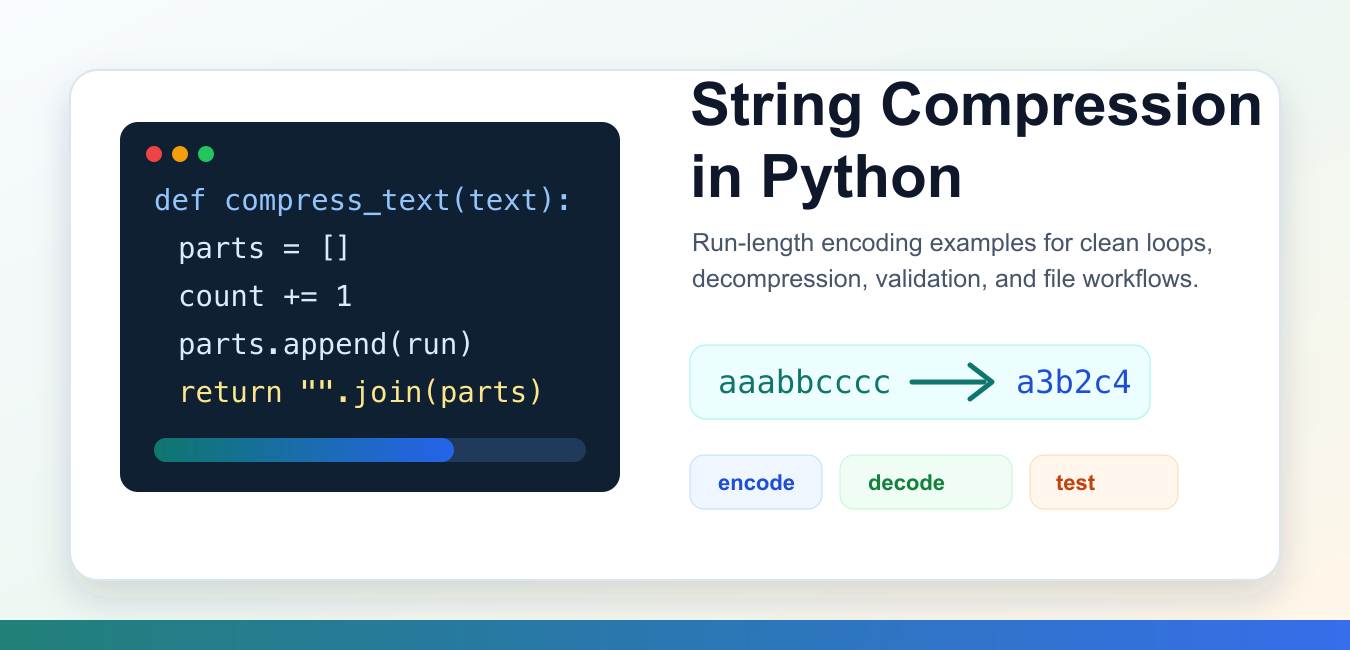
Learn when run-length encoding helps repeated text, how to decode it safely, and when a general compressor such as zlib is more appropriate.
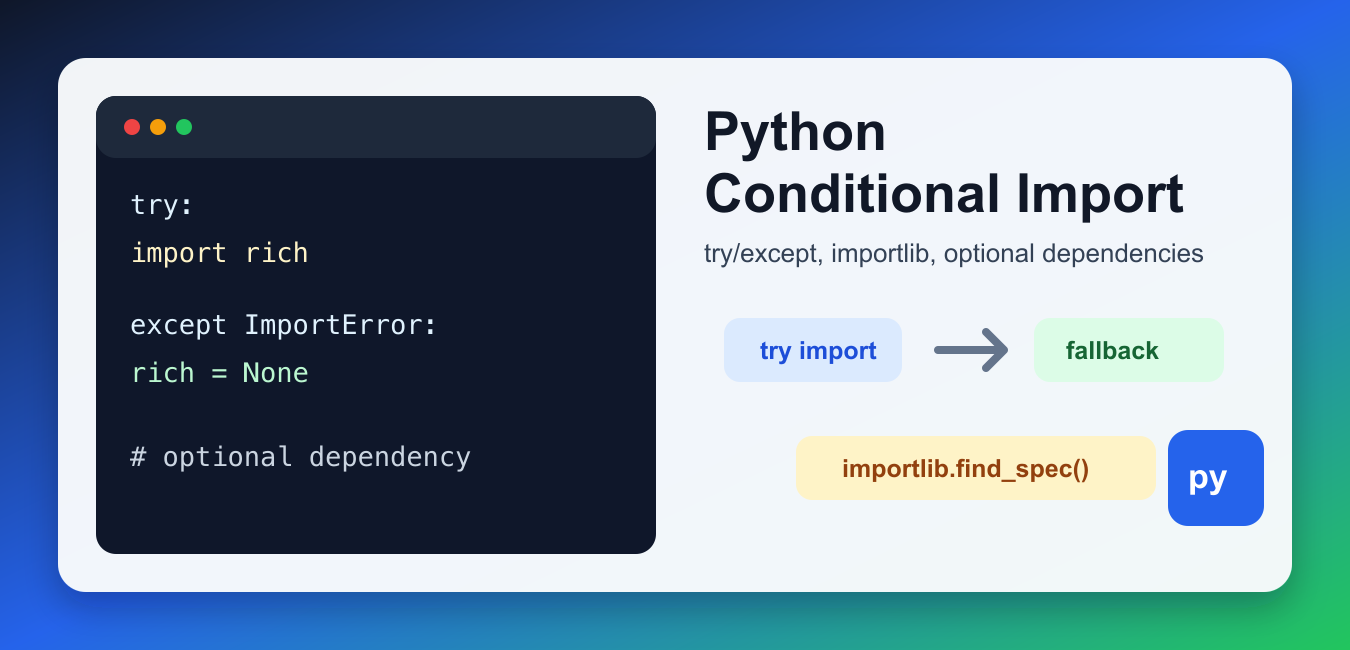
Make optional Python dependencies explicit with narrow import handling, importlib, and helpful errors at the feature boundary.
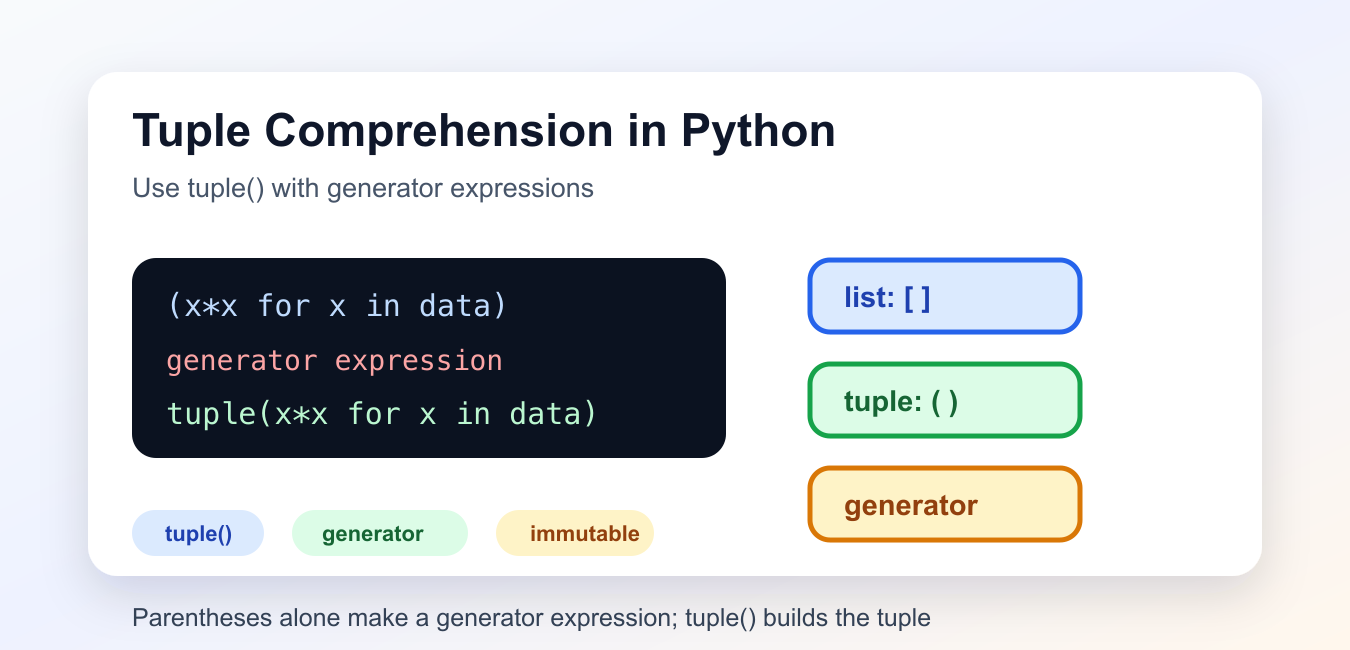
Python has no dedicated tuple-comprehension syntax. Learn how generator expressions, tuple(), and tuple unpacking work, with readable examples and pitfalls.

Understand Python 2 xrange(), replace it with Python 3 range(), convert to list only when needed, and migrate loops without wasting memory.
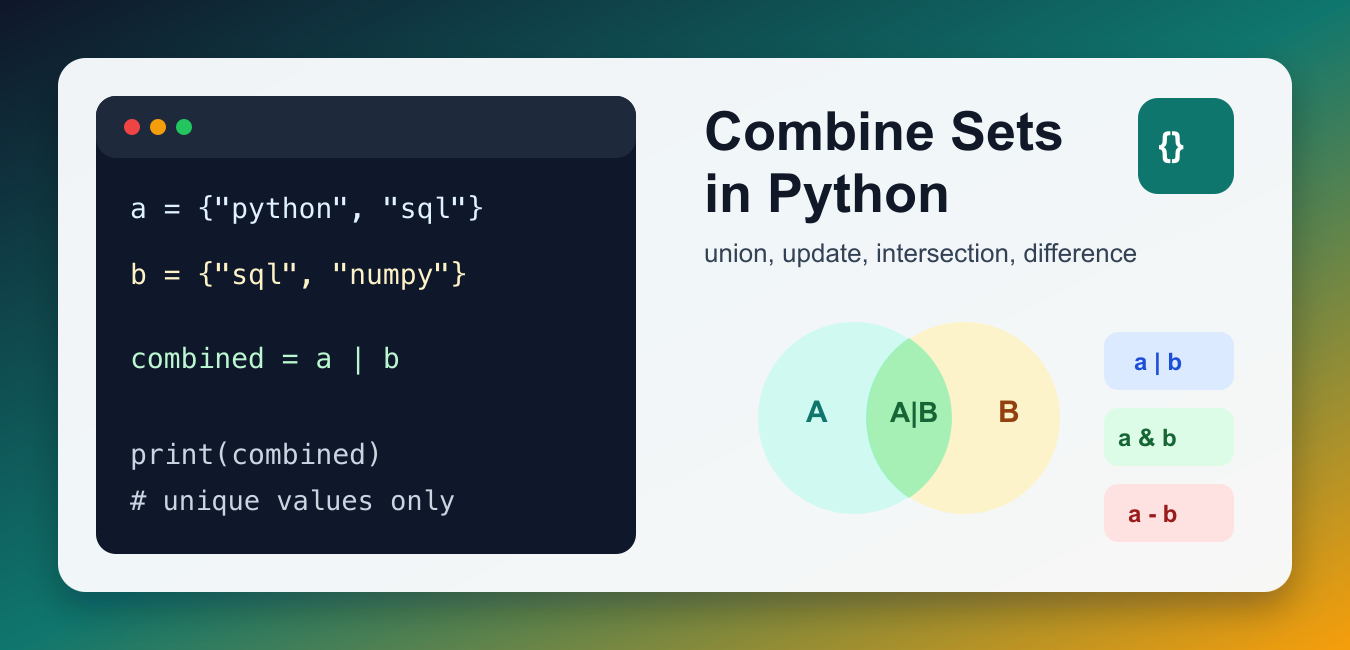
Combine Python sets with union(), the | operator, update(), and related set operations while preserving clarity about mutation, duplicates, and input types.
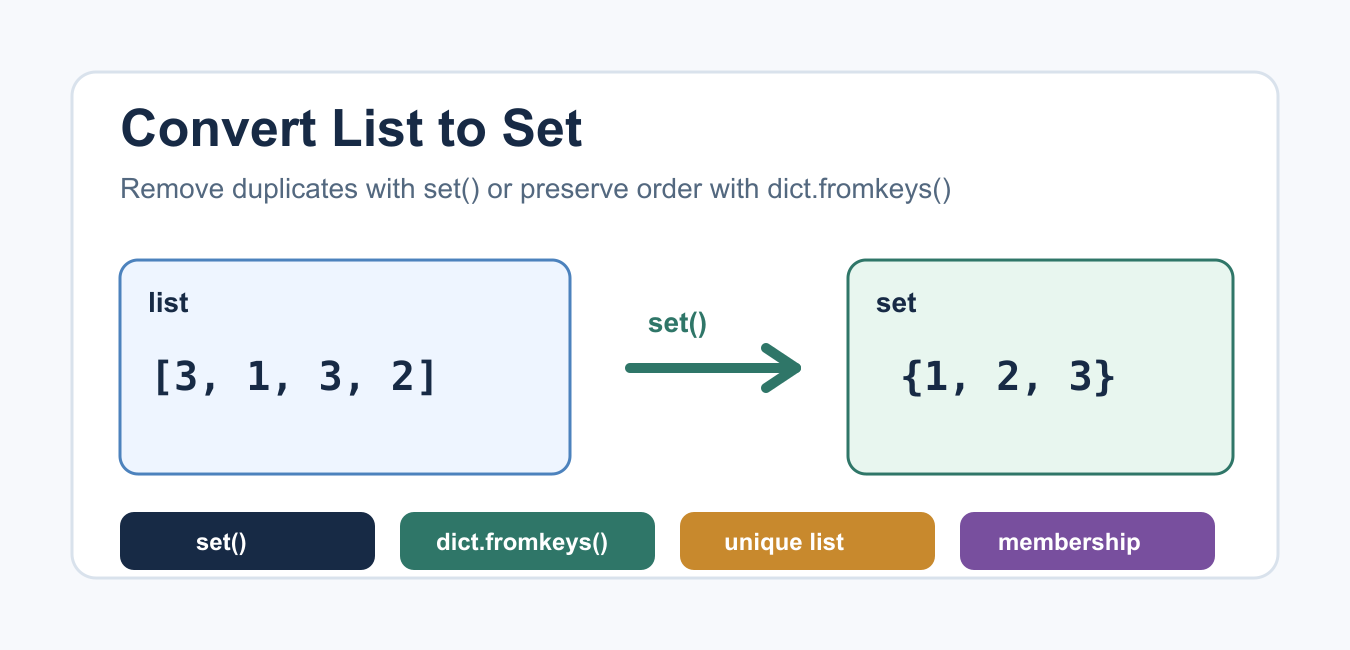
Convert Python lists to sets to remove duplicates, while understanding order, hashability, unhashable values, and when dict.fromkeys is safer.

Validate Python dictionaries and configuration data with Voluptuous schemas, required fields, defaults, nested structures, and readable errors.