Get the First Index in NumPy Arrays
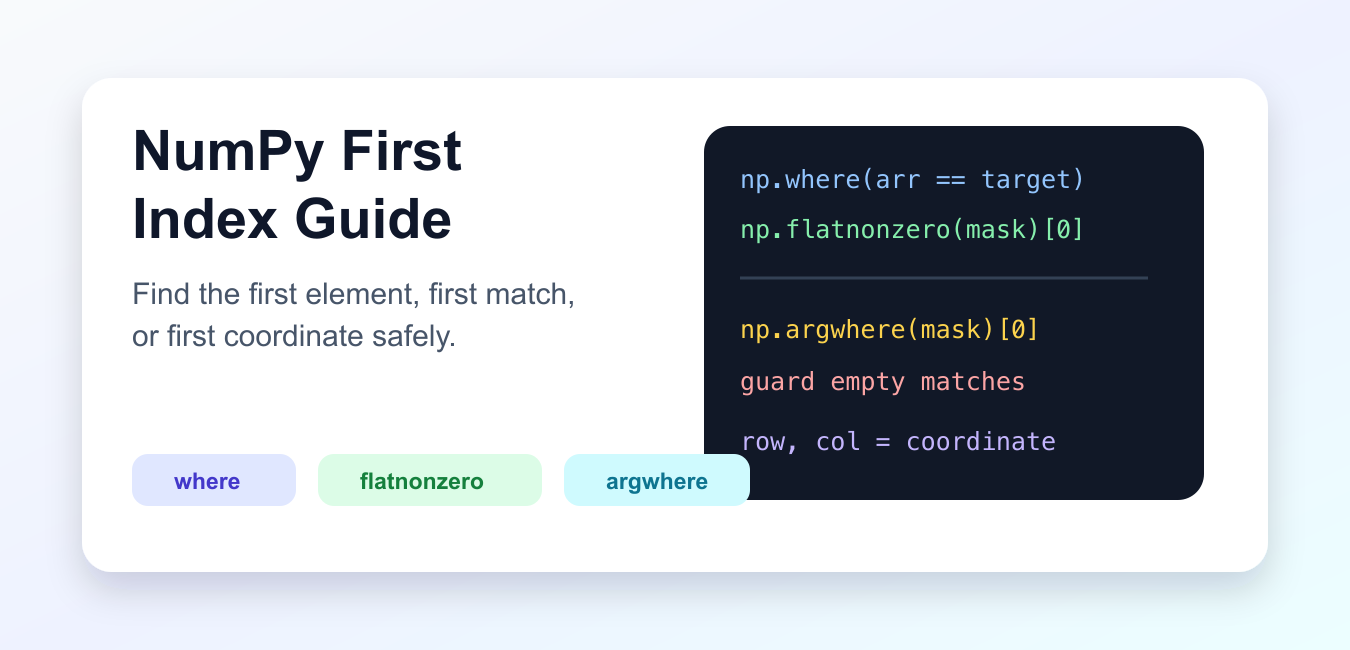
Learn how to get the first index in NumPy arrays using direct indexing, where(), flatnonzero(), argmax(), and argwhere().
Browse practical Python tutorials, error fixes, library guides, data science examples, and project ideas from Python Pool.
Learn how to get the first index in NumPy arrays using direct indexing, where(), flatnonzero(), argmax(), and argwhere().

Use NumPy save() and load() for .npy arrays, savez() archives, object safety, paths, compression, and portable data workflows.

Compare Python documentation tools including Sphinx, pydoc, MkDocs, docstrings, autodoc, API references, and documentation testing.
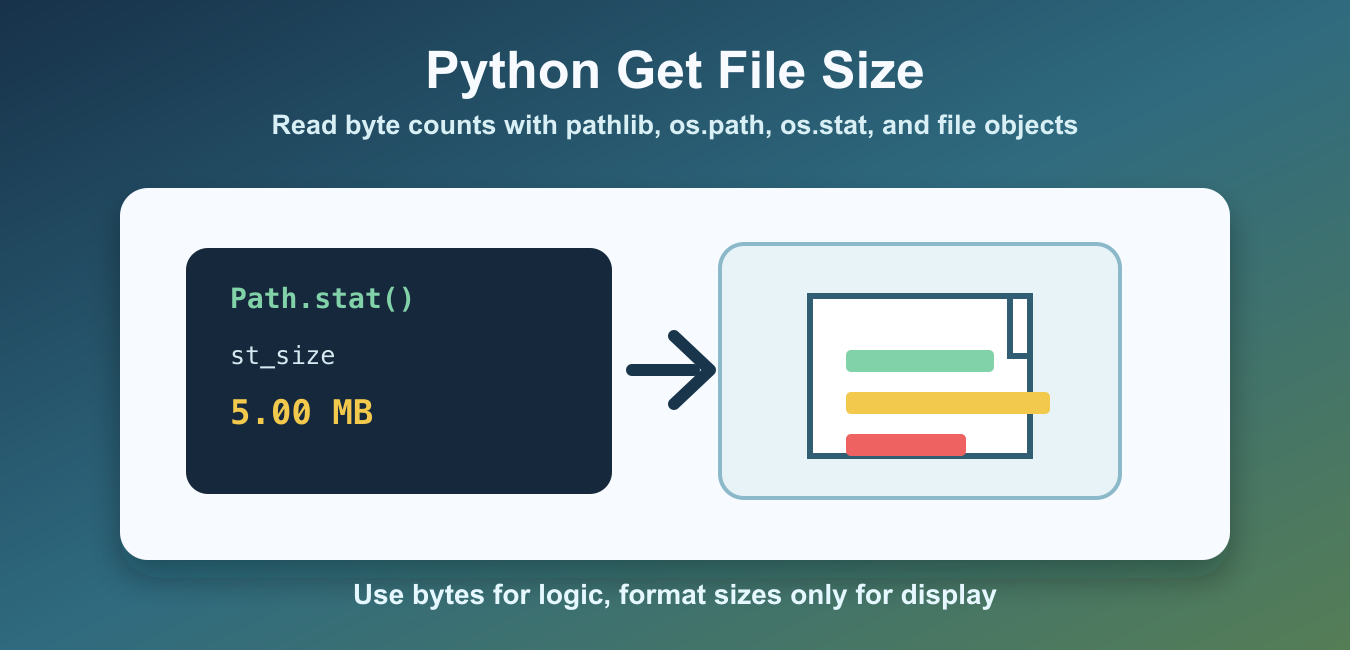
Get a file size in Python with pathlib or os, convert bytes safely, handle missing paths, and distinguish one file from a directory tree.
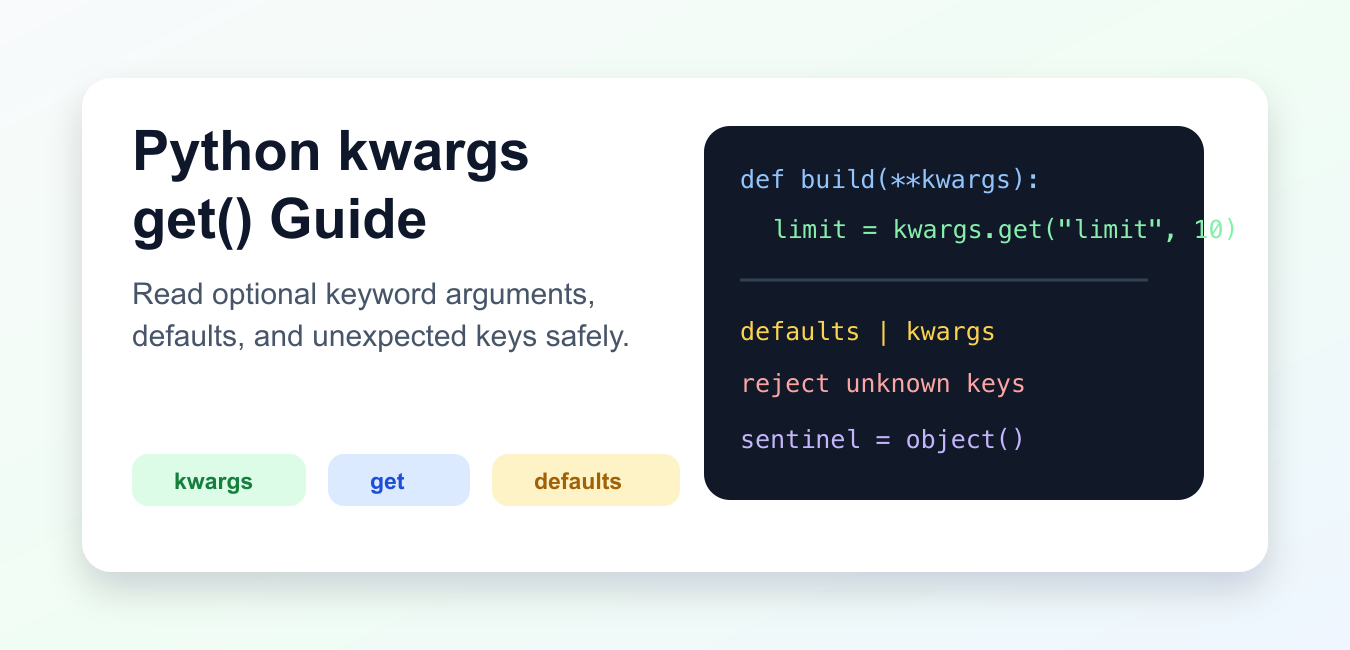
Use kwargs.get() in Python for optional keyword arguments while handling defaults, None, required keys, validation, and explicit function APIs.
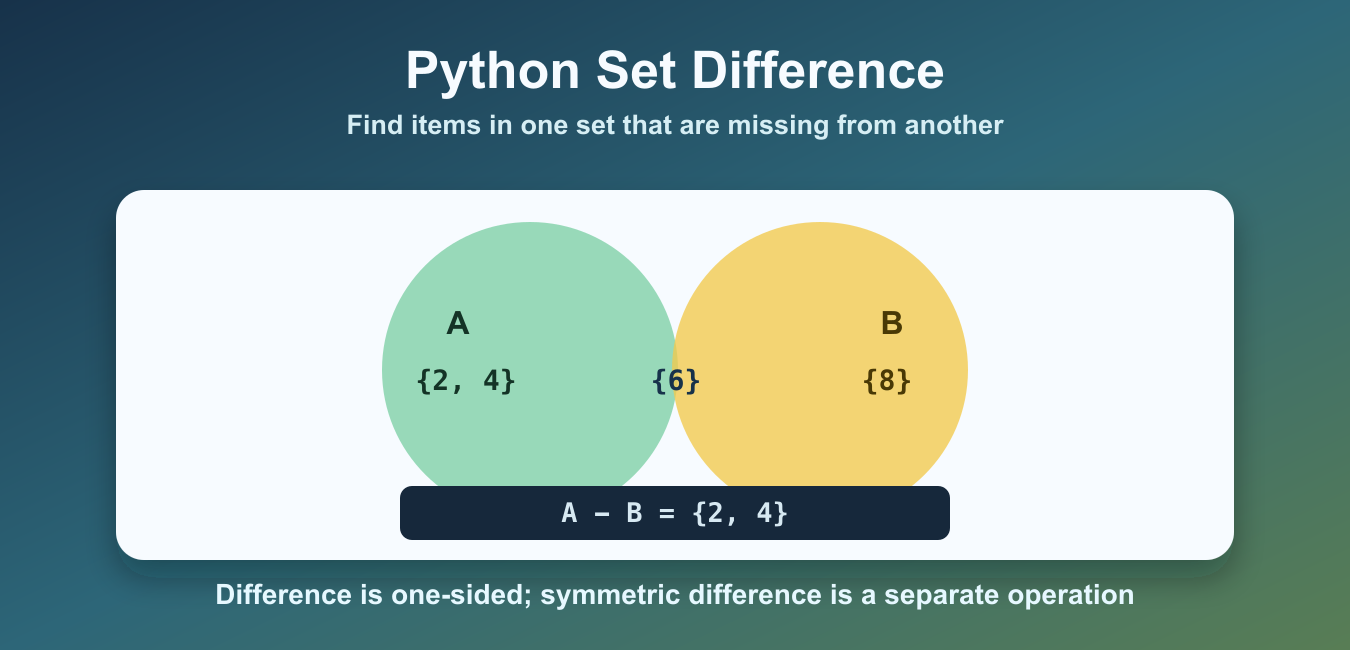
Use Python set difference with -, difference(), and difference_update() to find values missing from another set while keeping mutation and symmetry clear.
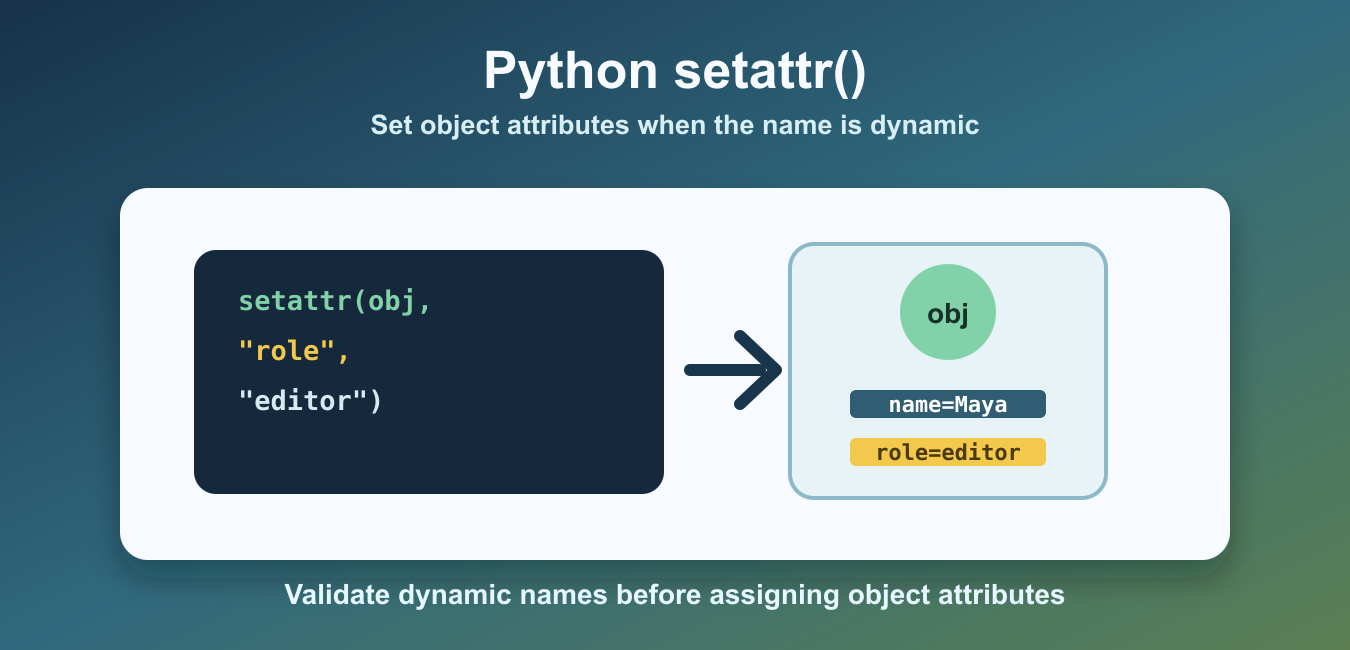
Use Python setattr() to set dynamic object attributes, understand properties and __slots__, validate names, and choose mappings when keys are data.
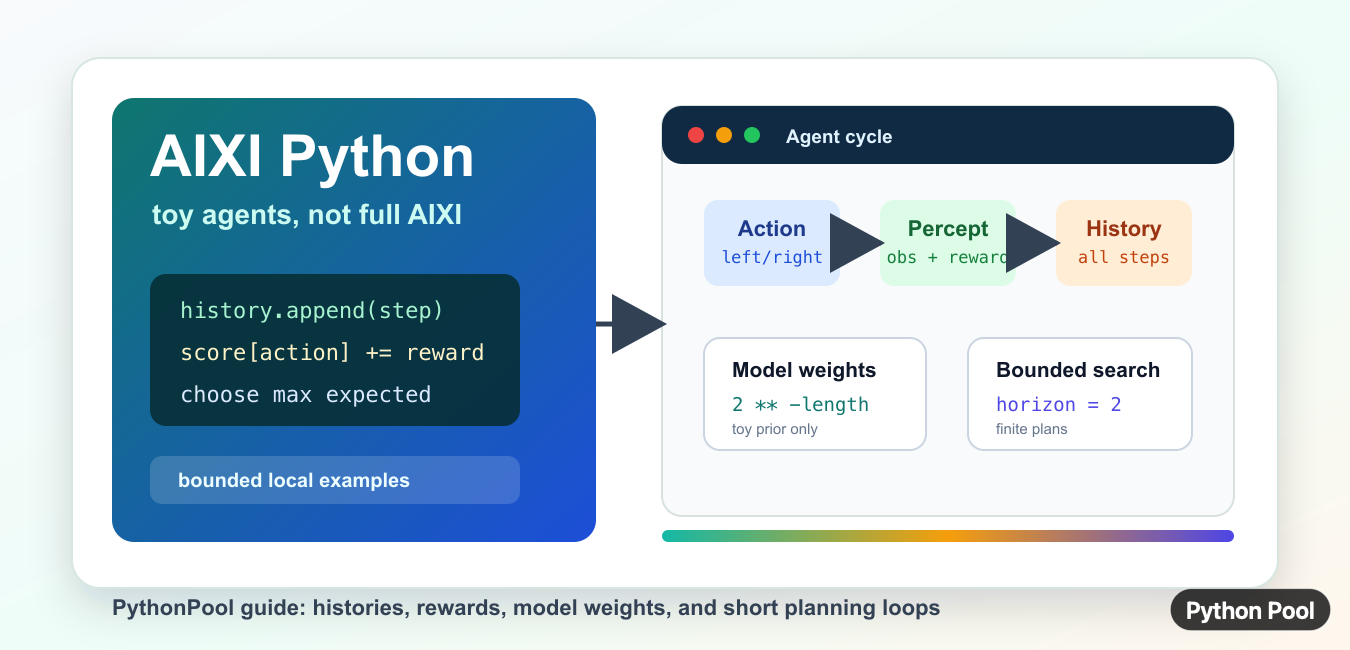
Explore AIXI-inspired Python agents through sequential decision models, rewards, history, approximations, computational limits, and reproducible experiments.
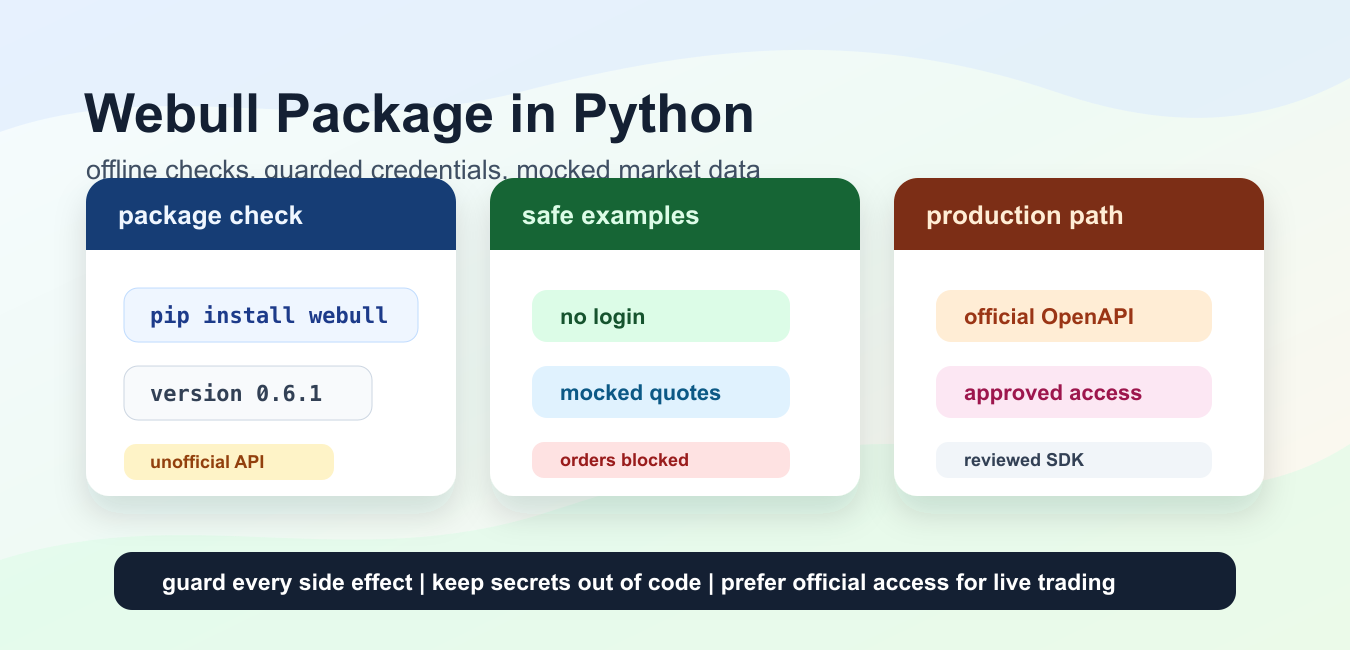
Learn how to evaluate the webull Python package with isolated credentials, mock data, rate limits, and safe boundaries before using any brokerage integration.

Build NumPy ranges with start, stop, and step while avoiding endpoint, floating-point, dtype, and memory mistakes.