Array of Strings in Python: Lists, array, and NumPy
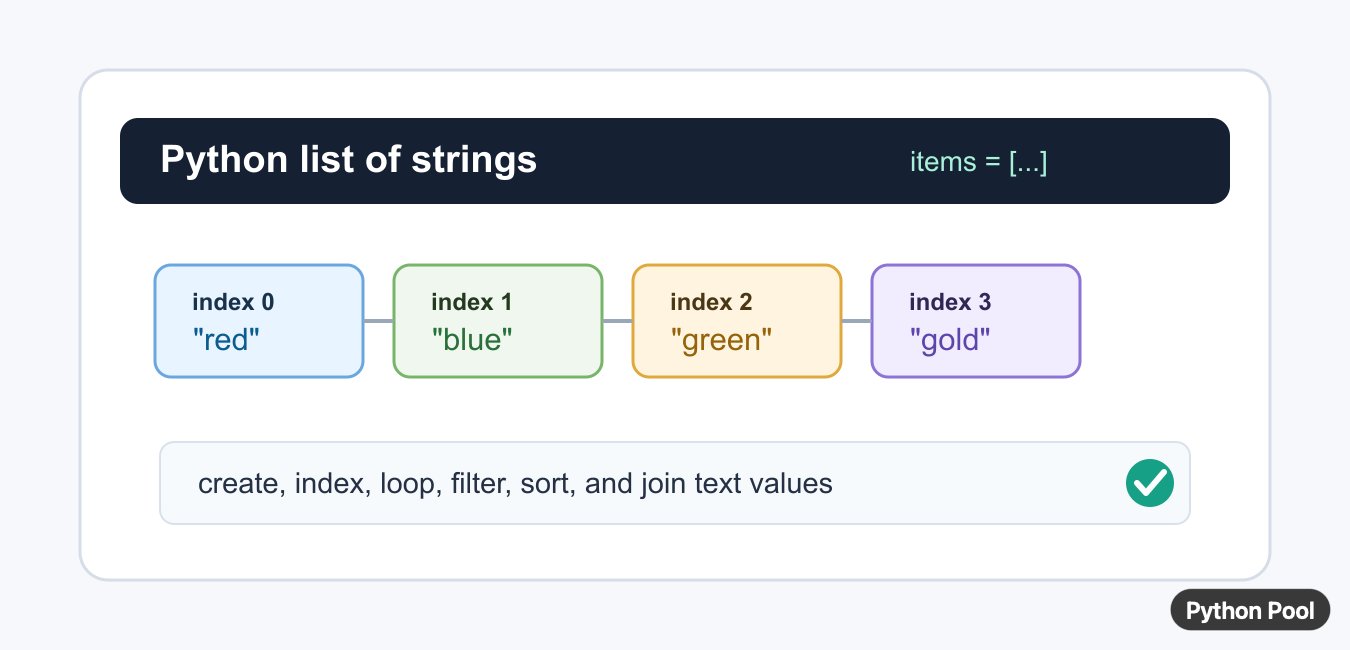
Store strings in Python with lists, the array module, or NumPy, and choose the right representation for typing, performance, indexing, and text operations.
Browse practical Python tutorials, error fixes, library guides, data science examples, and project ideas from Python Pool.
Store strings in Python with lists, the array module, or NumPy, and choose the right representation for typing, performance, indexing, and text operations.

Use NumPy cov() to calculate covariance, choose rowvar correctly, align observations, distinguish covariance from correlation, and interpret the matrix.
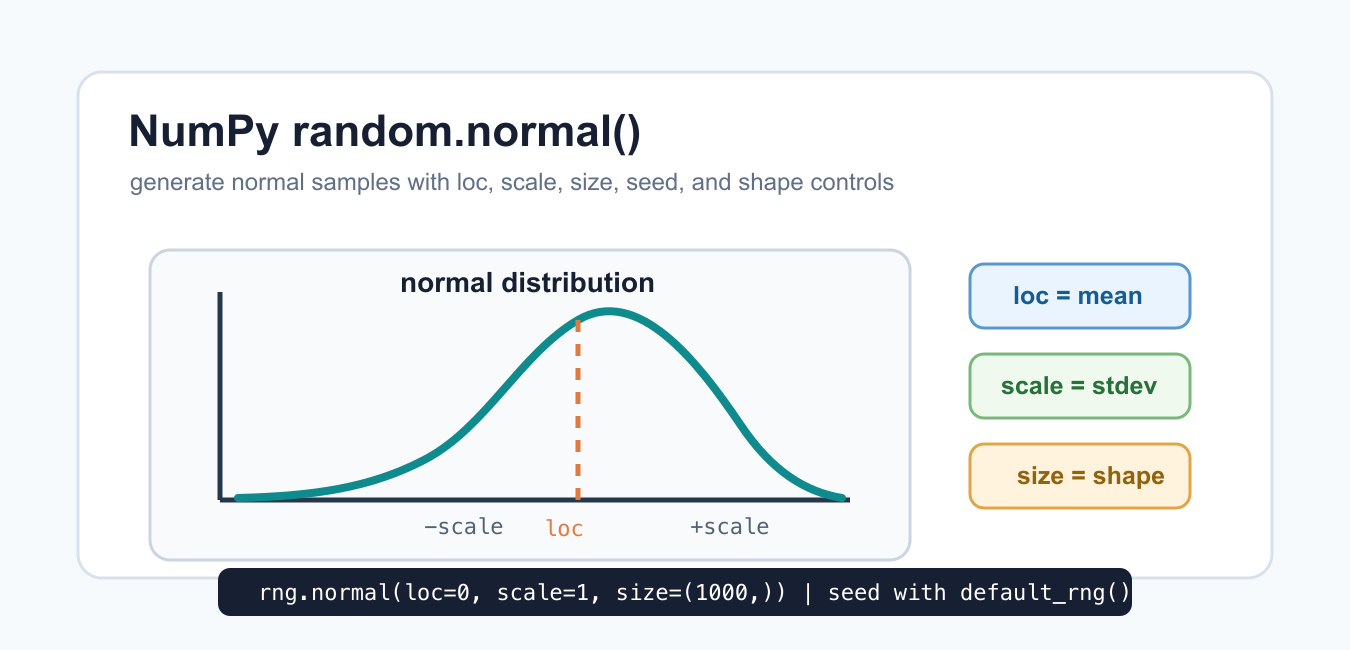
Generate NumPy normal-distribution samples with an explicit Generator, then validate shape, spread, reproducibility, and modeling assumptions.
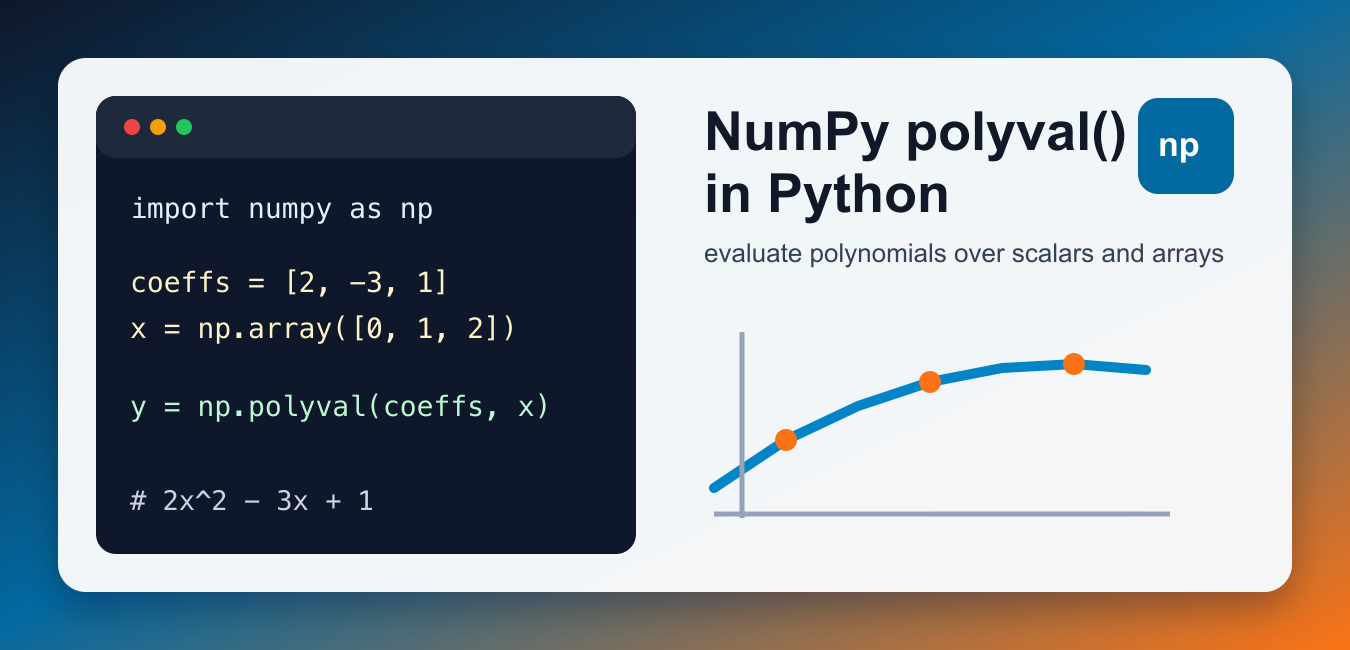
Use NumPy polyval to evaluate polynomials, understand coefficient order, vectorized inputs, polynomial fitting, and numerical stability.

Use NumPy cumsum() for running totals with axis, dtype, out, flattening, integer overflow, floating-point precision, and NaN guidance.
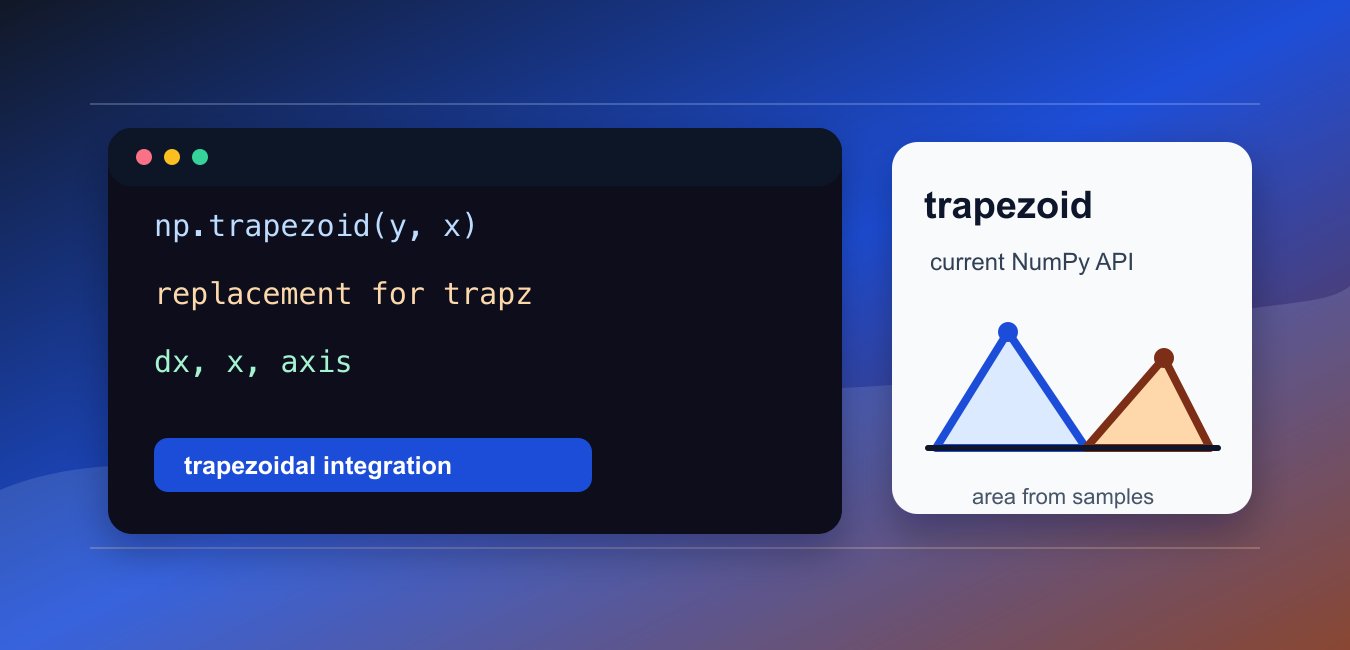
Update NumPy trapz integrations to np.trapezoid, with examples for sample positions, equal spacing, axes, and compatibility planning.
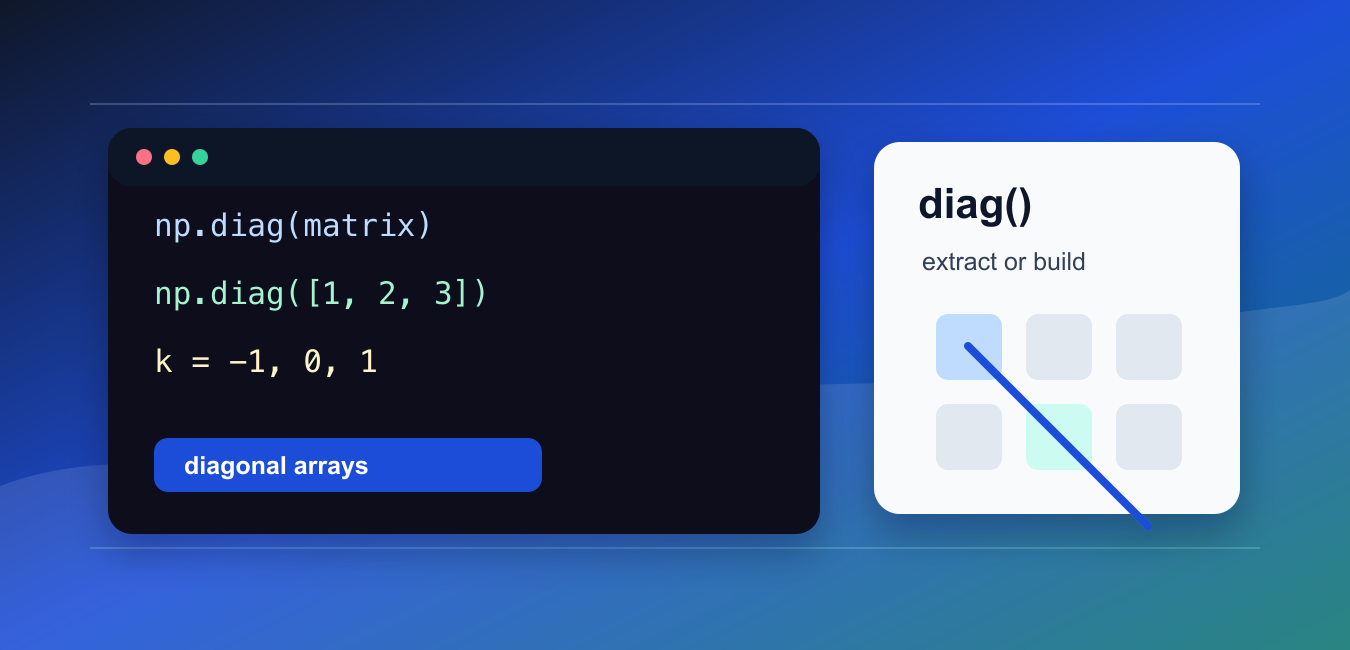
Use NumPy diag to extract or construct diagonals, understand offsets and shapes, and choose diagonal or fill_diagonal for the operation you need.
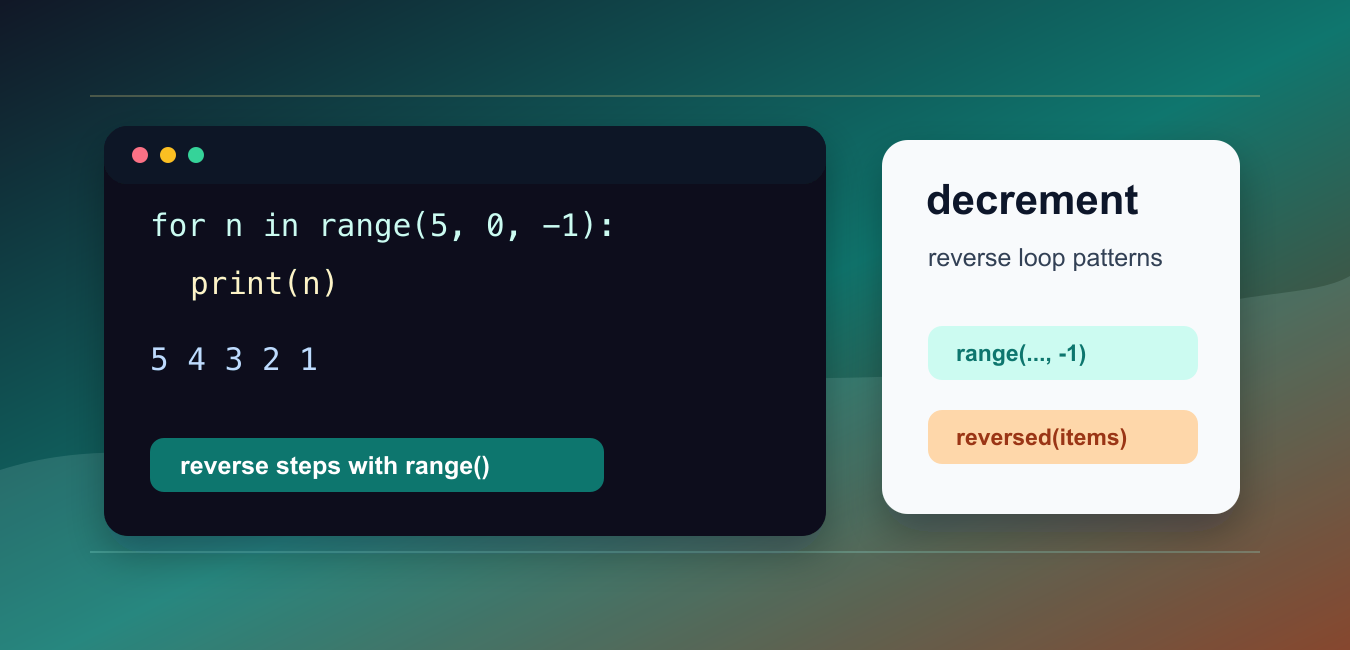
Decrement a Python for loop with range(start, stop, -step), understand the exclusive stop value, and avoid off-by-one and zero-step errors.
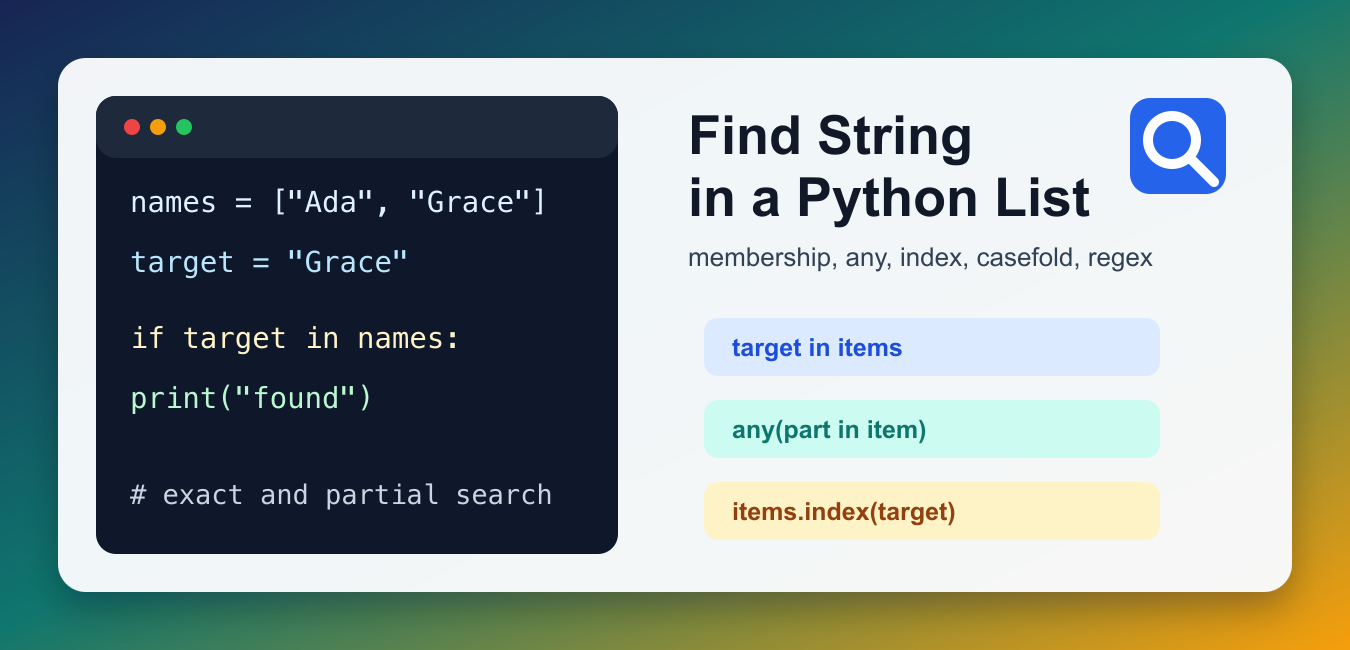
Find strings in a Python list with in, index, any, and comprehensions while choosing exact, substring, case-insensitive, and duplicate-match behavior.
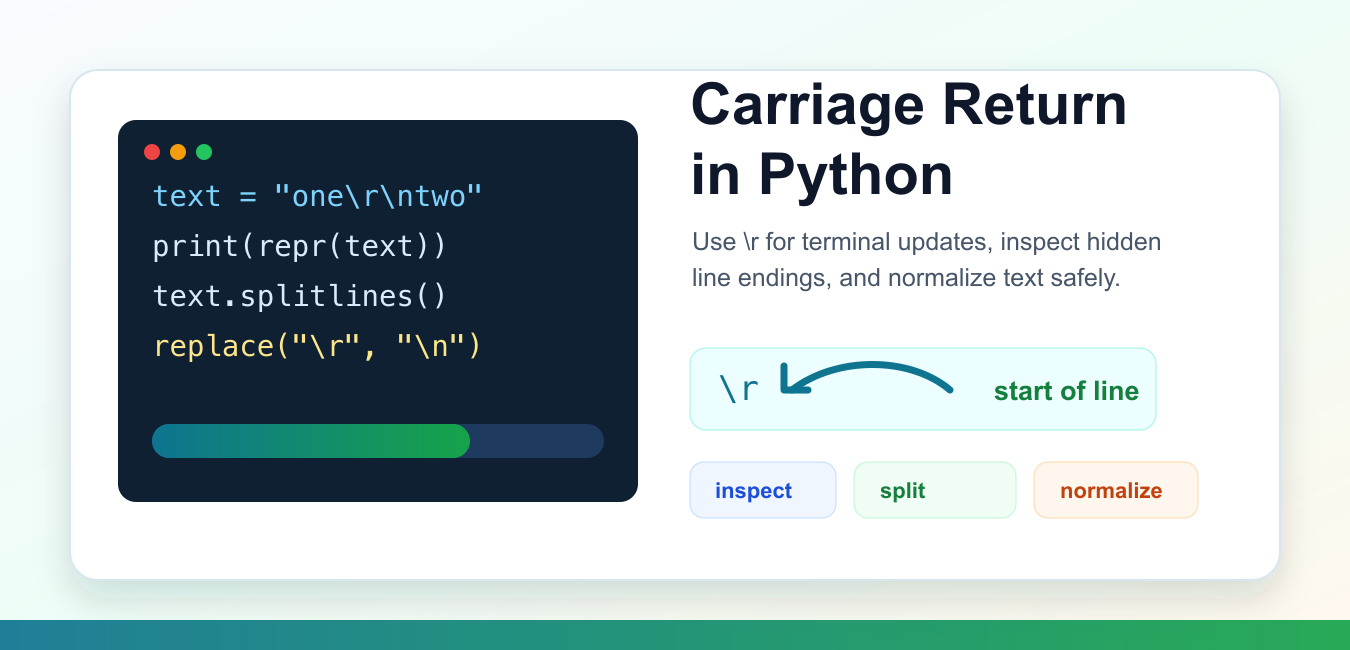
Understand carriage return in Python, use splitlines(), normalize CRLF text, preserve file endings, update terminal progress, and handle CSV files.