Python dateutil: Parse Dates, Time Zones, and Relative Time
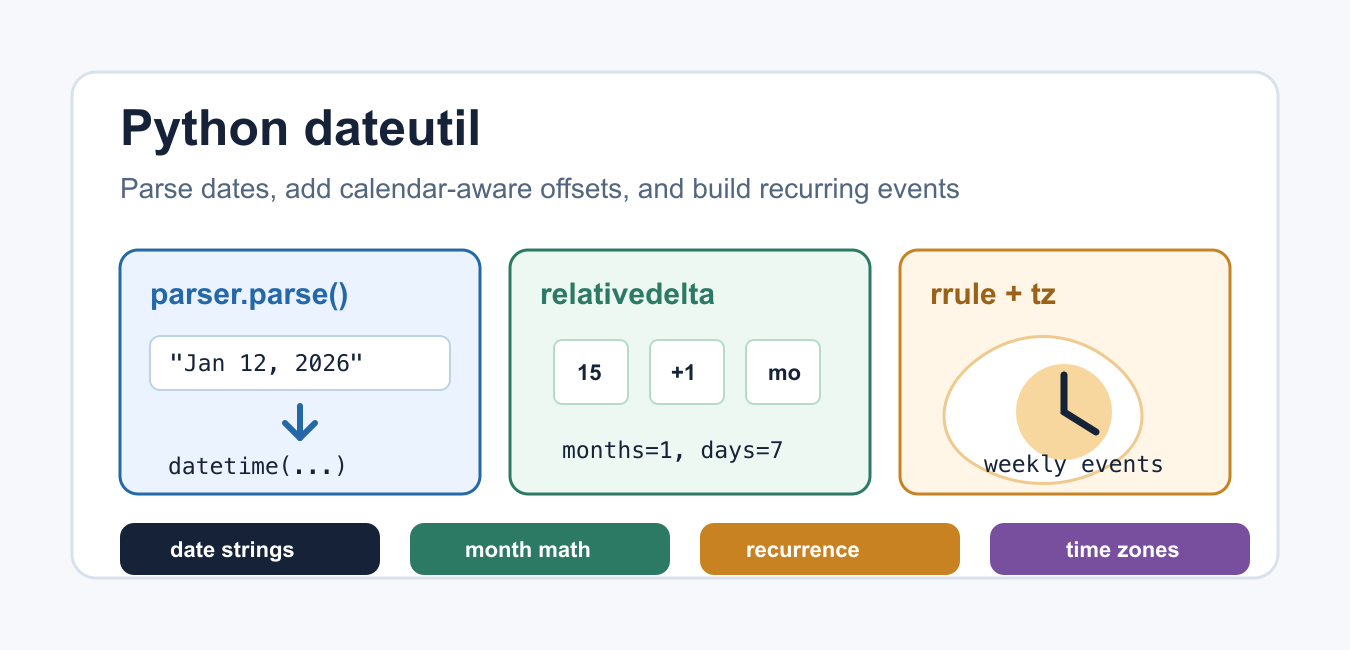
Parse flexible input, keep datetimes timezone-aware, and choose dateutil.parser, tz, or relativedelta for the job.
Browse practical Python tutorials, error fixes, library guides, data science examples, and project ideas from Python Pool.
Parse flexible input, keep datetimes timezone-aware, and choose dateutil.parser, tz, or relativedelta for the job.
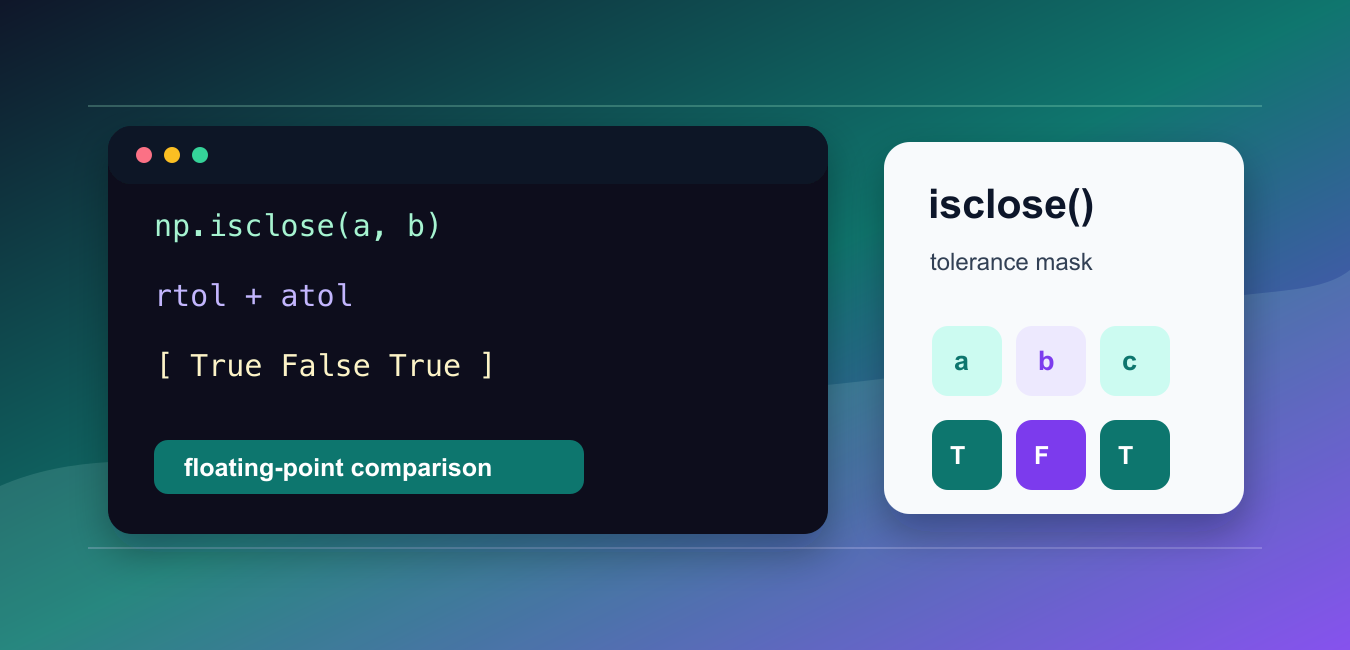
Use NumPy isclose() with rtol, atol, equal_nan, broadcasting, and domain-appropriate tolerances for floating-point comparisons.
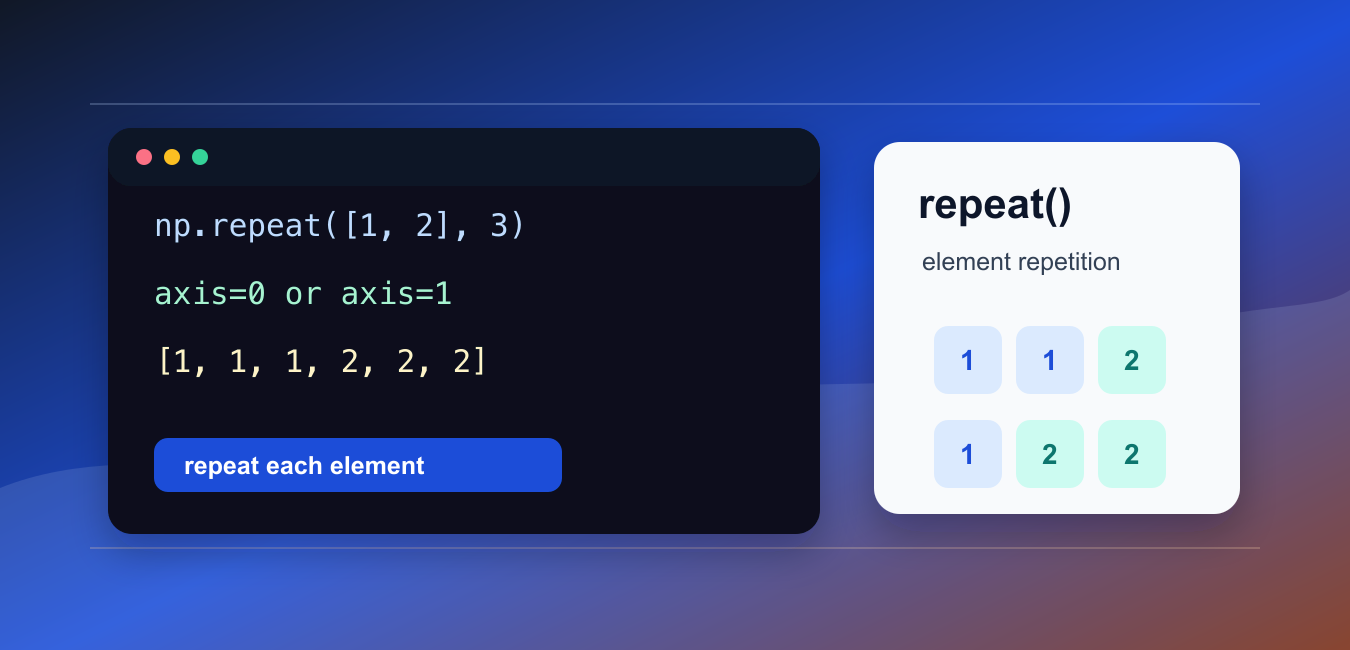
Use NumPy repeat to duplicate array elements with counts and axes, understand shape changes, dtype behavior, broadcasting limits, and tests.
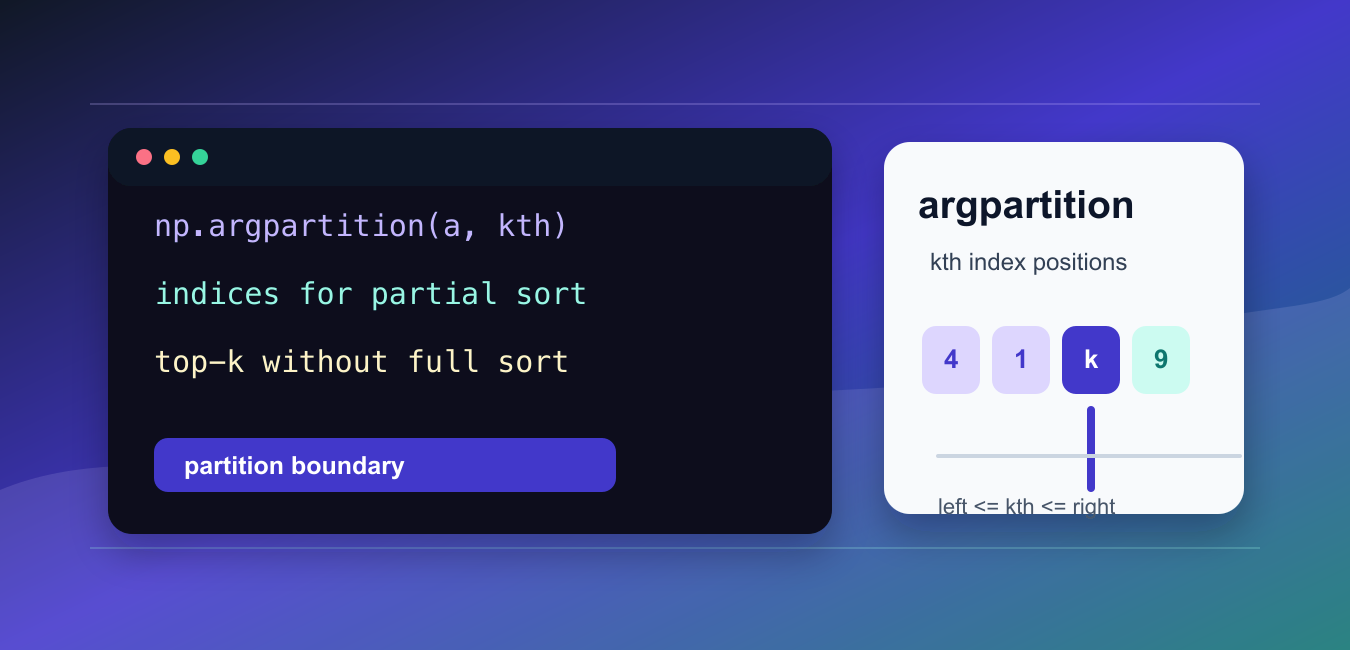
Use NumPy argpartition to find top-k or bottom-k indices without fully sorting an array, then sort the selected subset when ordered output is required.

Create NumPy identity matrices with identity() and eye(), choose dimensions and dtype, build diagonal masks, and avoid unexpected integer or boolean behavior.
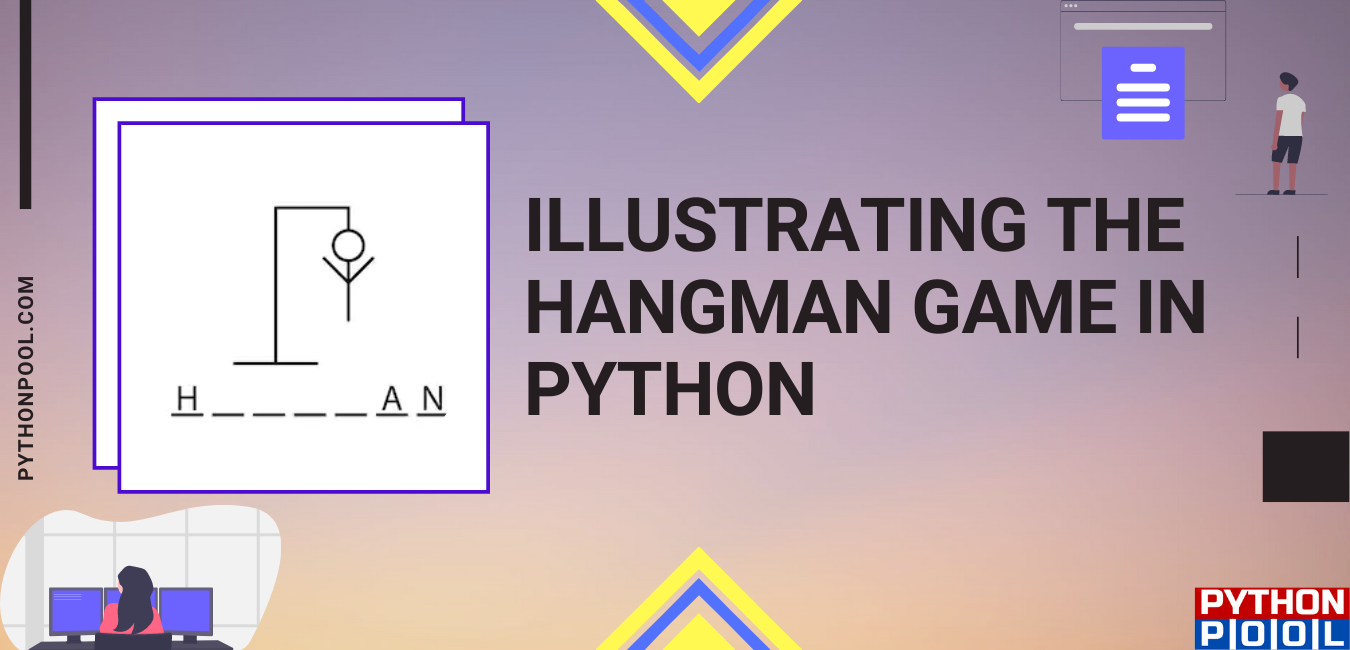
Build a Python Hangman game with random word selection, input validation, guessed-letter state, win conditions, and safe replay logic.
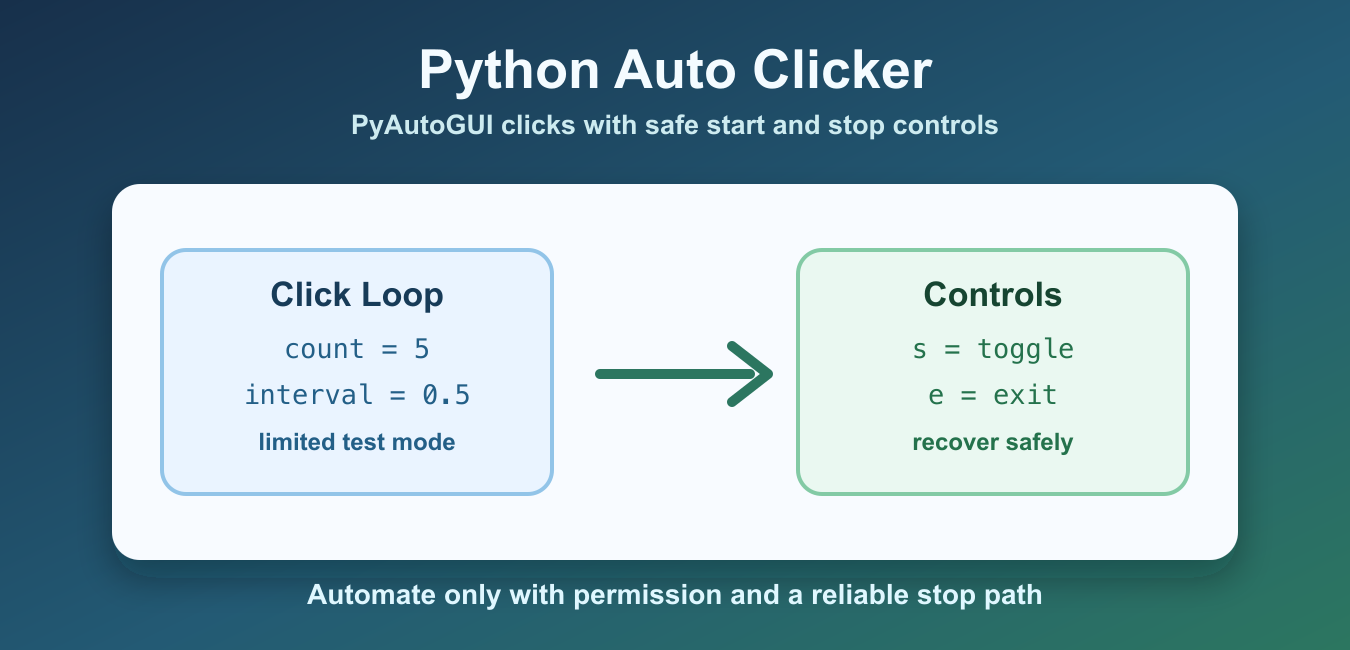
Build a Python auto clicker with PyAutoGUI and optional pynput controls, while adding a countdown, fail-safe, limits, and dry-run tests.

Get a filename, stem, suffix, or parent directory from a Python path with pathlib and os.path, including edge cases.
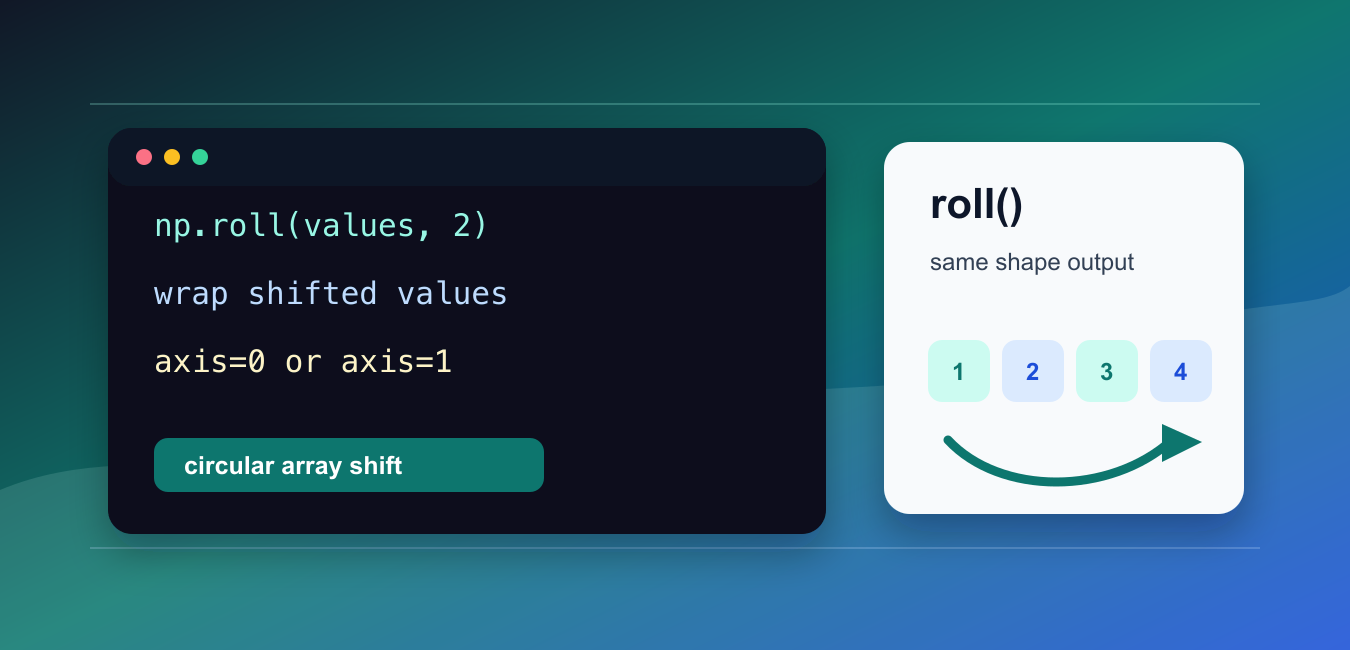
Use NumPy roll to rotate array values, choose an axis, combine shifts, and understand that wrapped elements re-enter at the opposite end.
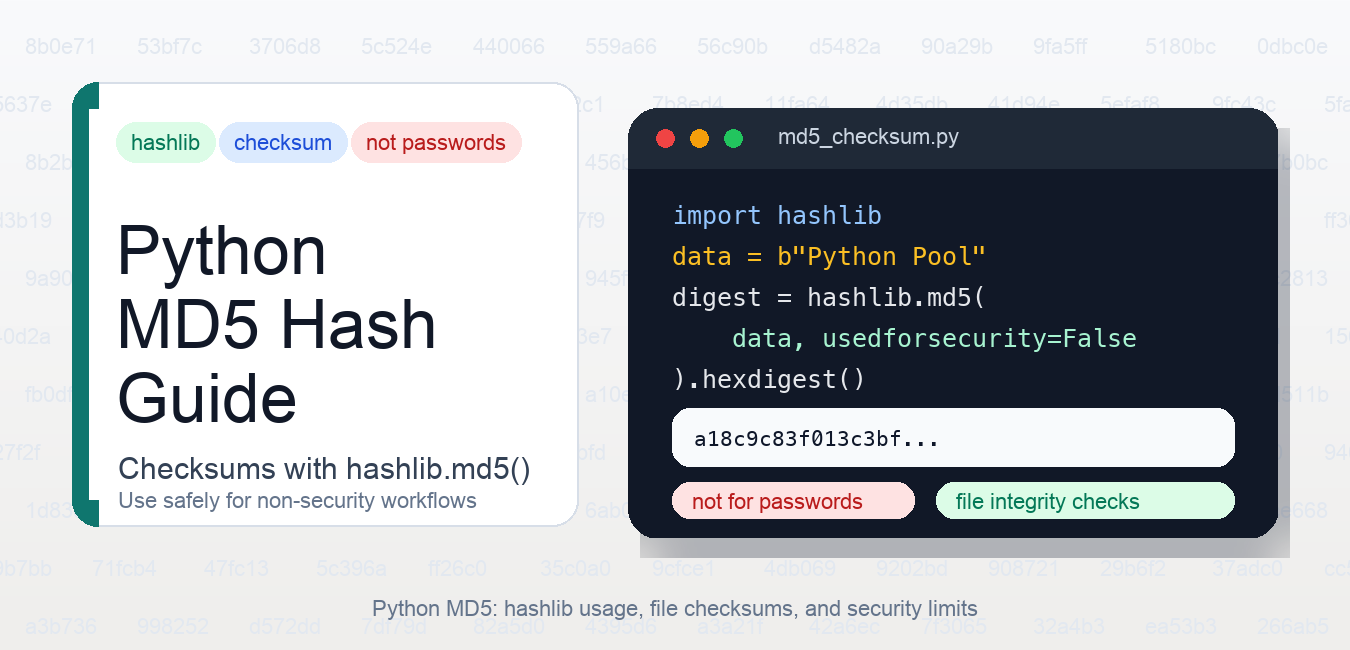
MD5 can identify accidental changes or legacy formats, but it is not safe for passwords, signatures, or adversarial integrity checks.