Python Curly Brackets: Dictionaries, Sets, and f-Strings
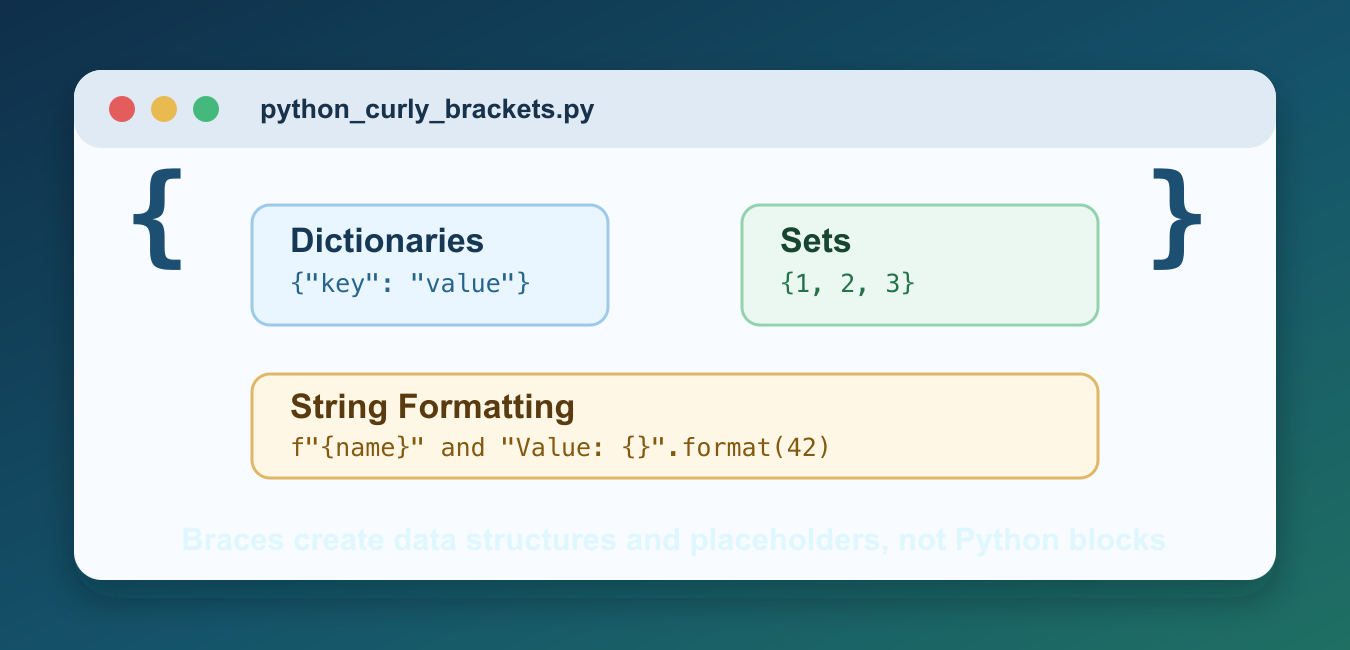
Python braces create dictionaries and sets and format f-strings; learn the punctuation rules, empty-container difference, and literal escaping.
Browse Python tutorials for beginners and working developers, including syntax, libraries, examples, projects, and real problem-solving guides.
Python braces create dictionaries and sets and format f-strings; learn the punctuation rules, empty-container difference, and literal escaping.
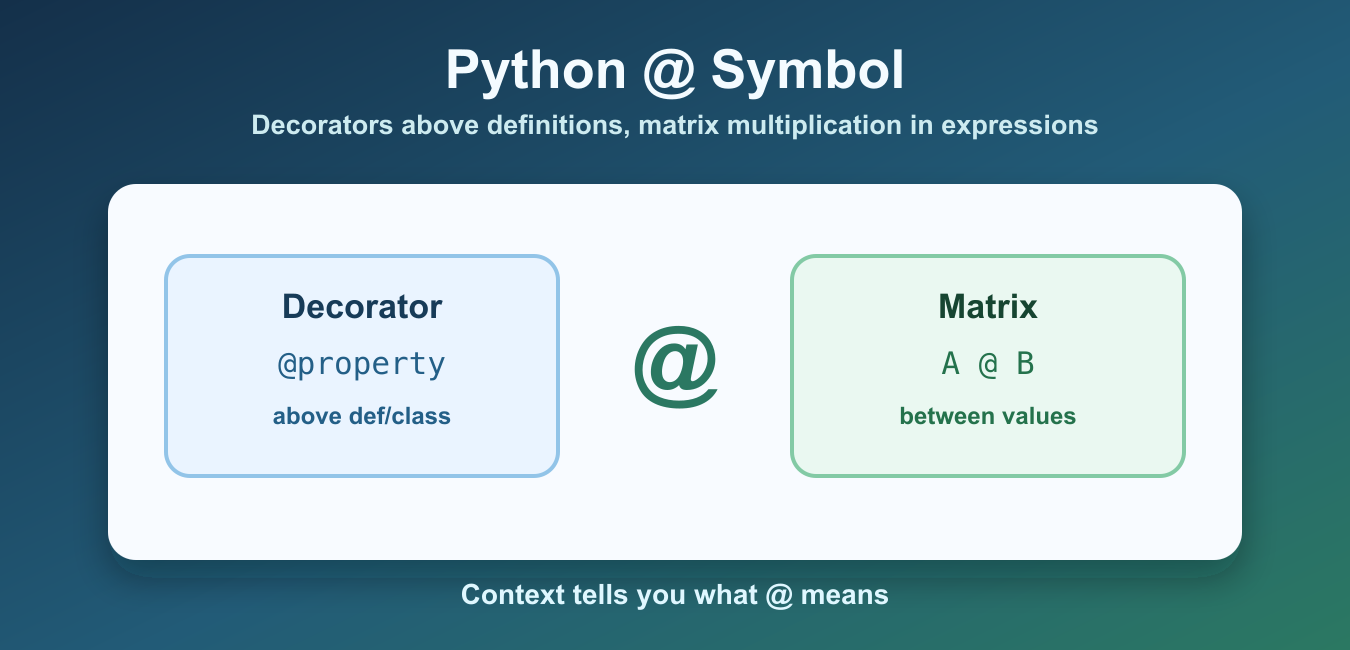
Understand the Python @ symbol for decorators and matrix multiplication, with syntax, evaluation order, and NumPy examples.

Learn how to create and test a Python robots.txt workflow with user agents, allow and disallow rules, sitemap hints, caching, and safe crawler behavior.
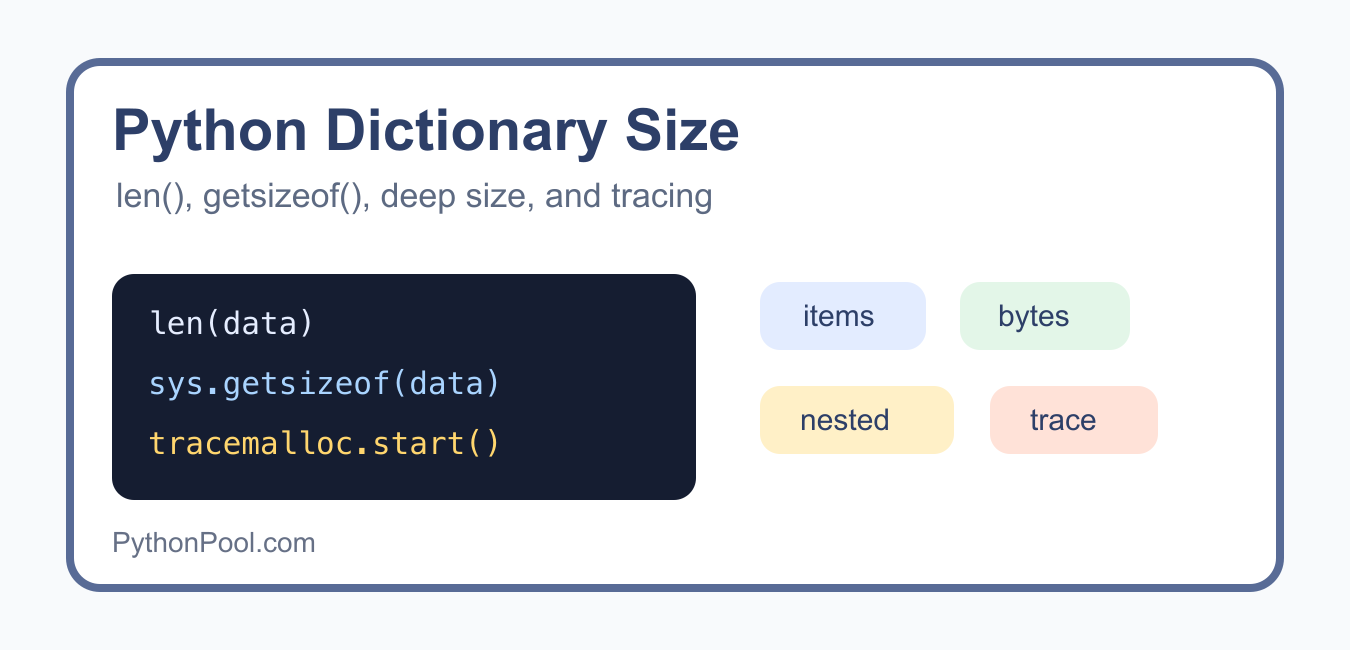
Measure a Python dictionary by entry count or memory, separating len(), shallow getsizeof(), nested values, and allocation profiling.
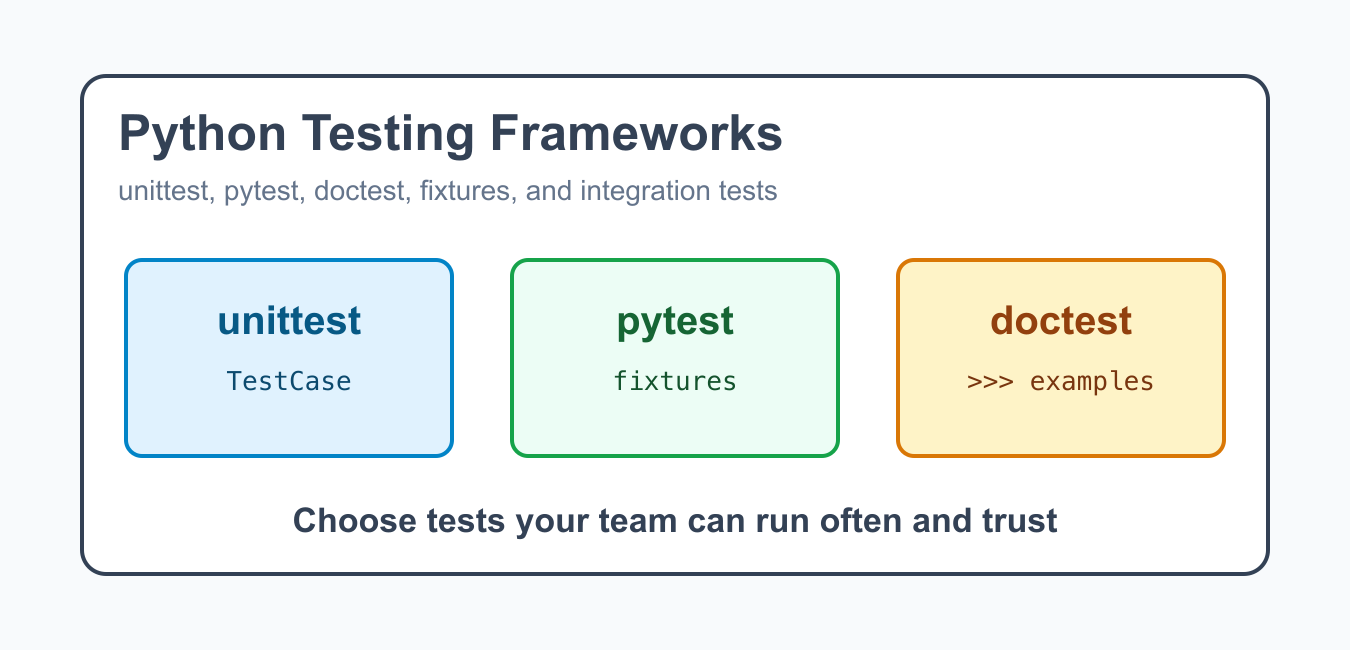
Compare Python testing frameworks including unittest and pytest by fixtures, discovery, assertions, plugins, parametrization, coverage, and team workflow.
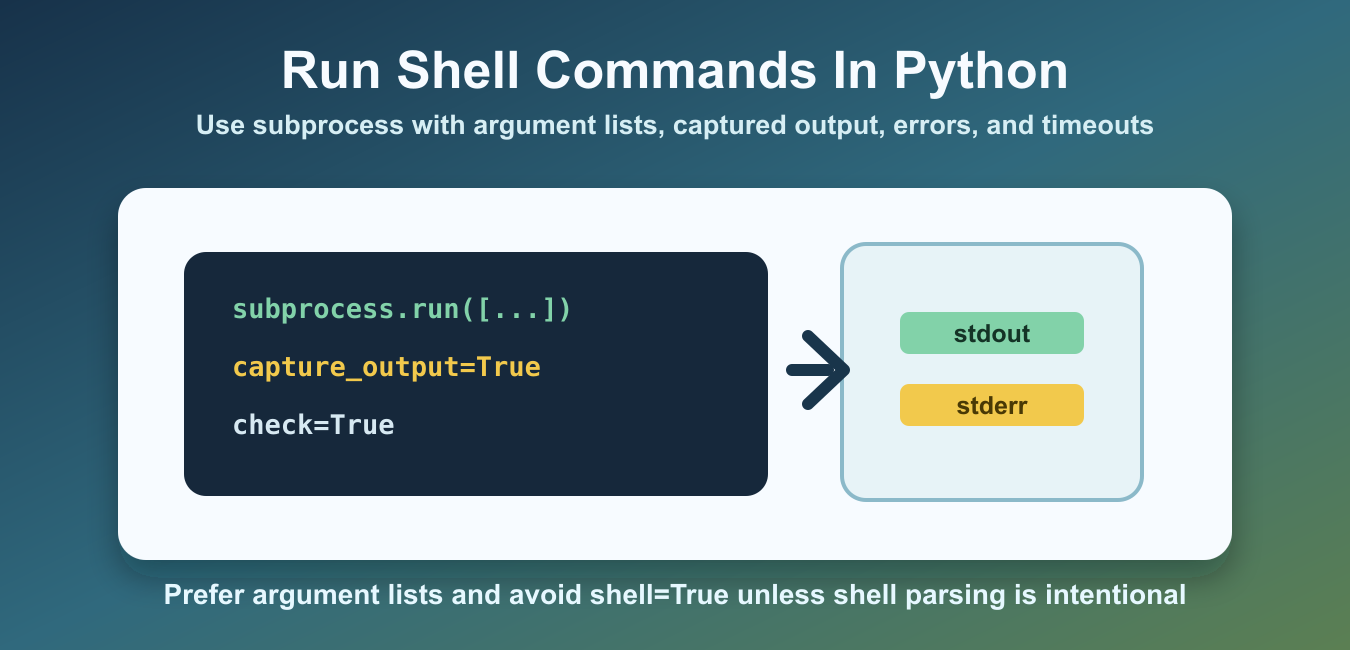
Run shell commands in Python with subprocess using argument lists, captured output, timeouts, return codes, environment control, and safe error handling.
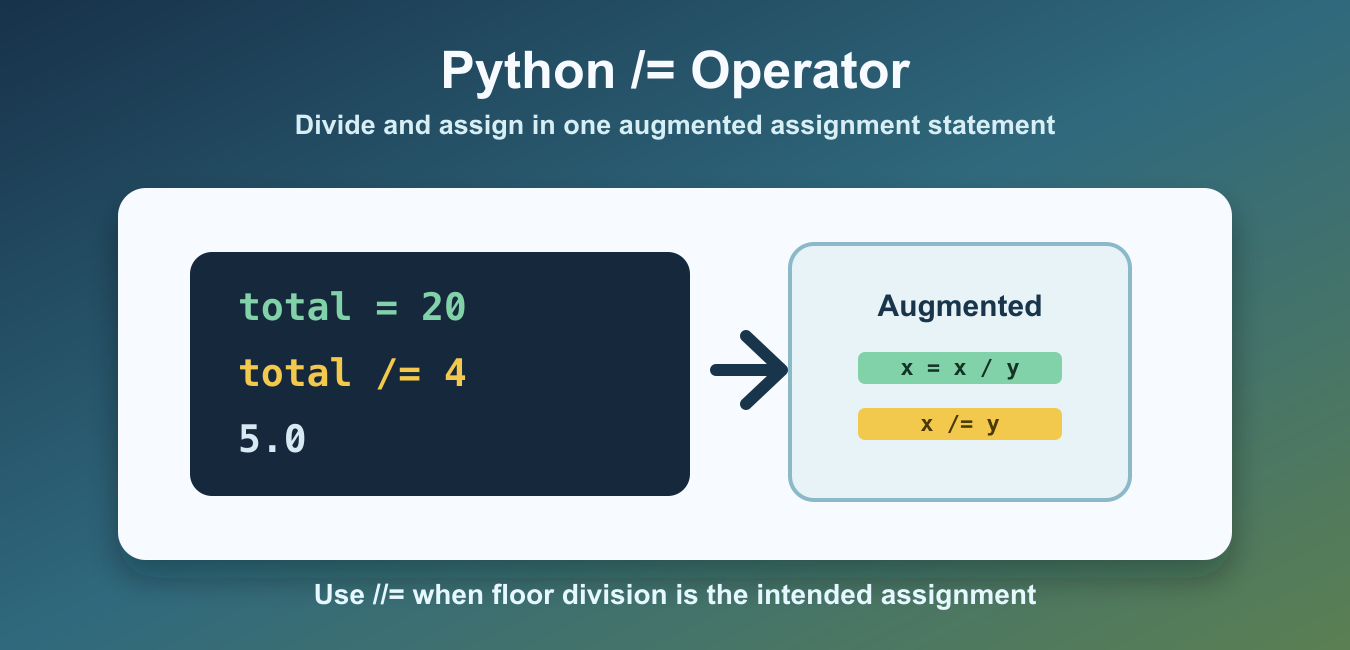
Learn how Python /= divides and updates a variable, why the result is often a float, and how it differs from /, //, and explicit reassignment.
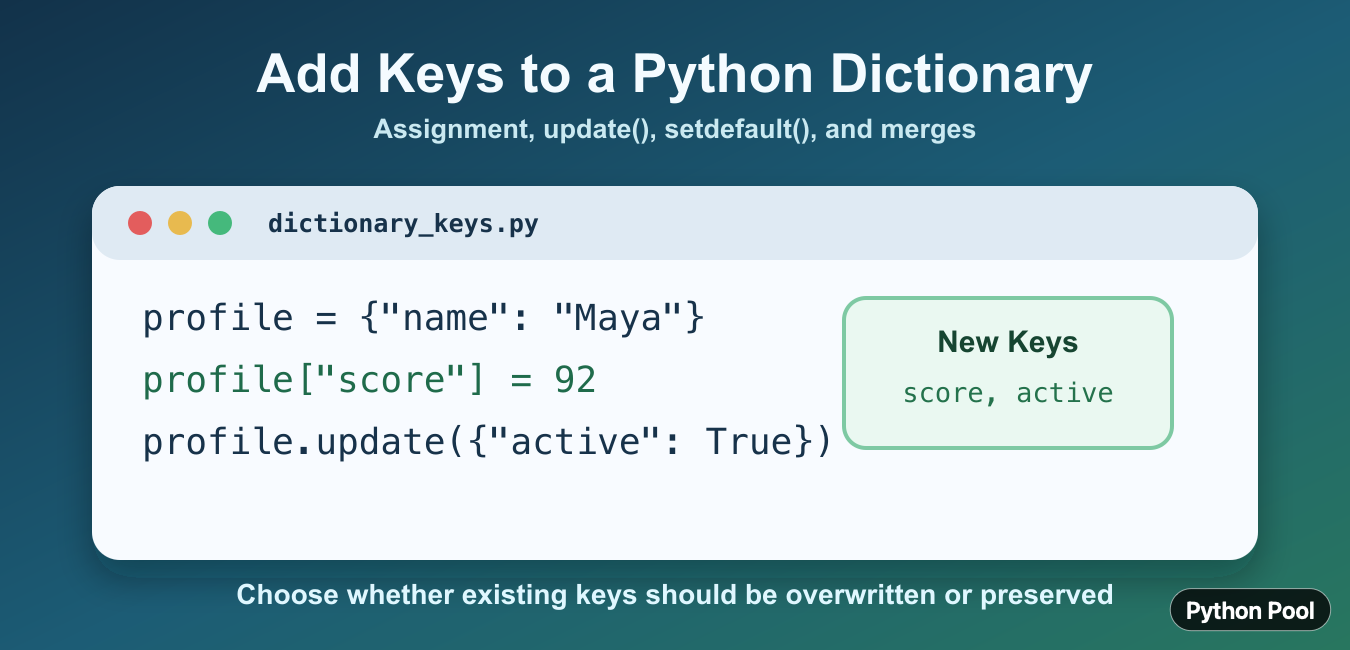
Add keys to a Python dictionary with assignment, update(), setdefault(), unpacking, and union operators while defining duplicate-key behavior.
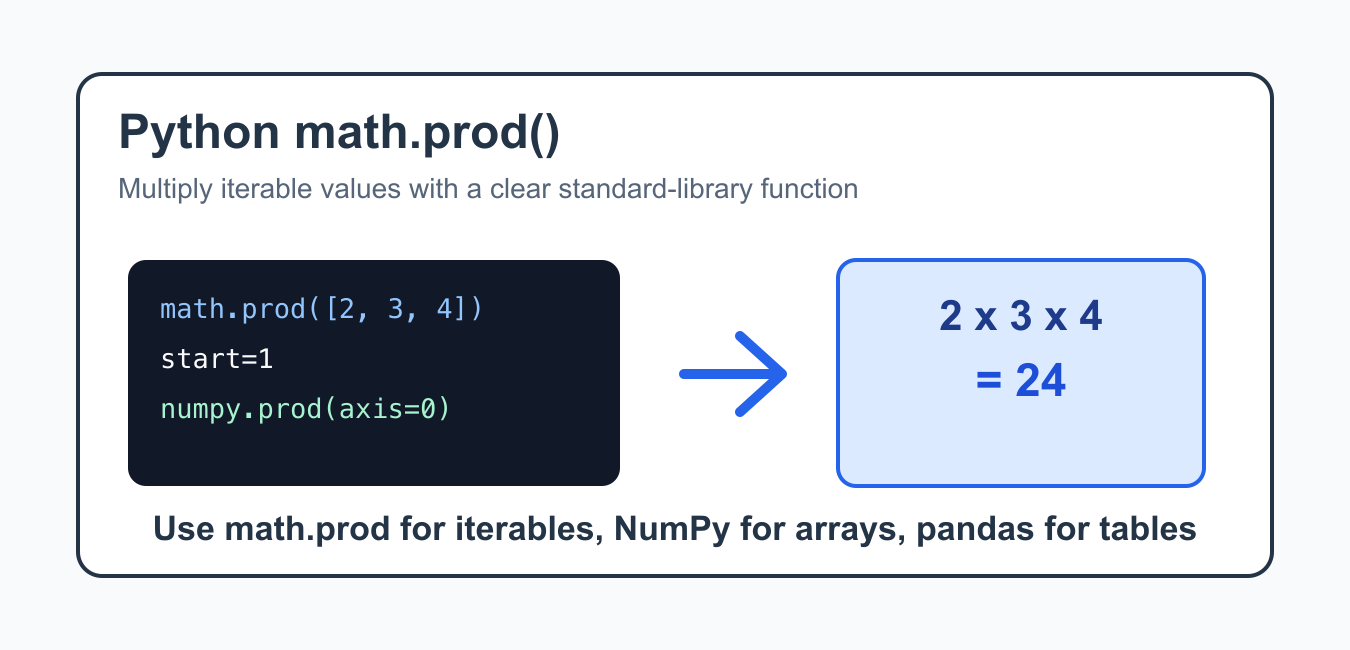
Calculate products in Python with math.prod, understand empty iterables and start values, and choose NumPy methods for array-wise multiplication.
Understand Python integer division with //, true division with /, divmod(), remainders, and the floor rule for negative numbers.