Bubble Sort in Python: Algorithm, Code, and Complexity
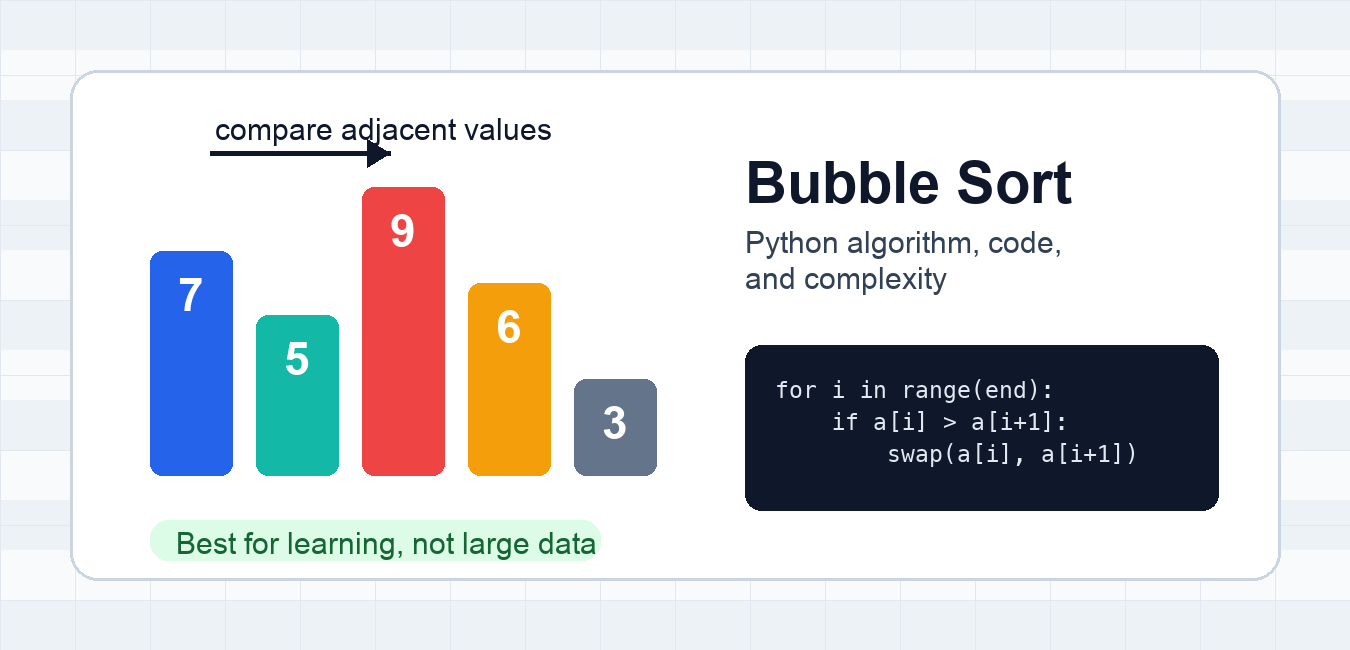
Learn bubble sort in Python with passes, swaps, early-exit optimization, stability, complexity, and when sorted() is better.
Follow Python how-to guides for common coding tasks, file handling, strings, lists, environments, package setup, and practical workflow fixes.
Learn bubble sort in Python with passes, swaps, early-exit optimization, stability, complexity, and when sorted() is better.

Learn Python comments with # syntax, inline guidance, docstrings, type comments, TODOs, maintenance rules, and examples of comments that help readers.
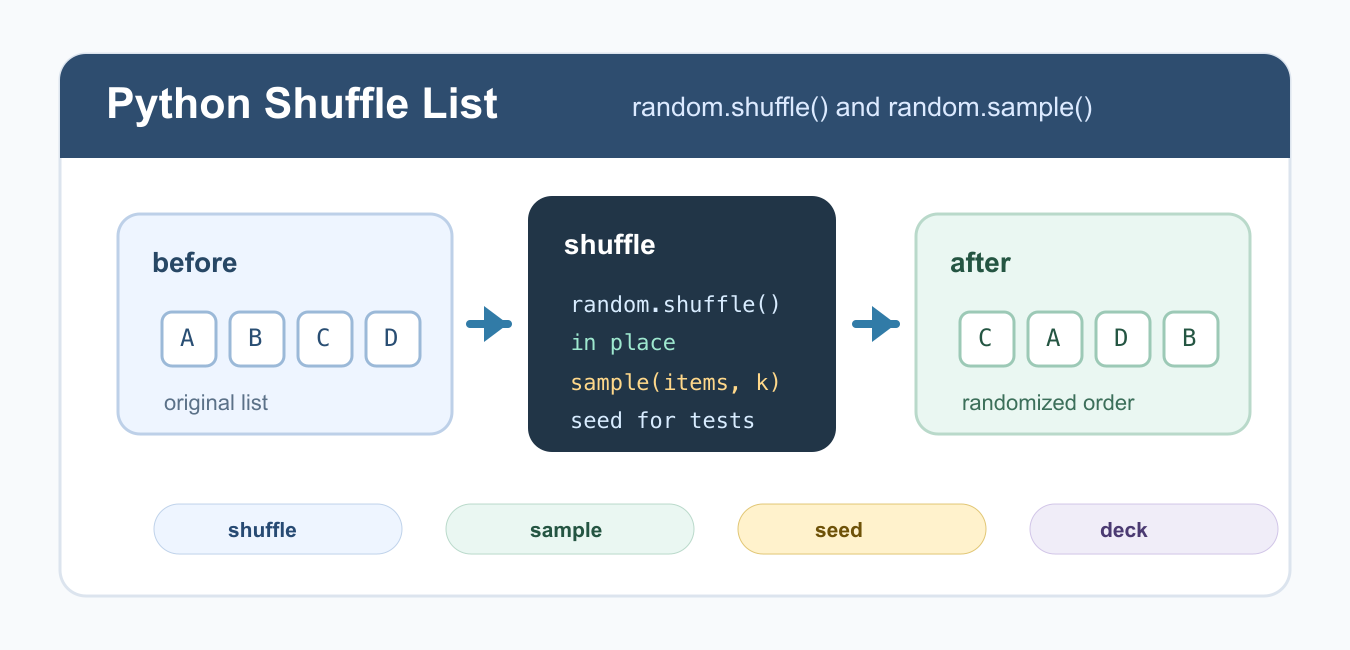
Choose in-place shuffle or non-mutating sample, keep random state explicit, and avoid treating pseudo-random output as secure randomness.
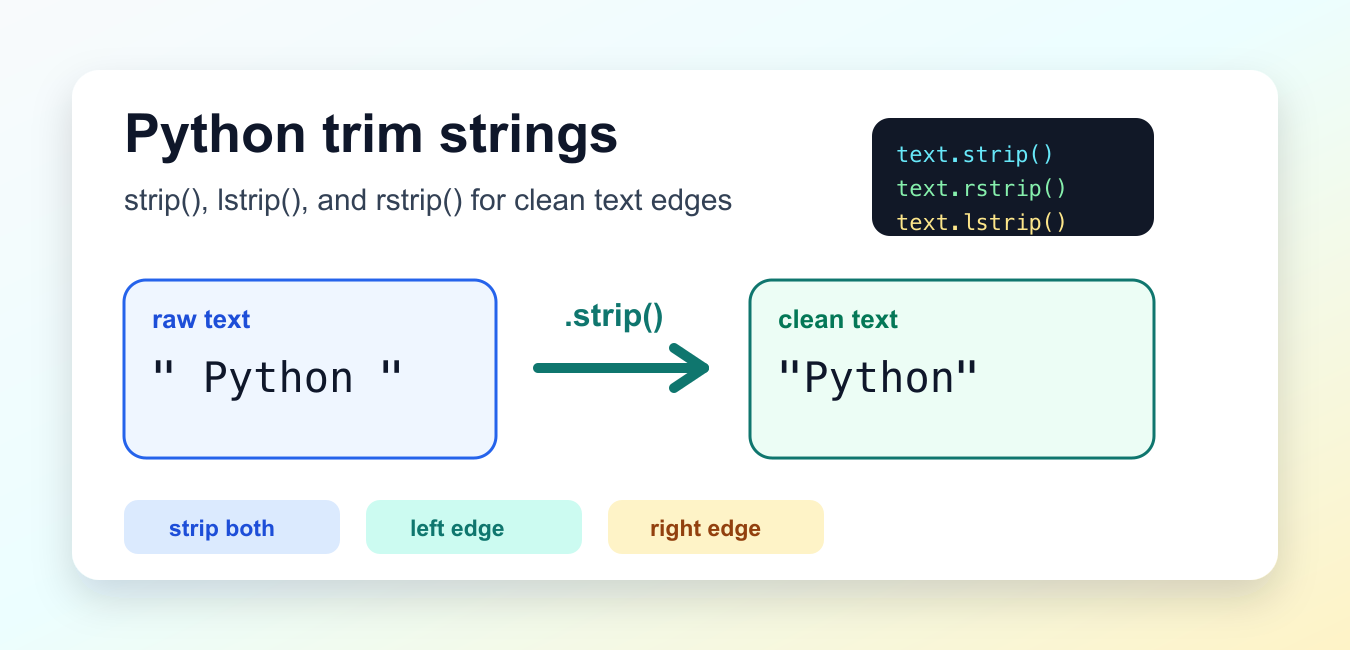
Trim leading and trailing characters in Python with strip(), lstrip(), and rstrip(), with clear examples for whitespace and custom cleanup.
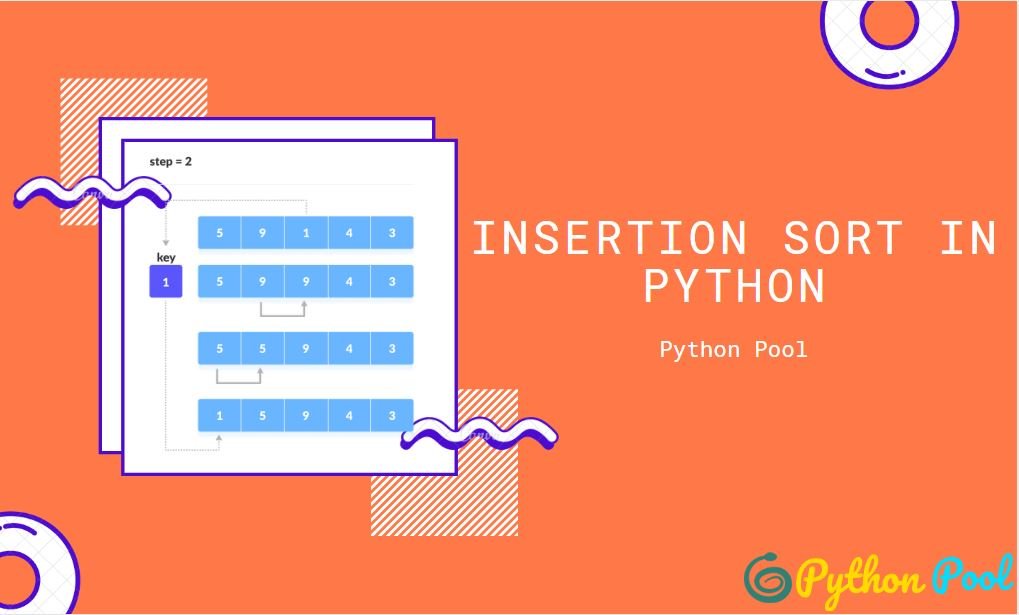
Learn insertion sort in Python, trace its shifting behavior, understand best and worst-case complexity, and choose it appropriately for small or nearly sorted data.
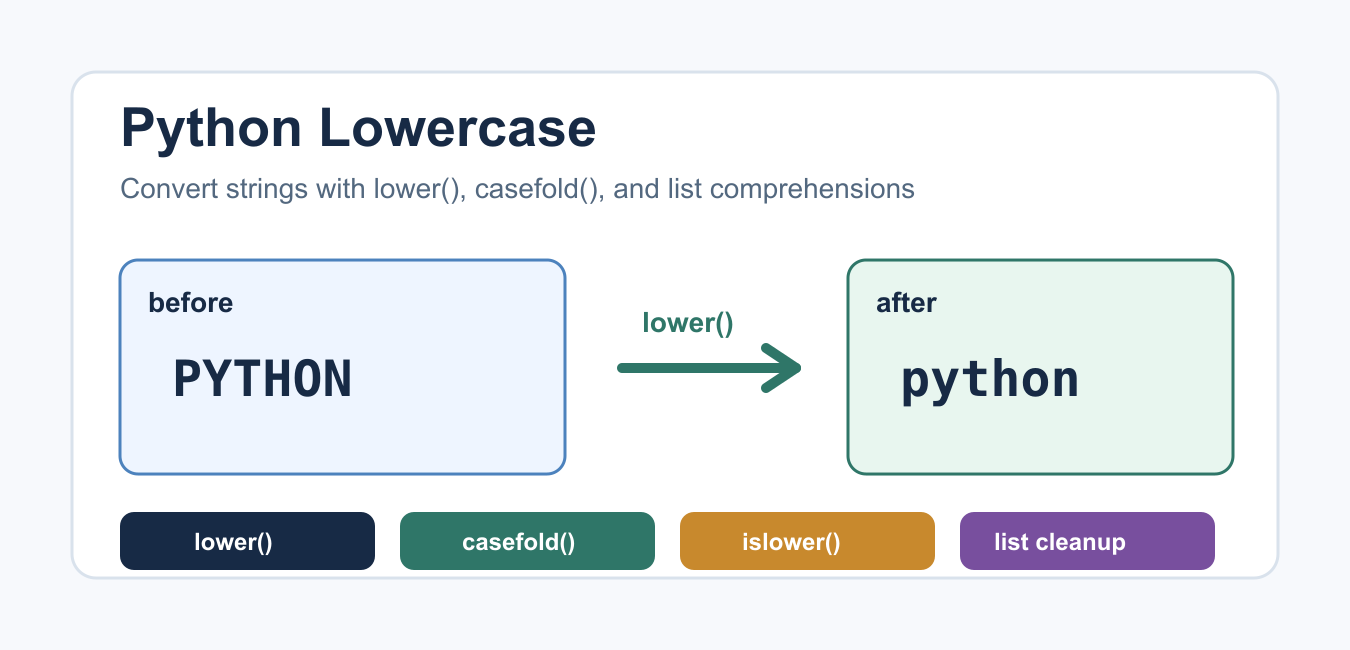
Use lower() for conversion, casefold() for robust matching, and islower() for validation with Unicode-safe Python examples.
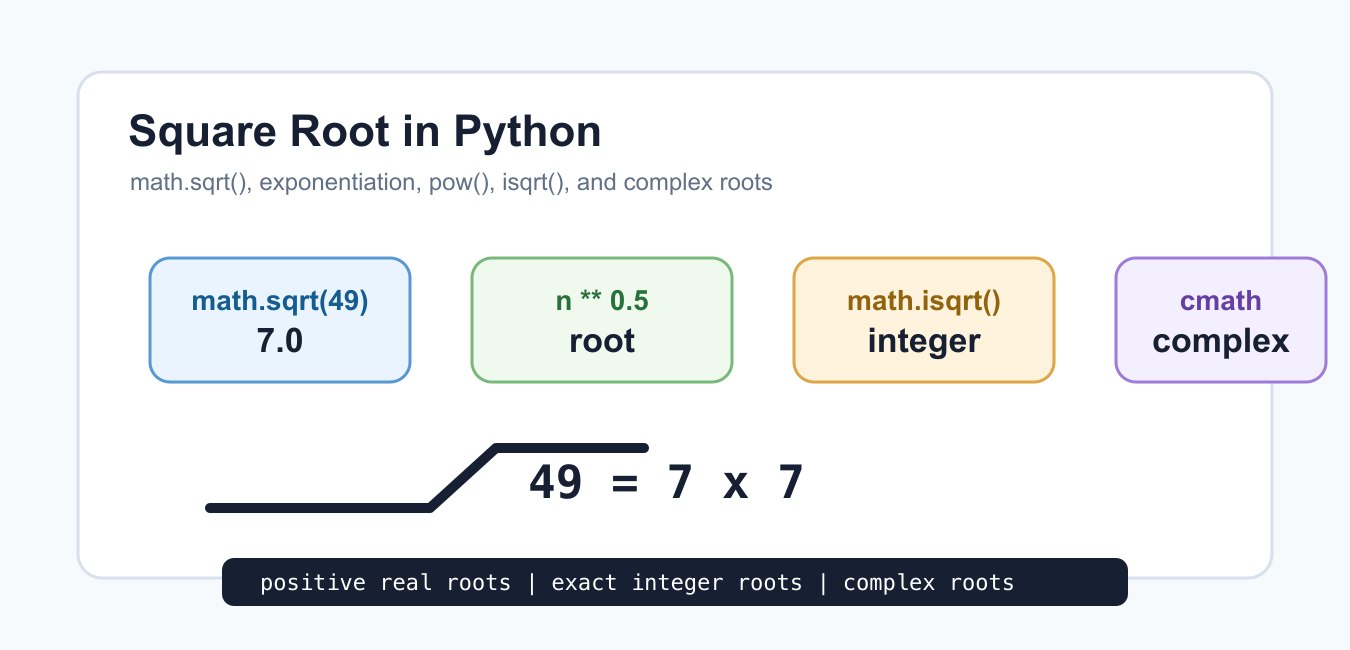
Calculate square roots with math.sqrt, NumPy, exponentiation, and cmath while handling negative inputs and floating-point checks.
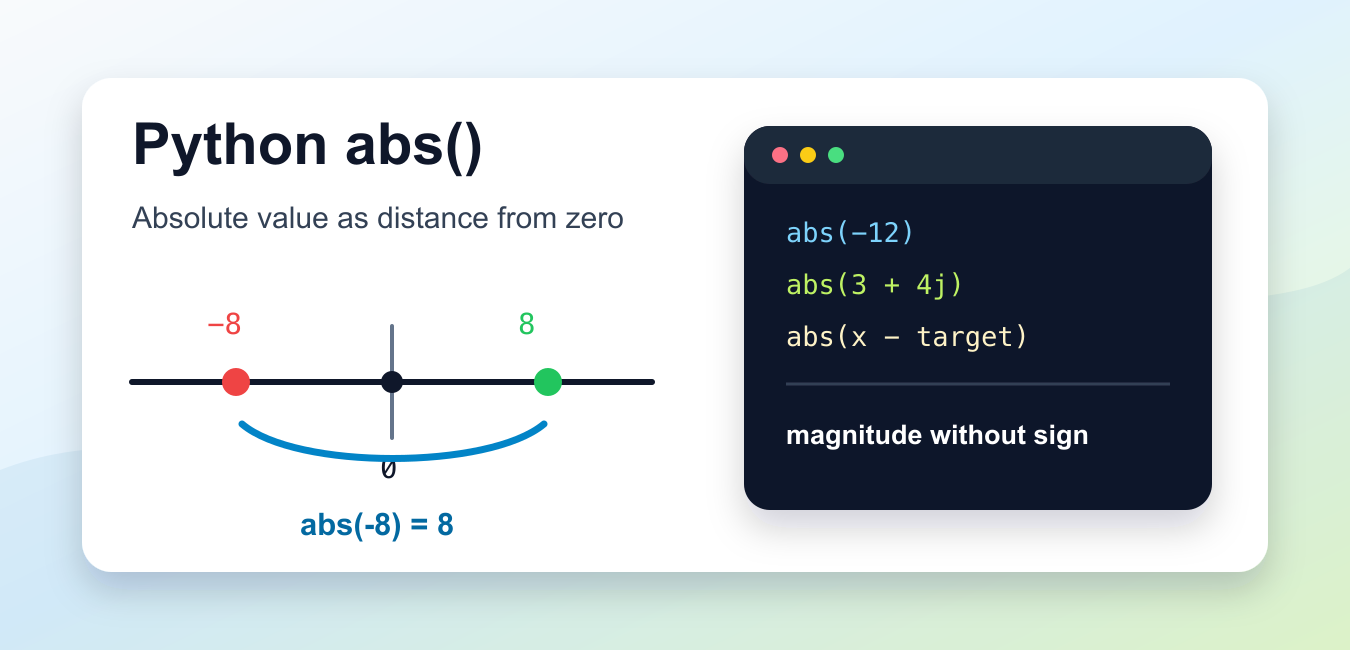
Use Python abs() for integers, floats, complex numbers, and custom objects, with practical examples and edge cases.
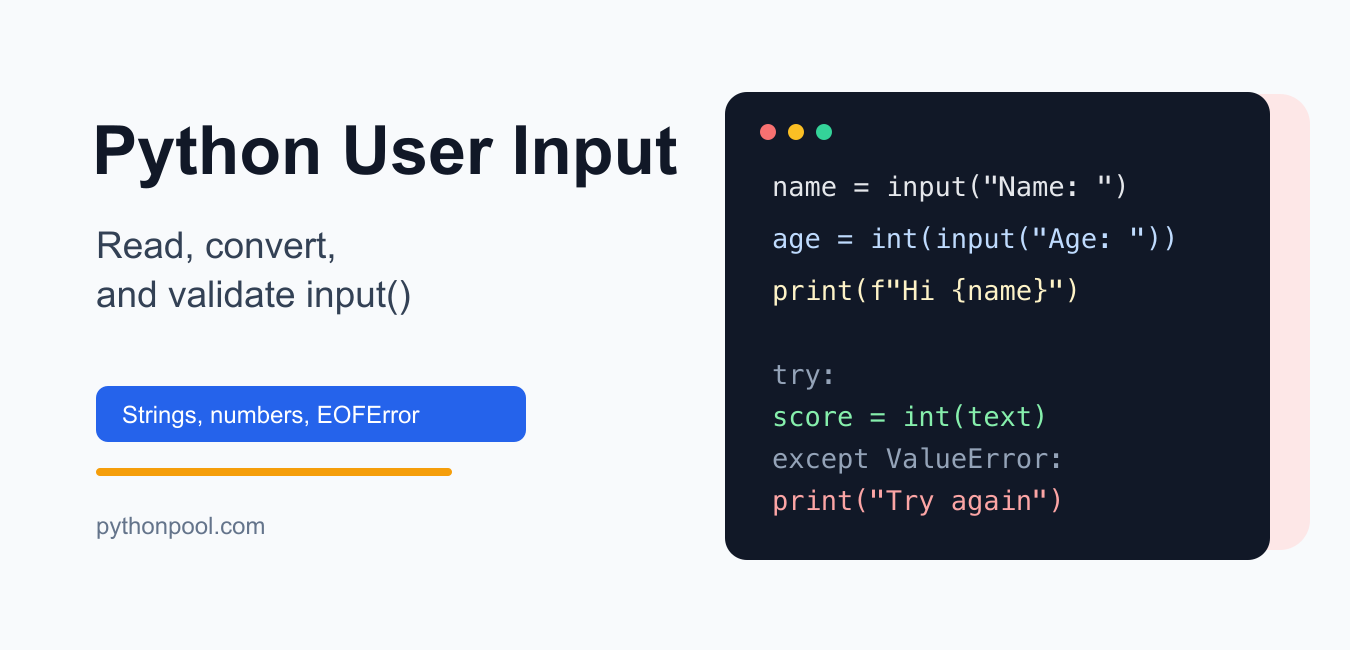
Use Python input() to read text, convert numbers, validate choices, handle EOFError, collect values, and hide passwords safely.
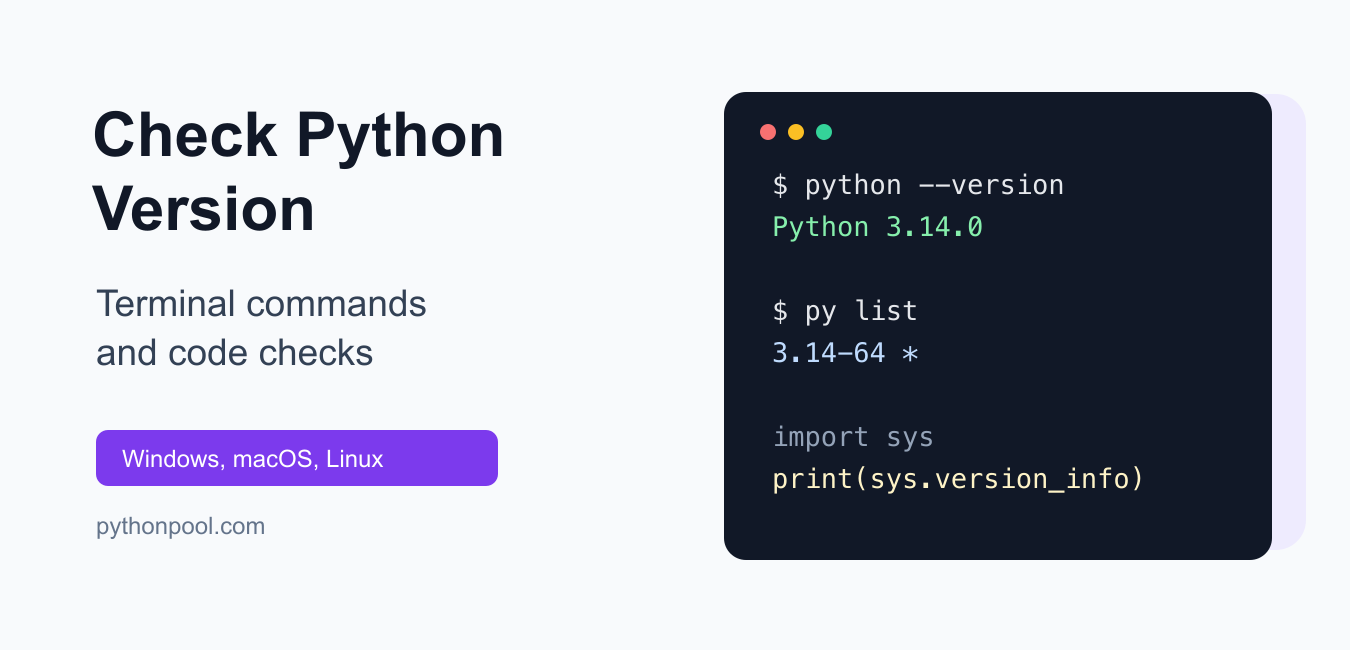
Check Python from a terminal or script, then compare sys.executable so multiple interpreters and virtual environments do not confuse diagnosis.