Python sum(): Start Values, Generators, and Common Mistakes
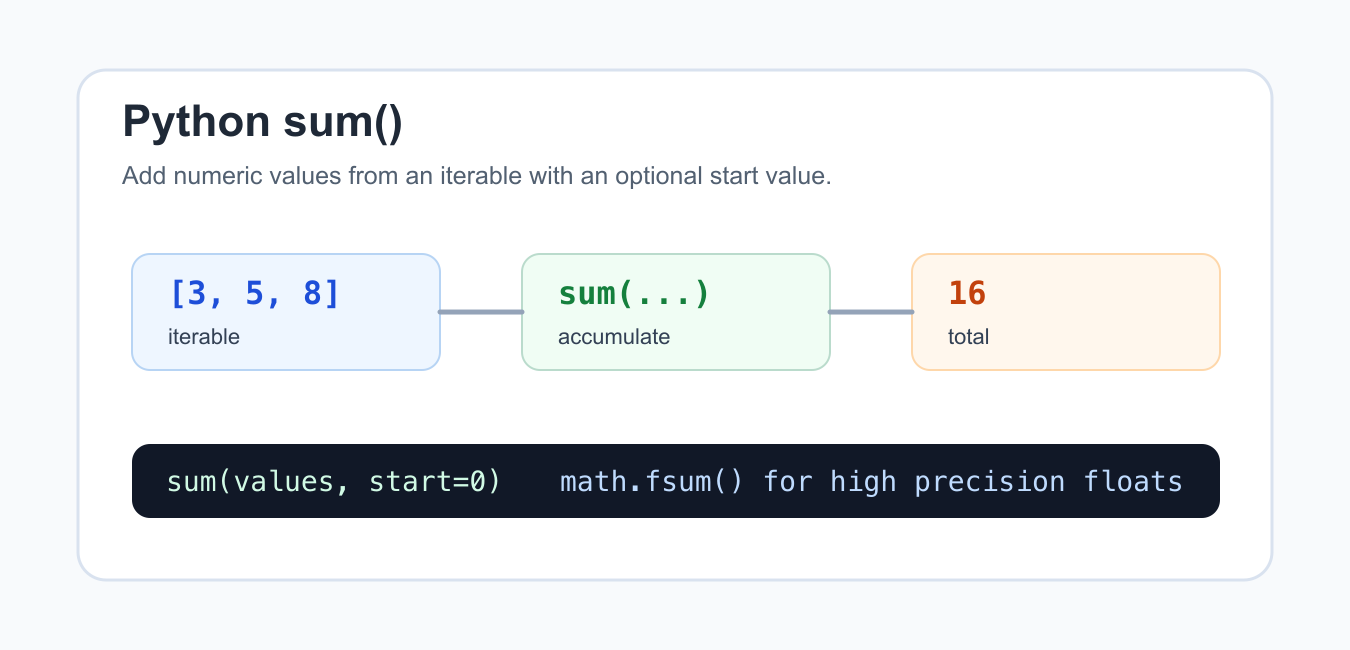
Use Python sum with iterables, start values, generators, booleans, and numeric data while avoiding string concatenation and unexpected empty results.
Browse practical Python tutorials, error fixes, library guides, data science examples, and project ideas from Python Pool.
Use Python sum with iterables, start values, generators, booleans, and numeric data while avoiding string concatenation and unexpected empty results.

Use break to stop the nearest Python loop, handle not-found searches with loop else, and distinguish it from continue and return.
Fix the Windows Python command error by checking installation, PATH, the py launcher, virtual environments, aliases, and terminal restarts.
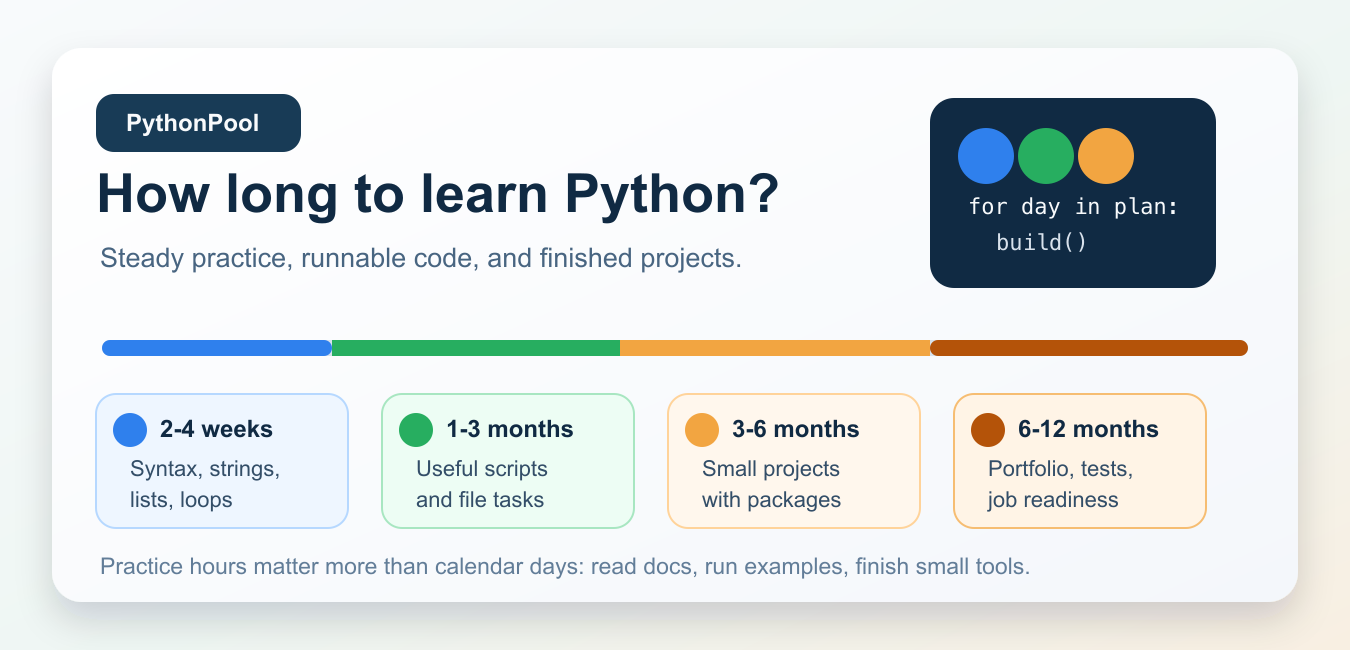
Estimate how long it takes to learn Python by goal, practice time, project scope, debugging skill, and a staged roadmap from basics to useful applications.

Remove duplicates from a Python list with set(), dict.fromkeys(), loops, custom keys, unhashable values, and order-preserving choices.
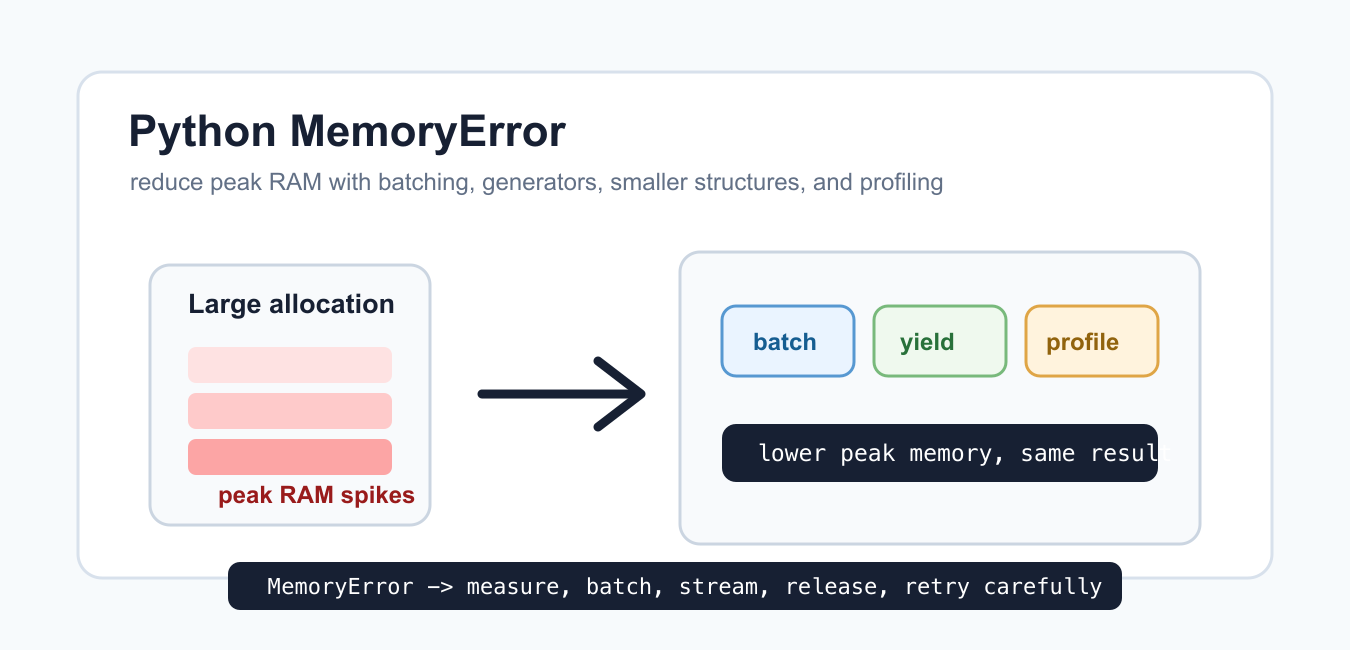
Fix Python MemoryError by measuring allocations, streaming data, reducing object overhead, and choosing process or array strategies that fit available RAM.

Print on one line in Python with end, control separators with sep, and use flush for timely terminal or progress output.
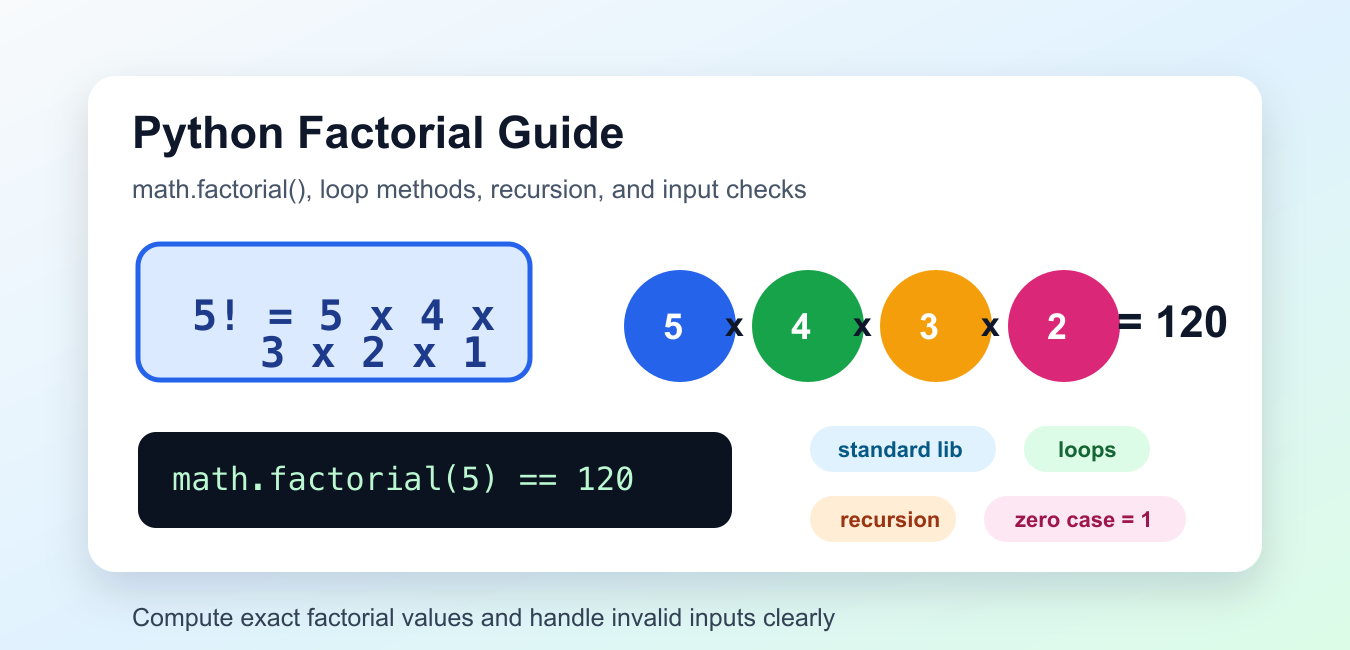
Calculate factorials in Python with math.factorial, understand the domain and zero factorial, and choose an iterative or recursive implementation for learning or custom behavior.
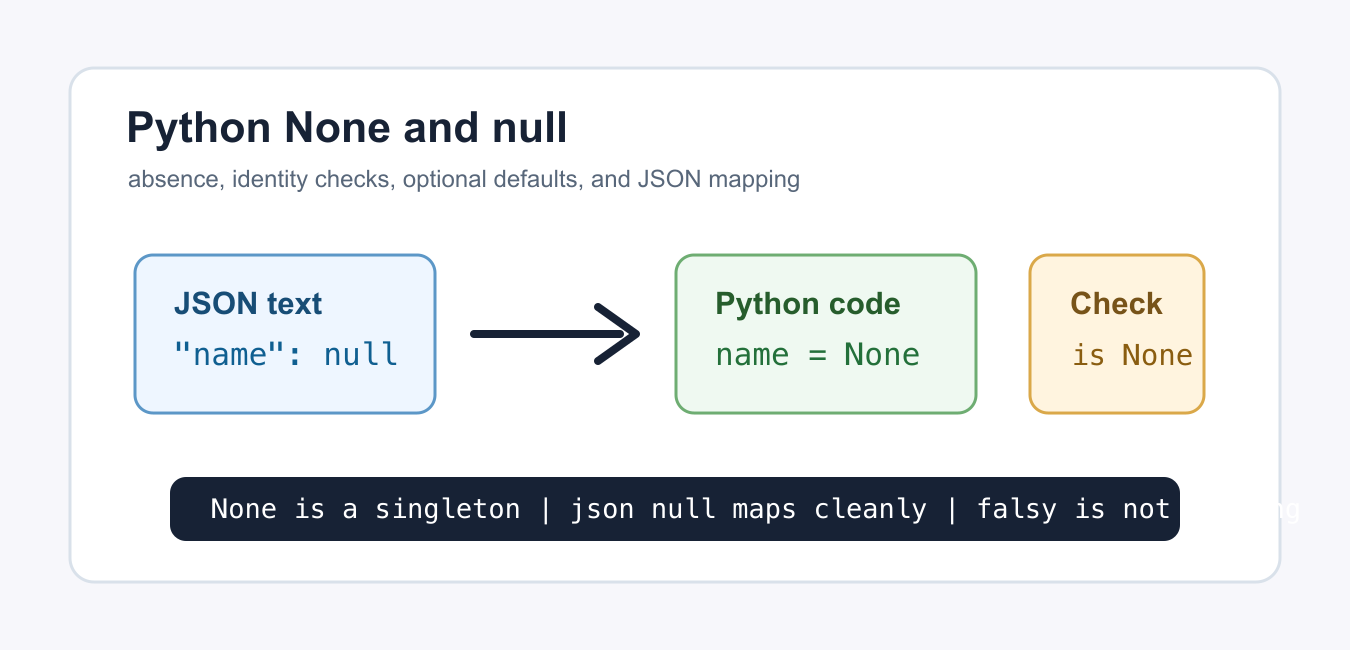
Python uses None to represent an absent value; test it with identity checks and define how missing differs from empty or zero data.

Review Learn Python the Hard Way PDF and legitimate edition options, understand the exercise-first method, and build a practical Python study plan.