Python any(): Truth Tests, Short-Circuiting, and Generators
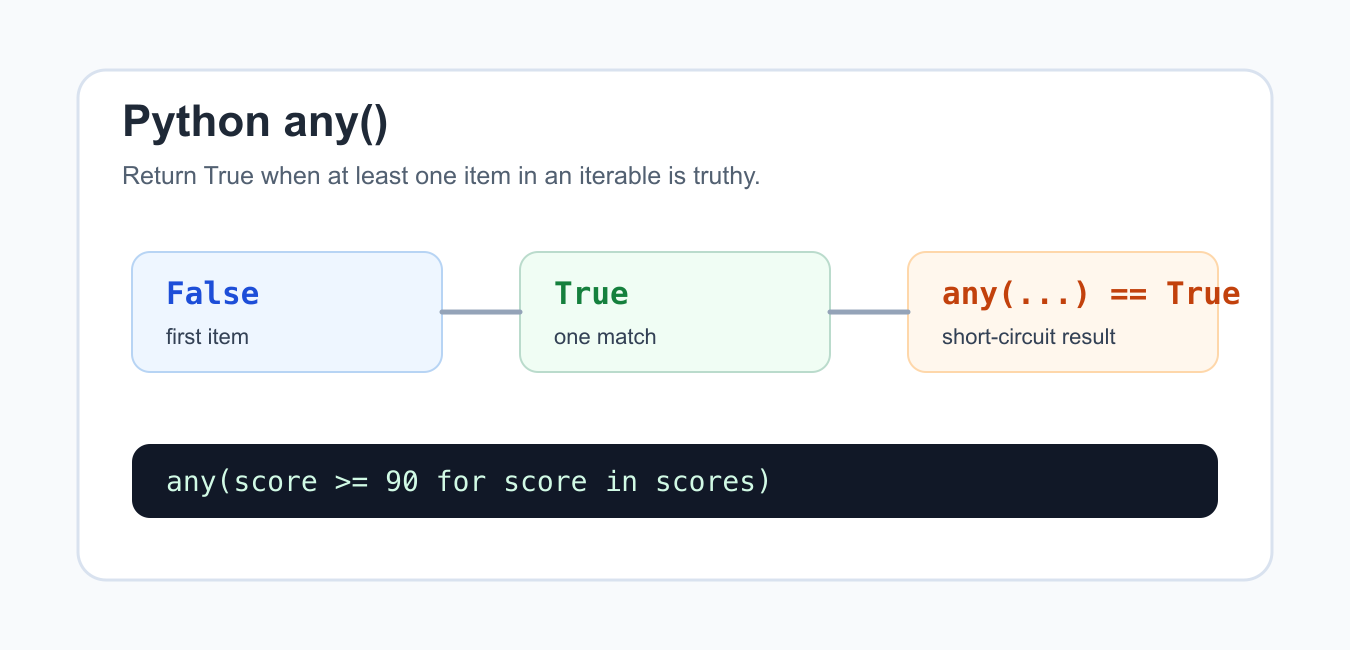
Use any() for existential checks, let generators short-circuit work, and distinguish it from all(), membership, and truth testing.
Browse Python tutorials for beginners and working developers, including syntax, libraries, examples, projects, and real problem-solving guides.
Use any() for existential checks, let generators short-circuit work, and distinguish it from all(), membership, and truth testing.
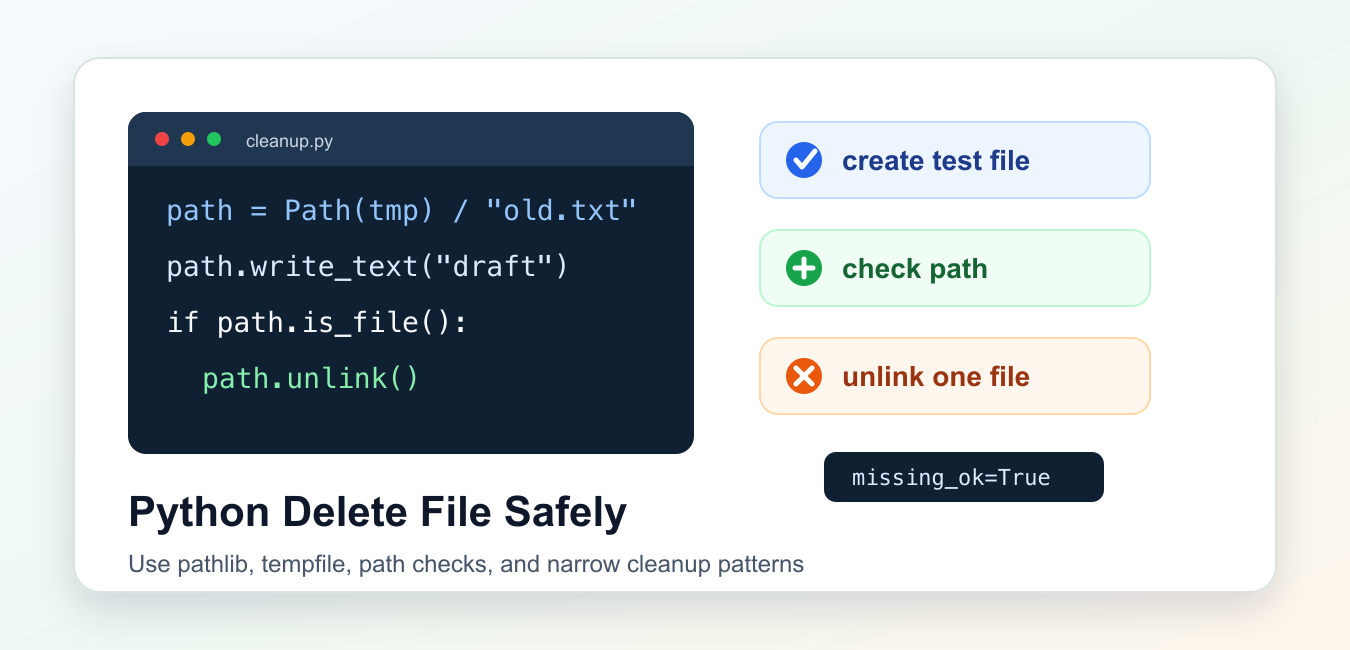
Delete files safely in Python with pathlib.Path.unlink(), os.remove(), missing_ok, path validation, errors, and narrow cleanup patterns.
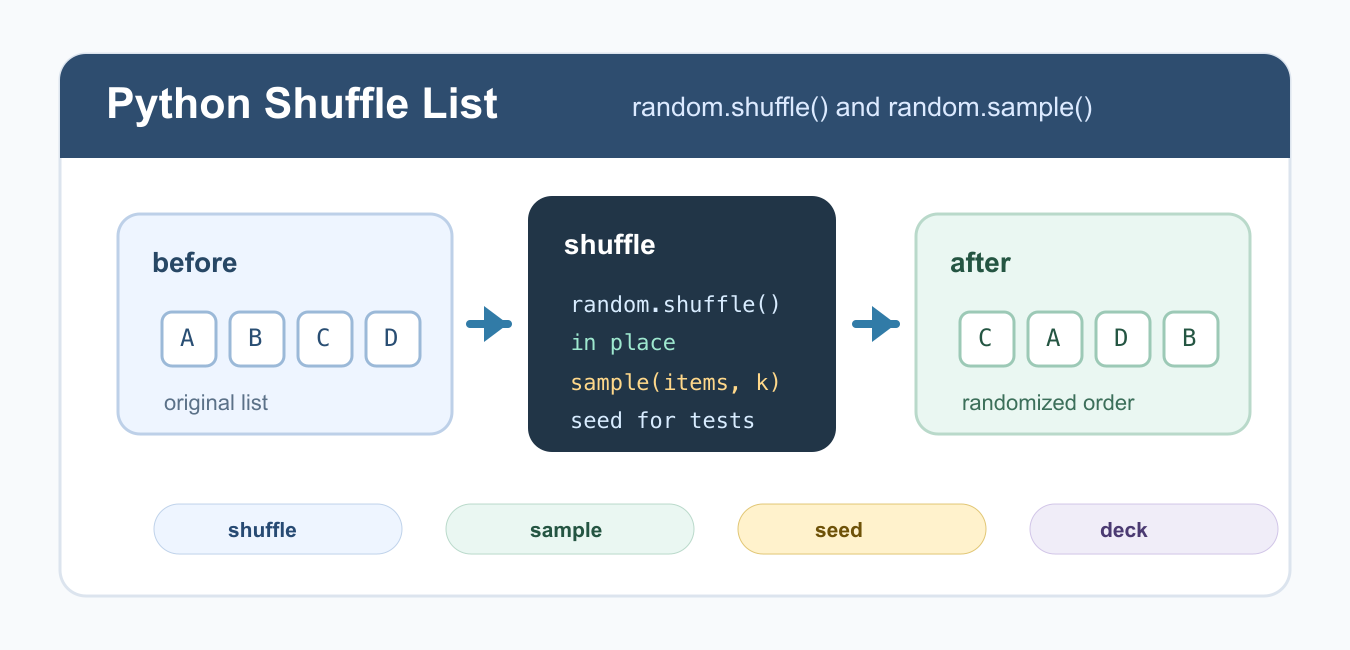
Choose in-place shuffle or non-mutating sample, keep random state explicit, and avoid treating pseudo-random output as secure randomness.
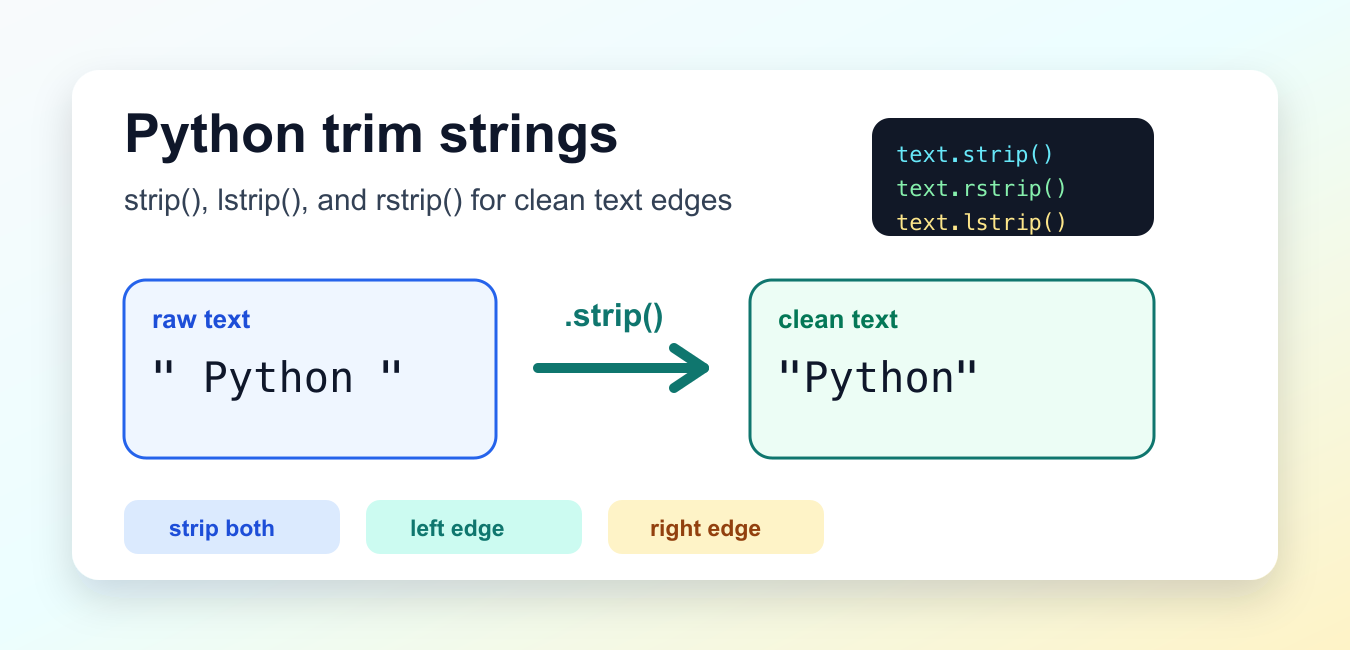
Trim leading and trailing characters in Python with strip(), lstrip(), and rstrip(), with clear examples for whitespace and custom cleanup.
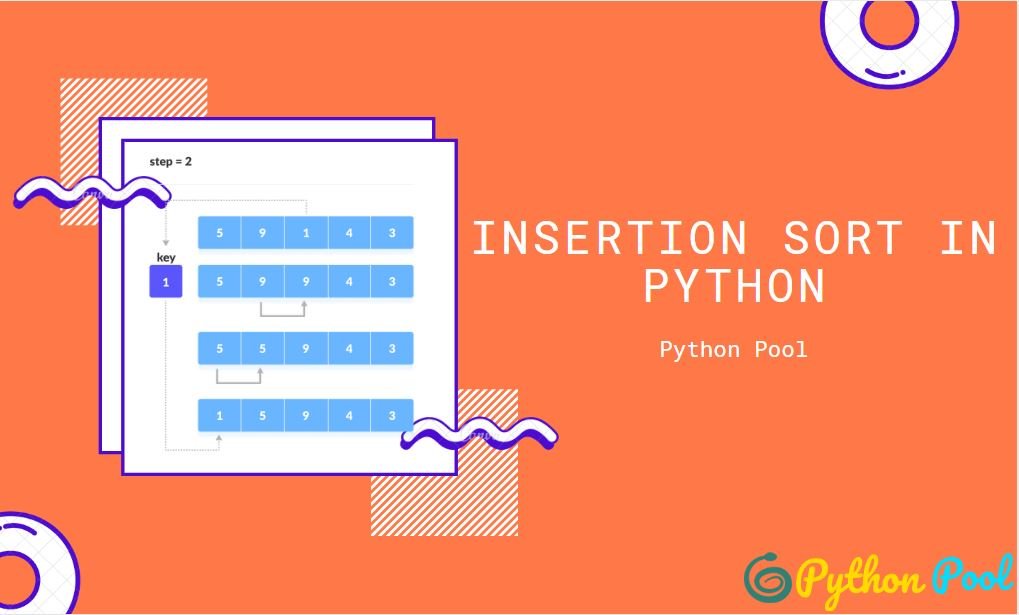
Learn insertion sort in Python, trace its shifting behavior, understand best and worst-case complexity, and choose it appropriately for small or nearly sorted data.
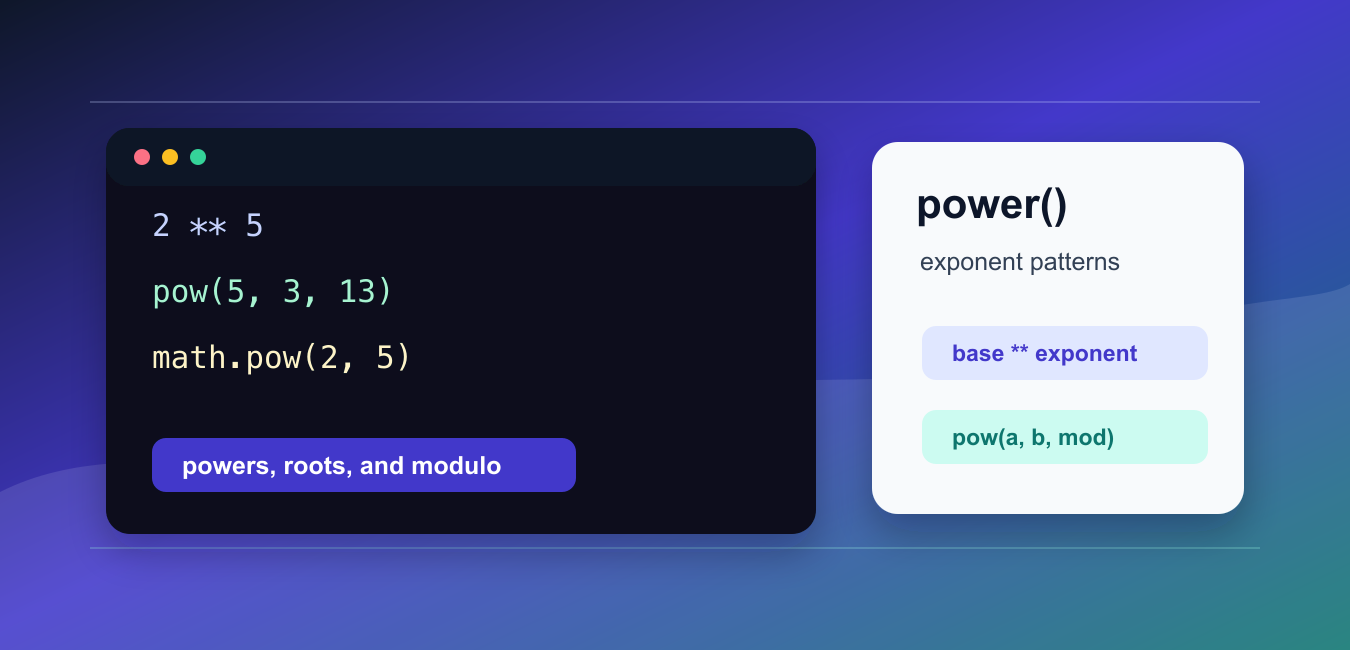
Choose Python **, pow(), or math.pow() for exact integers, float results, modular arithmetic, roots, and negative bases.
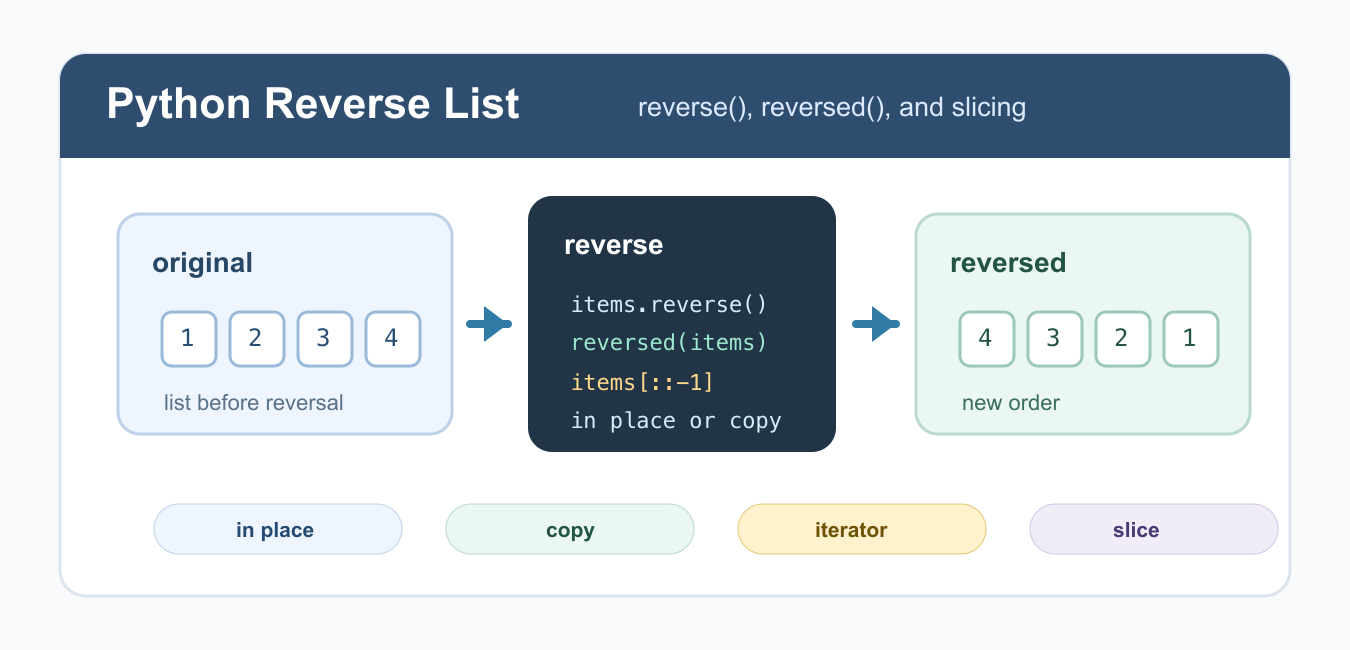
Compare reverse(), reversed(), and list slicing so you can choose mutation, lazy iteration, or a new shallow list.
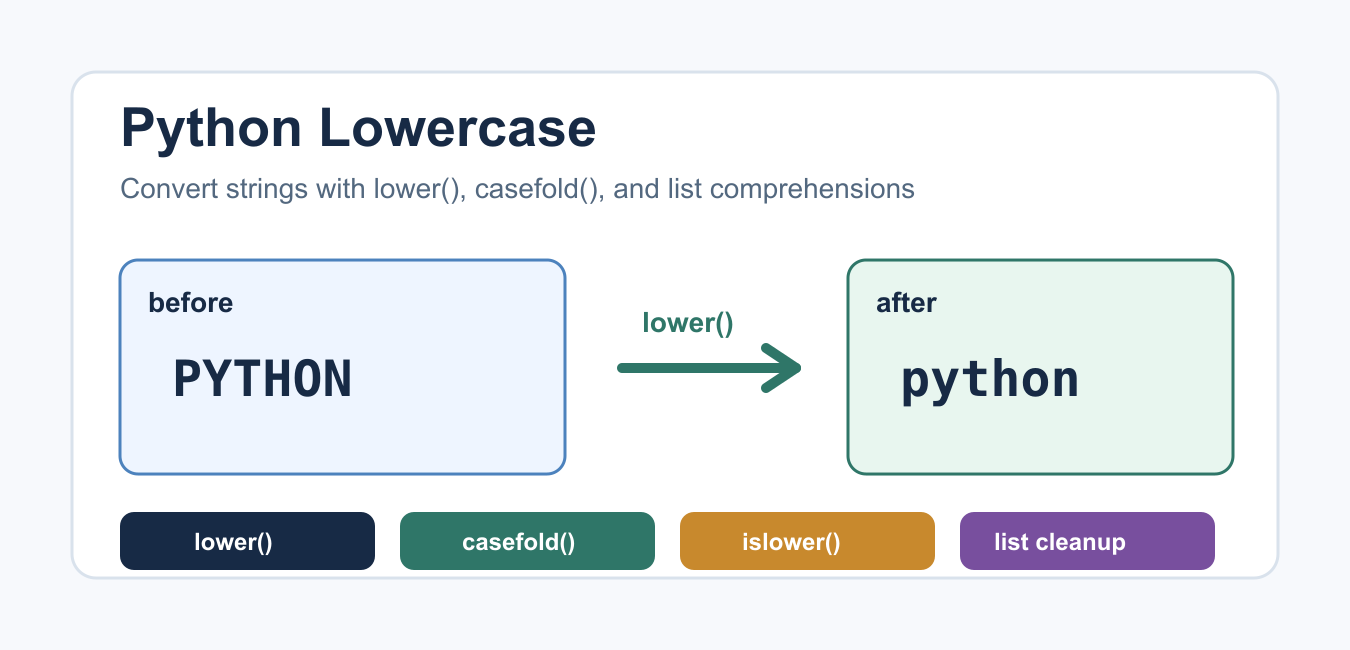
Use lower() for conversion, casefold() for robust matching, and islower() for validation with Unicode-safe Python examples.
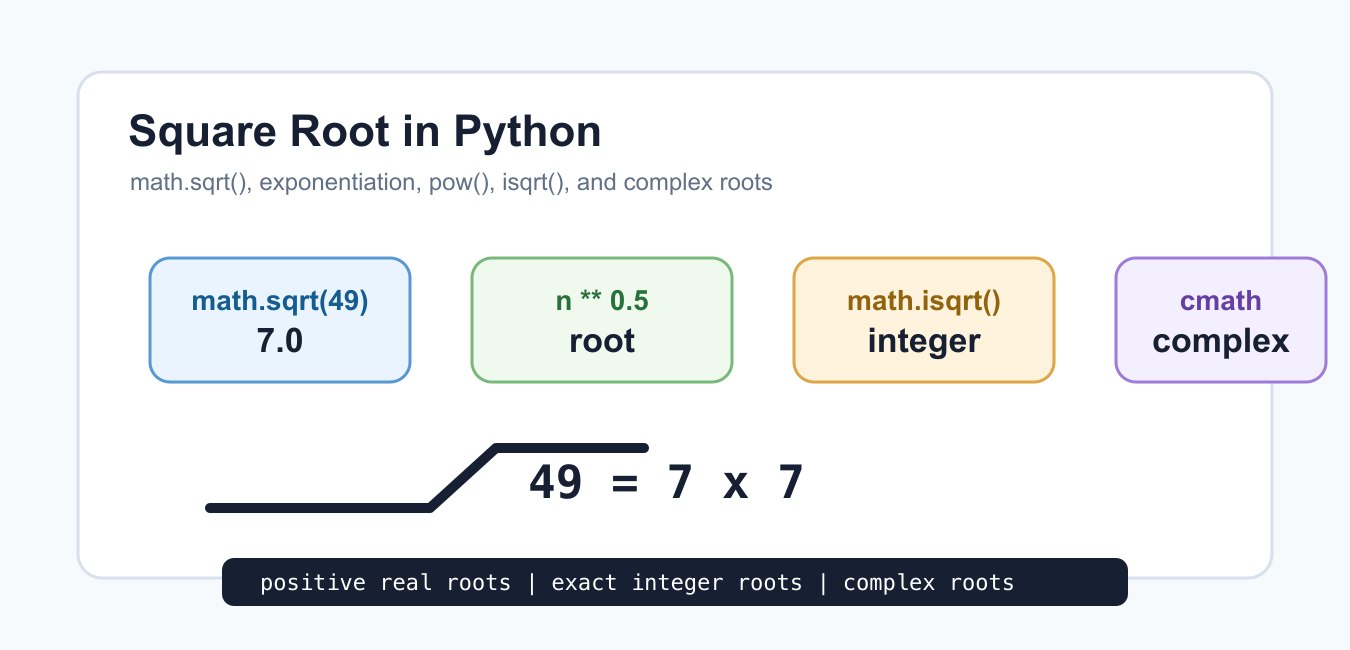
Calculate square roots with math.sqrt, NumPy, exponentiation, and cmath while handling negative inputs and floating-point checks.
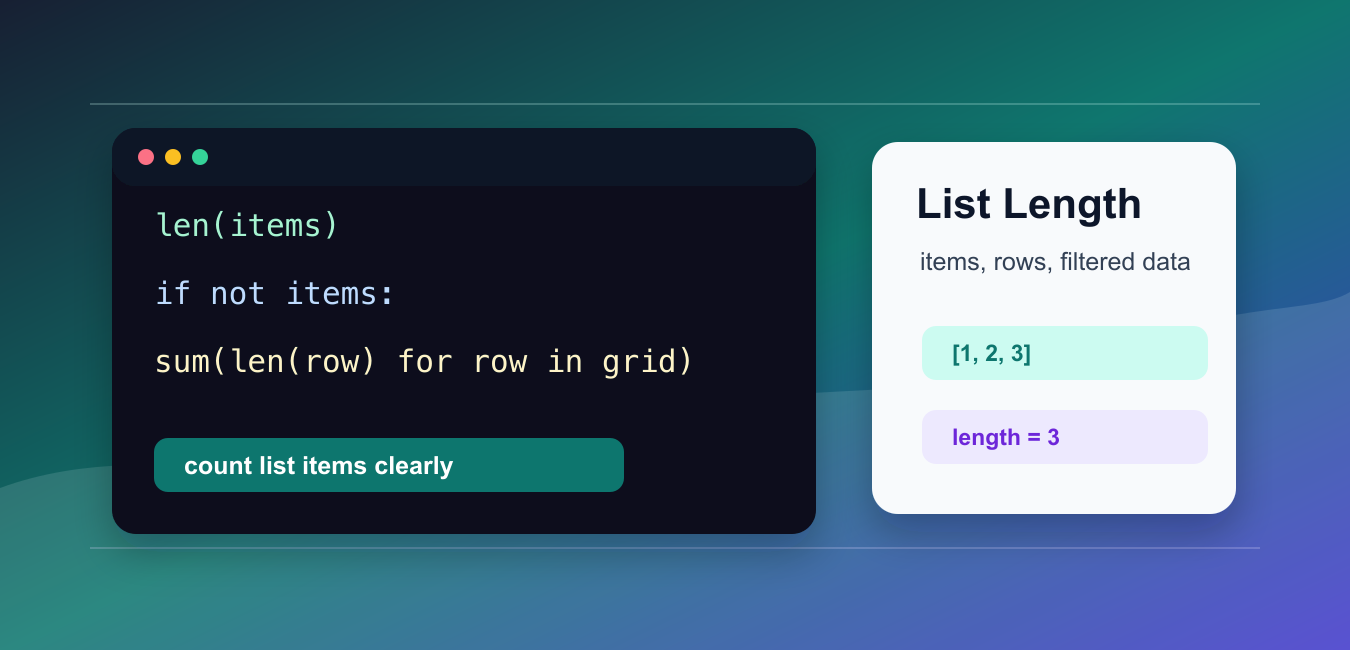
Find the length of a Python list with len(), handle empty lists safely, and distinguish item count from memory usage.