NumPy subtract(): Element-Wise Difference and Broadcasting
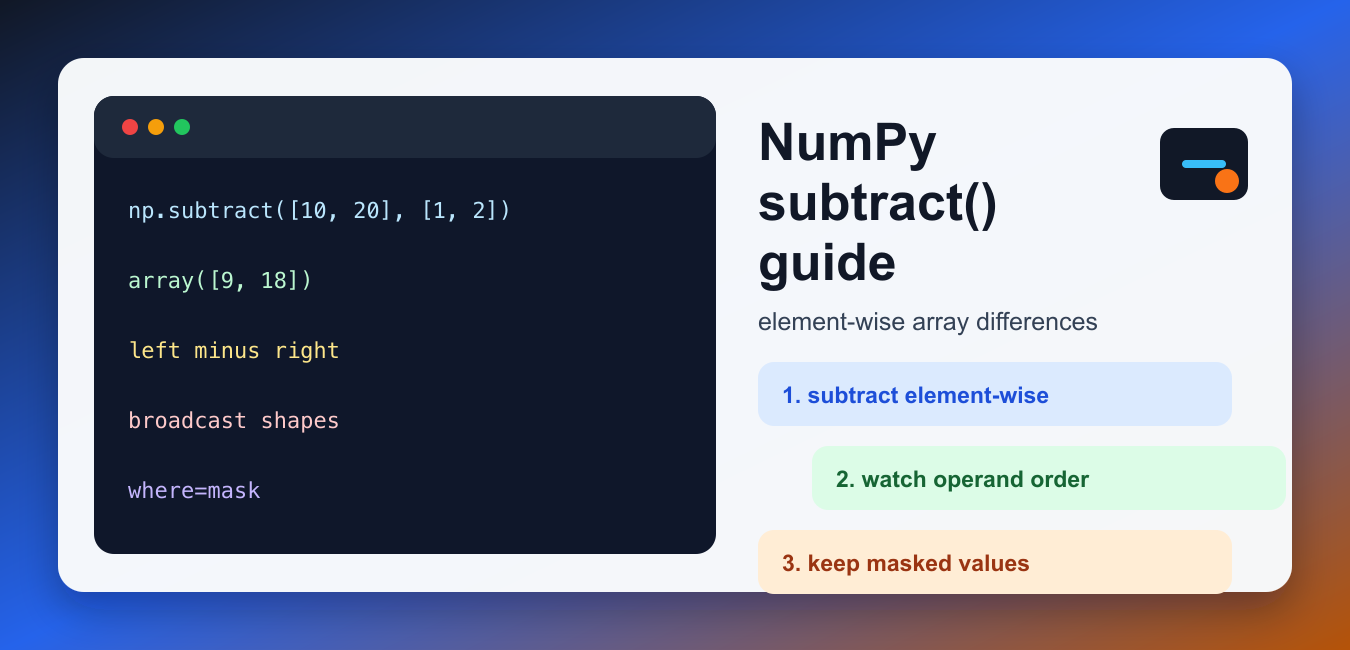
Use NumPy subtract() for element-wise differences, broadcasting, dtype and out controls, masked updates, and predictable operand order.
Browse practical Python tutorials, error fixes, library guides, data science examples, and project ideas from Python Pool.
Use NumPy subtract() for element-wise differences, broadcasting, dtype and out controls, masked updates, and predictable operand order.
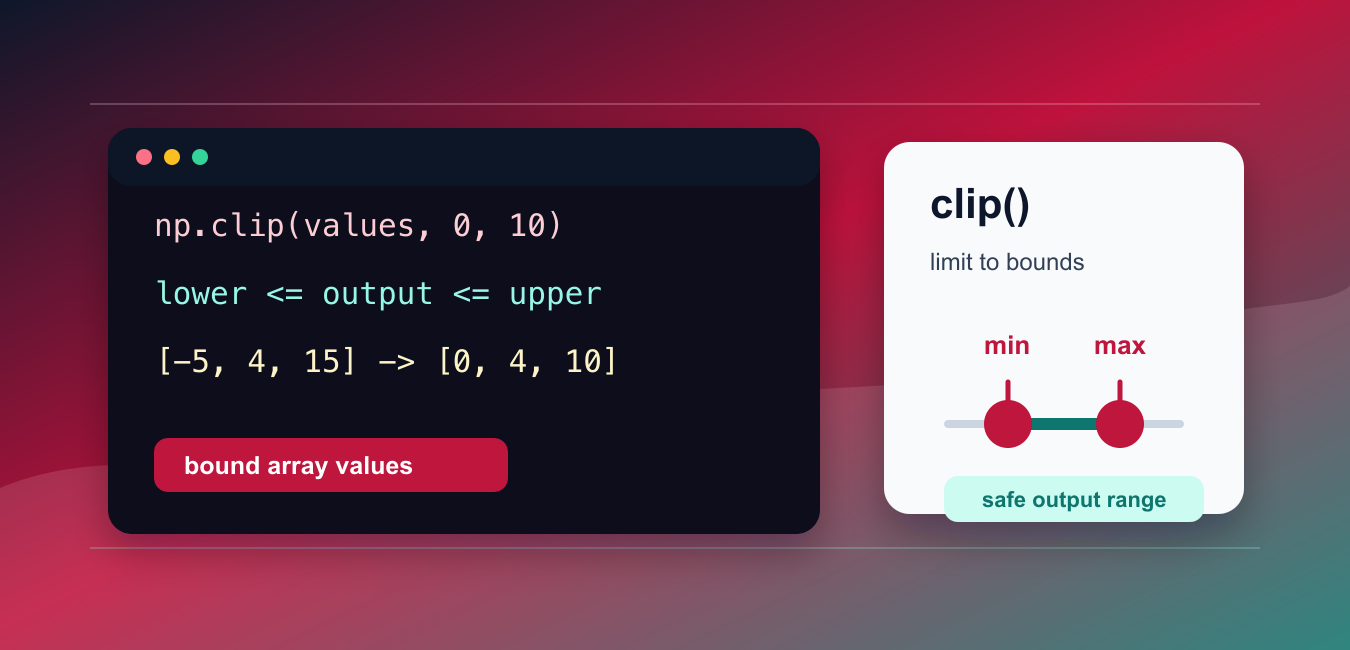
Limit NumPy arrays with scalar or per-element bounds, one-sided clipping, in-place output, dtype checks, and validation guidance.
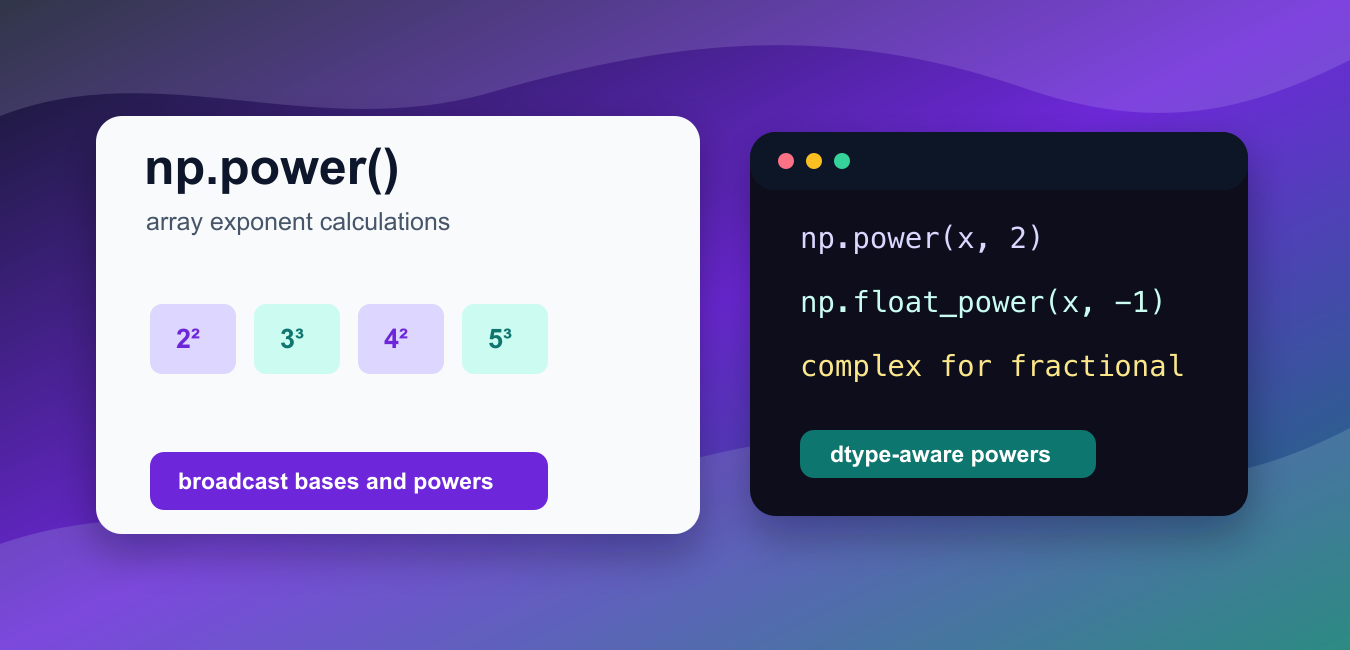
Use np.power() deliberately by checking broadcasted shapes, negative and fractional domains, dtype, and masked output behavior.
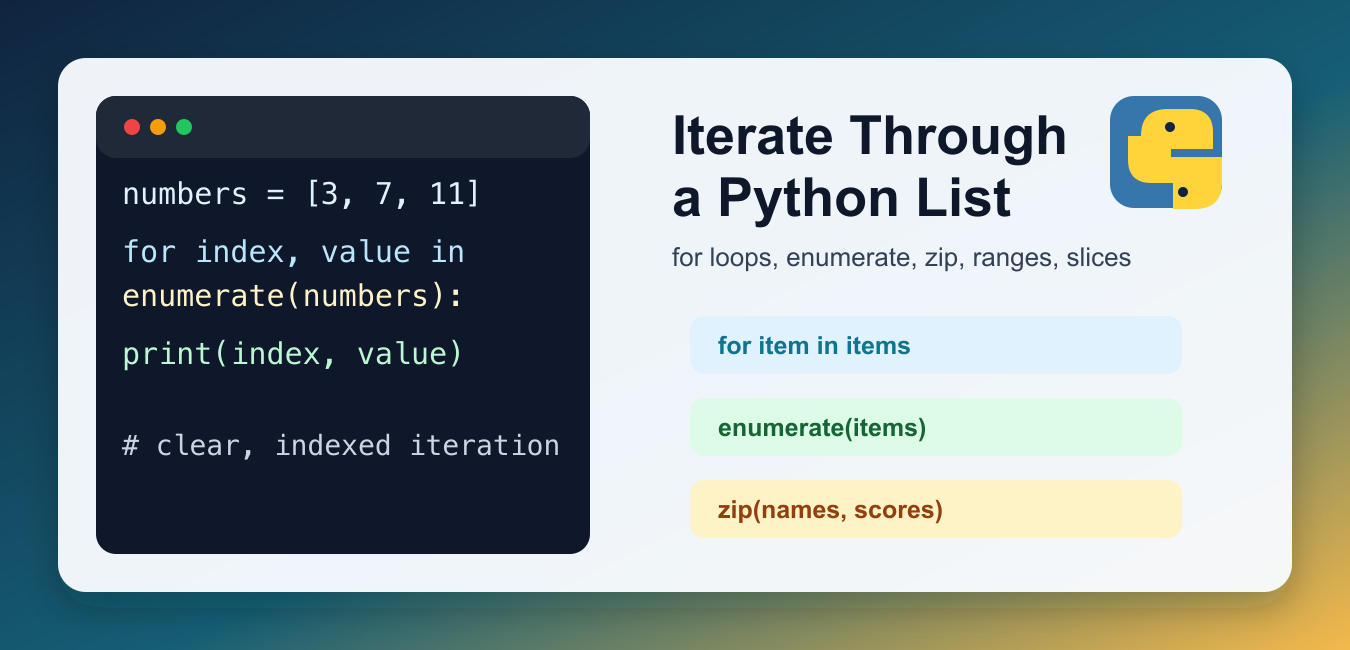
Iterate through Python lists with direct for loops, enumerate(), index ranges, while loops, and list comprehensions.
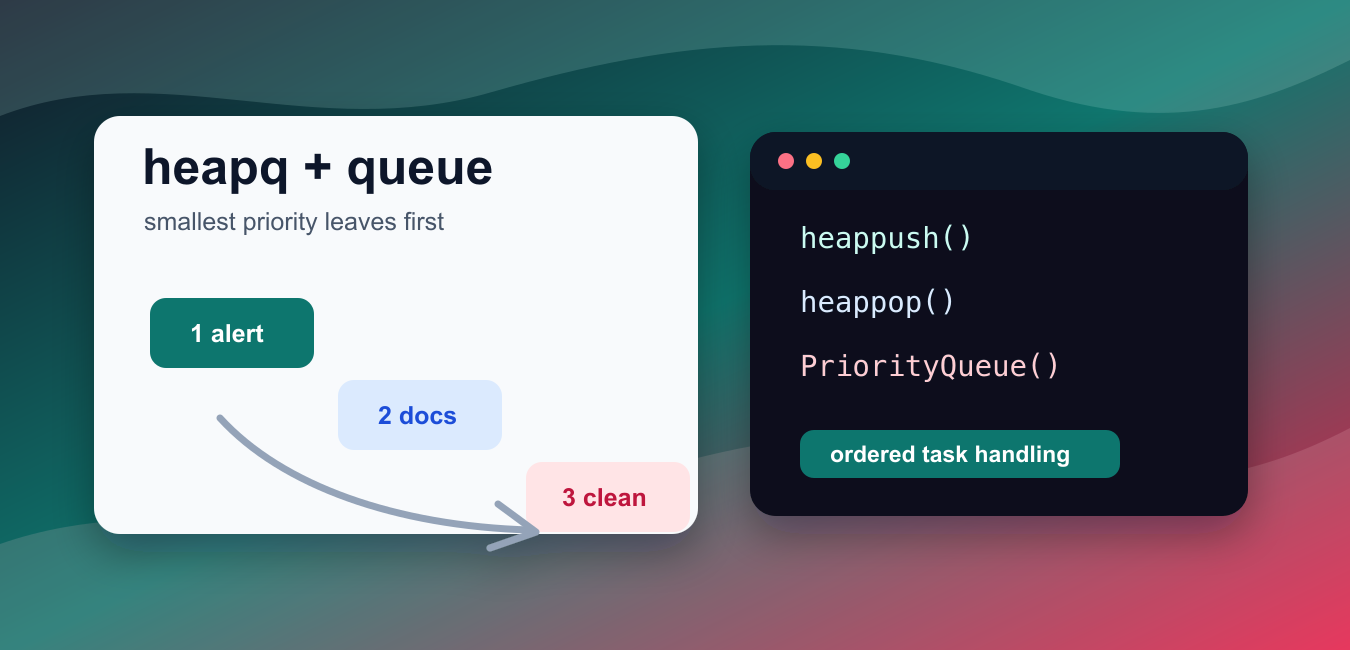
Implement Python priority queues with heapq for lightweight control or queue.PriorityQueue for synchronized producer-consumer workflows.
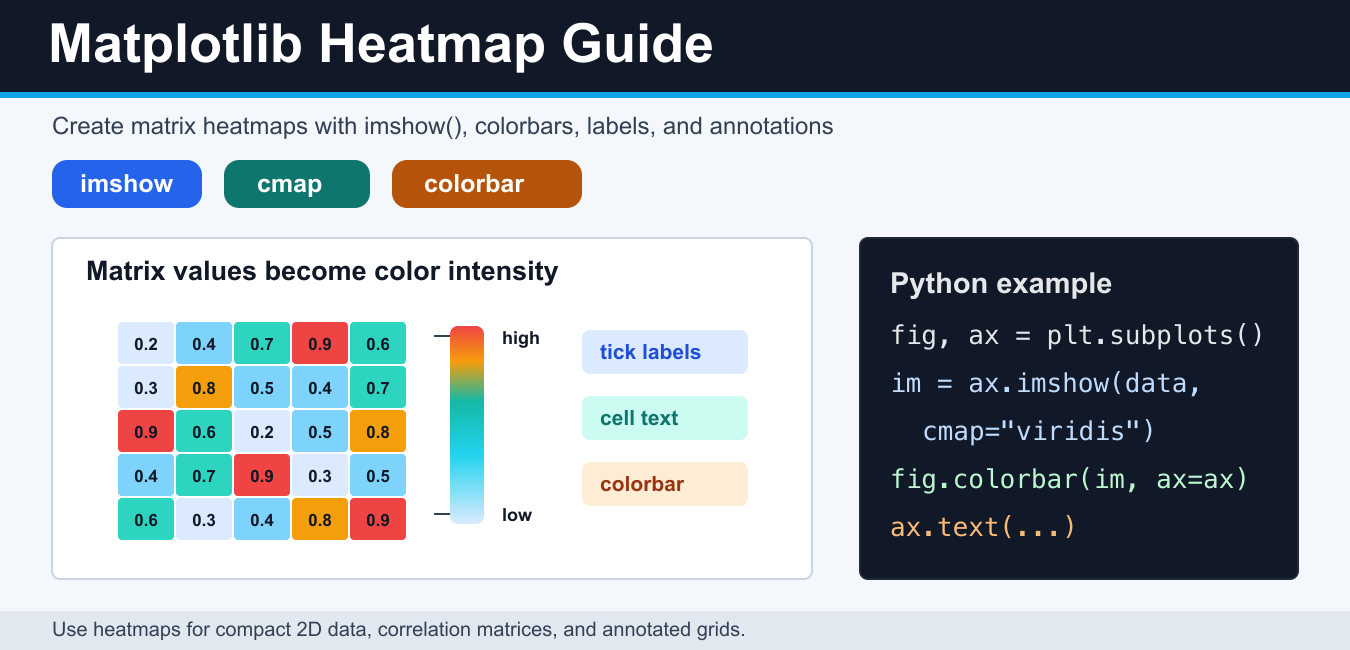
Create Matplotlib heatmaps with imshow(), colorbars, tick labels, annotations, colormaps, and readable correlation matrices.
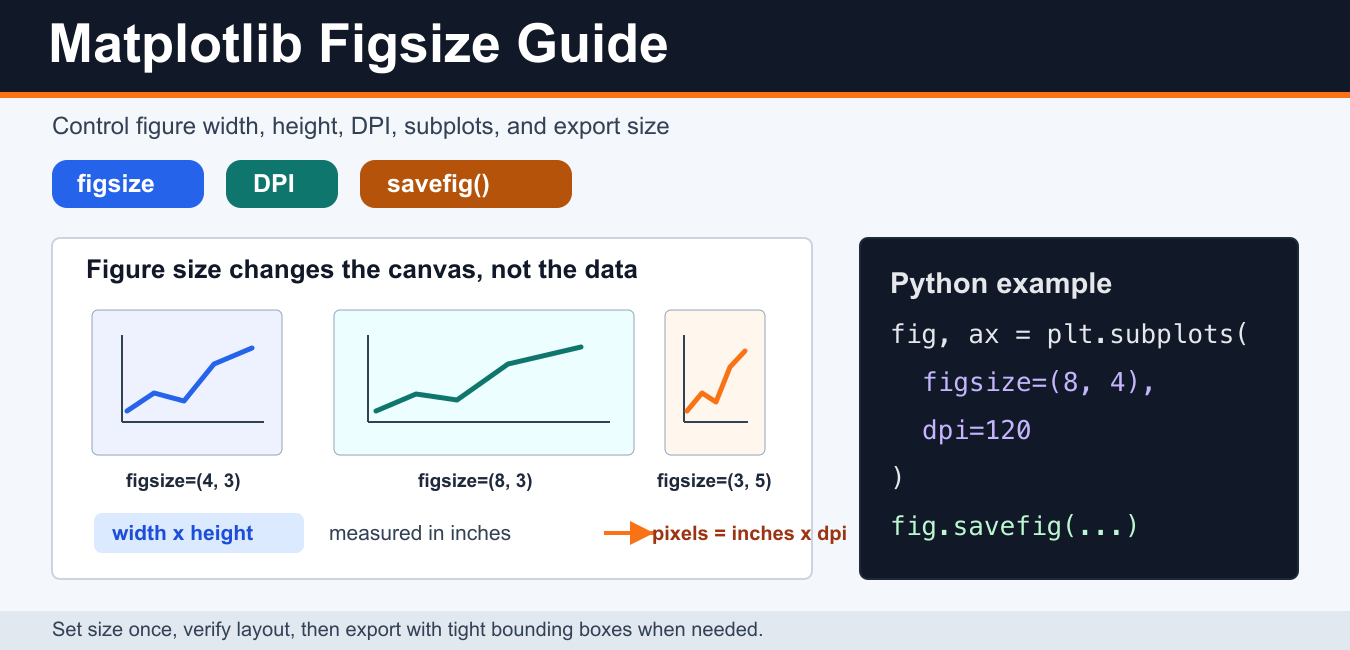
Control Matplotlib figure width and height in inches, convert to pixels with DPI, and protect labels during export.
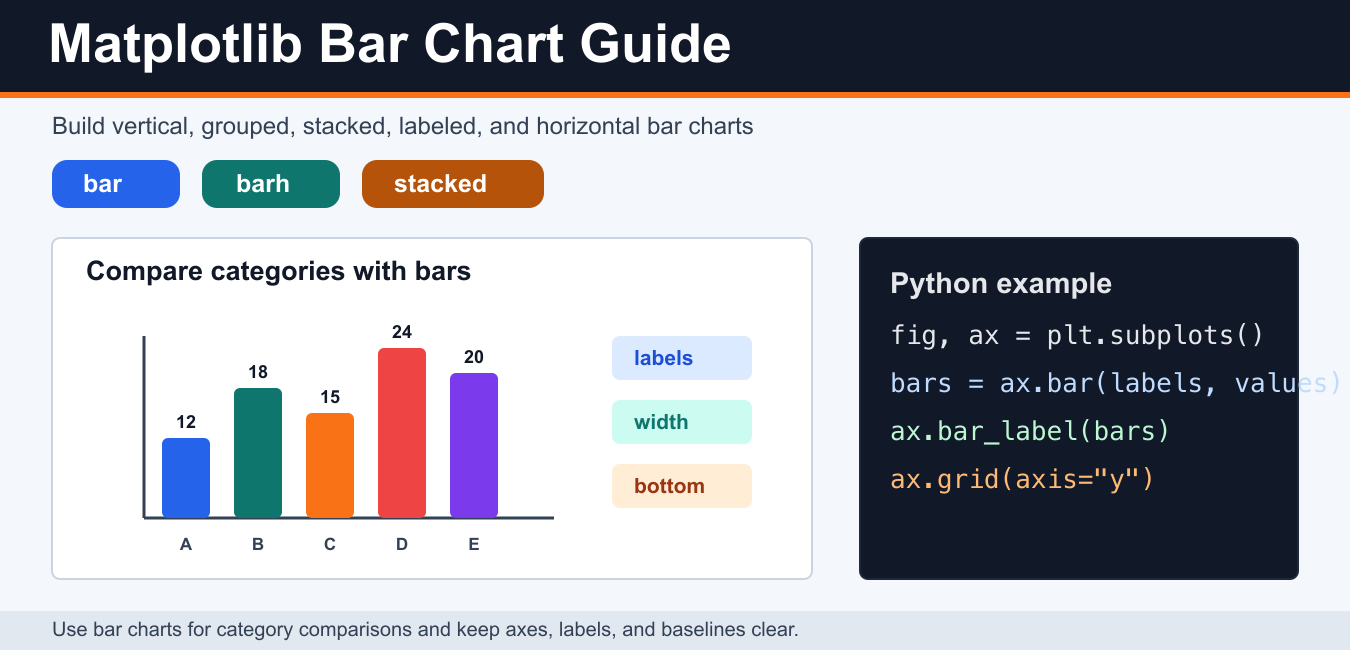
Create readable Matplotlib bar charts with bar(), barh(), grouped or stacked series, labels, error bars, and export-ready axis choices.
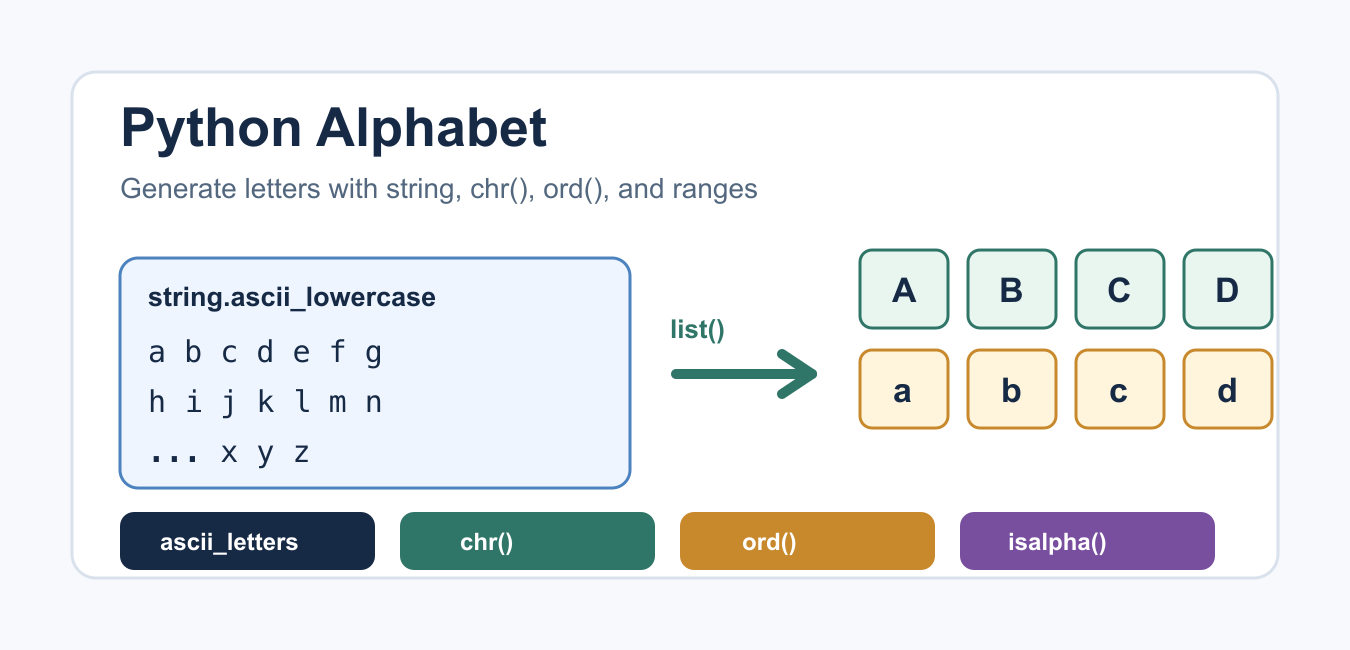
Generate lowercase and uppercase Python alphabets with string constants or chr and ord, then choose the right ASCII or Unicode validation rule.
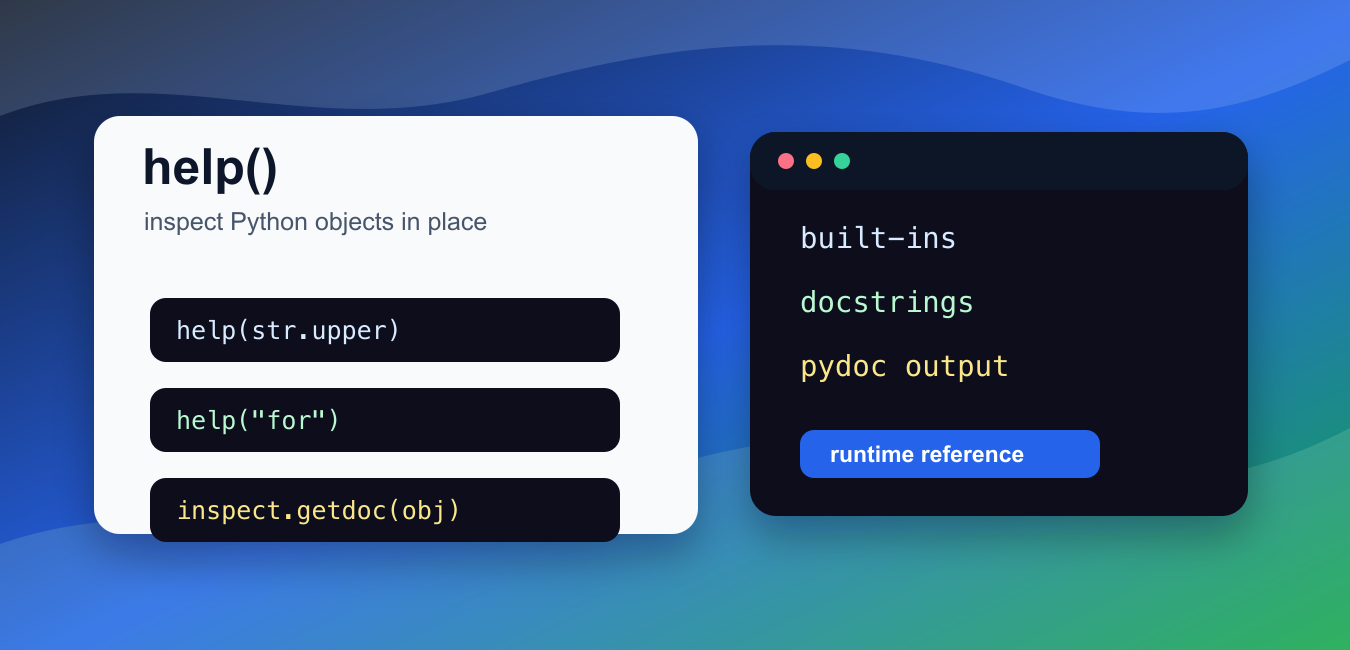
Use Python help() to inspect functions, modules, keywords, classes, and packages from the interpreter or with direct object arguments.